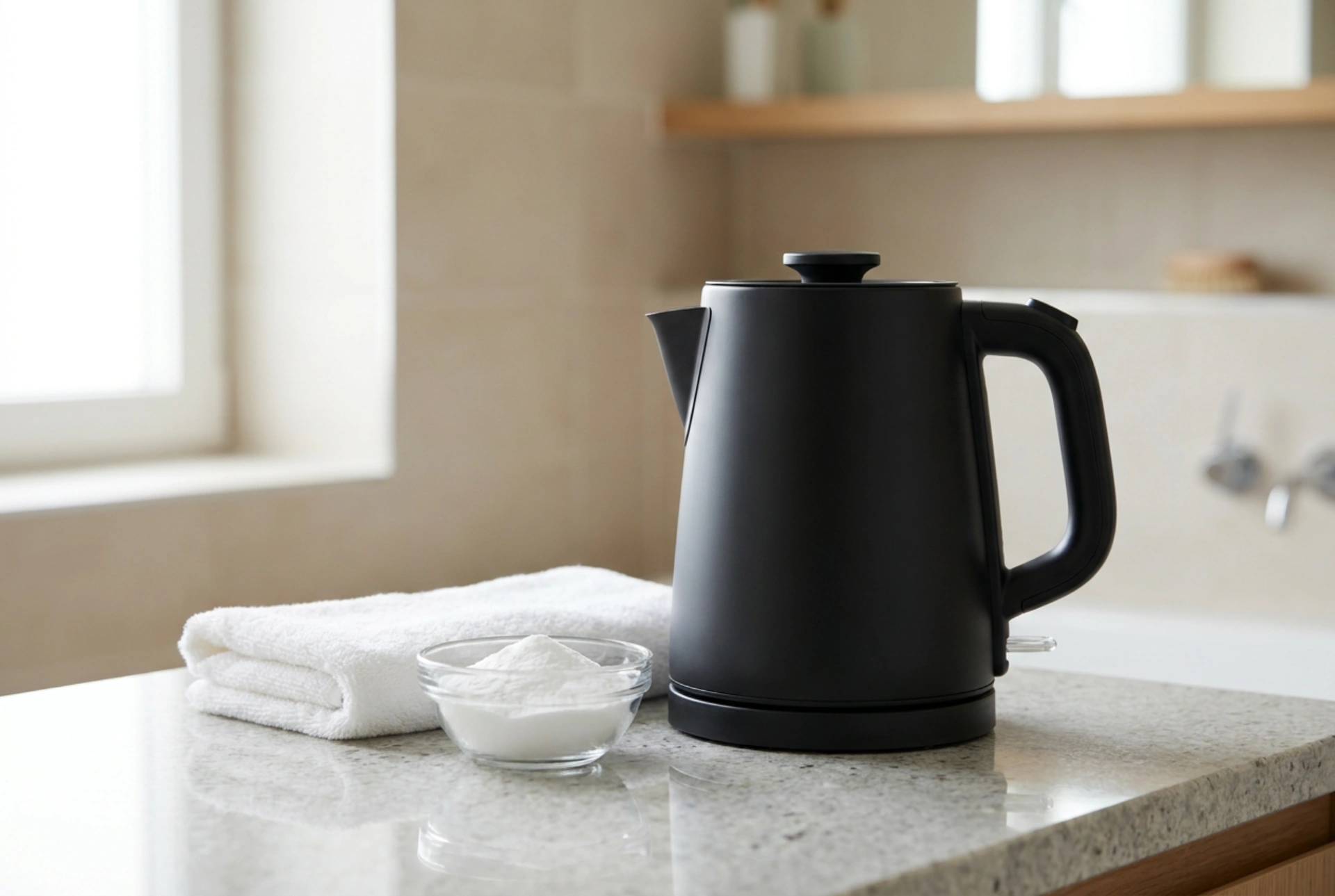


Maintaining the sleek appearance of a black gas kettle requires understanding how heat, mineral deposits, and grease interact with its exterior coating and interior metal.
Understanding the Surface Chemistry of Black Kettles
Most modern black stovetop kettles feature either a matte powder-coated finish or an enamel layer over stainless steel or aluminum. These materials are highly sensitive to abrasive particles and aggressive chemical reactions. Standard abrasive sponges, wire wool, or harsh scouring powders will micro-scratch the dark surface, turning a rich matte black into a dull, greyish, scratched mess. When cleaning the exterior, the goal is to dissolve grease and carbon deposits chemically rather than wearing them down mechanically. This relies on selecting the right pH levels for different types of dirt.
Removing Burn Marks and Grease from the Exterior
The exterior of a gas kettle is constantly exposed to vaporized cooking oils from nearby pans, which then bake onto the surface under the high heat of the gas flame. This creates polymerized grease layers and carbonized burn marks.
- The Weak Base Approach (Baking Soda Paste): For light carbon deposits and grease, sodium bicarbonate (baking soda) acts as an excellent, mild cleaning agent. When mixed with a small amount of warm water to form a thick, smooth paste, it provides a very gentle physical scrub that dissolves organic compounds without scratching the coating. Apply the paste with a soft microfiber cloth, using circular motions without applying heavy pressure. Let it sit for ten minutes to soften the grease before wiping it clean.
- The Surfactant Technique: For stubborn, sticky grease films, a highly concentrated solution of neutral dishwashing liquid in warm water is highly effective. Surfactant molecules surround the hydrophobic grease particles, suspending them in water so they can be easily rinsed away. Always rinse with lukewarm water and dry immediately with a clean microfiber towel to prevent water spots.
Descaling the Interior: Neutralizing Calcium Carbonate
Hard water contains dissolved calcium and magnesium hydrogencarbonates. When heated inside the kettle, these minerals undergo a thermal decomposition reaction, forming insoluble calcium carbonate (limescale) on the interior floor and walls. This chalky layer acts as an insulator, reducing the thermal efficiency of the kettle and causing it to heat unevenly on the gas burner.
The Citric Acid Method
To dissolve calcium carbonate, you need a mild acid that reacts with the scale to create water-soluble salts and carbon dioxide gas. Citric acid is preferred over acetic acid (white vinegar) because it is highly effective, odorless, and less aggressive to any internal rubber seals.
- Fill the kettle with water until all visible limescale is fully submerged.
- Add two tablespoons of citric acid powder to the water.
- Bring the solution to a gentle simmer on the gas stove, then immediately turn off the heat. Do not let it boil over, as the acidic water can damage the exterior black coating.
- Allow the hot solution to sit for 15 to 30 minutes while the acid breaks down the mineral bonds.
- Pour out the liquid, rinse the interior thoroughly several times with cold water, and boil one batch of fresh water to discard before regular use.
Preventing Heat Discoloration and Water Spots
Preventative care is essential for maintaining the deep black finish of your kettle. Always adjust the gas burner flame so that it does not extend beyond the base of the kettle; flames licking up the sides will scorch the black finish, causing permanent thermal discoloration that cannot be cleaned. Additionally, always dry the exterior of the kettle thoroughly after every wash. Leftover tap water will evaporate, leaving behind mineral rings that are highly visible on black surfaces.