

Maintaining the optimal flavor of your espresso requires immediate removal of residual coffee oils and micro-particles from the brewing group and portafilter after every extraction.
The Chemistry of Coffee Residue and Thermal Stability
As hot water passes through the coffee puck under high pressure, it extracts soluble solids, insoluble micro-fines, and volatile lipids. Once the brewing cycle ends, a small amount of this mixture remains trapped against the shower screen and within the internal pathways of the group head. If left untreated, these lipids oxidize rapidly when exposed to air and high temperatures, turning rancid. During the subsequent brewing cycle, the fresh water dissolves these oxidized compounds, introducing a harsh, bitter flavor to your next espresso. Furthermore, keeping the portafilter locked into the group head with a spent coffee puck cools down the extraction system, disrupting the thermal stability required for consistent brewing.
The Immediate Post-Brew Flush (The Purge)
The cleaning process begins the moment you slide the cup away from the machine. Follow this sequence to prevent particle buildup:
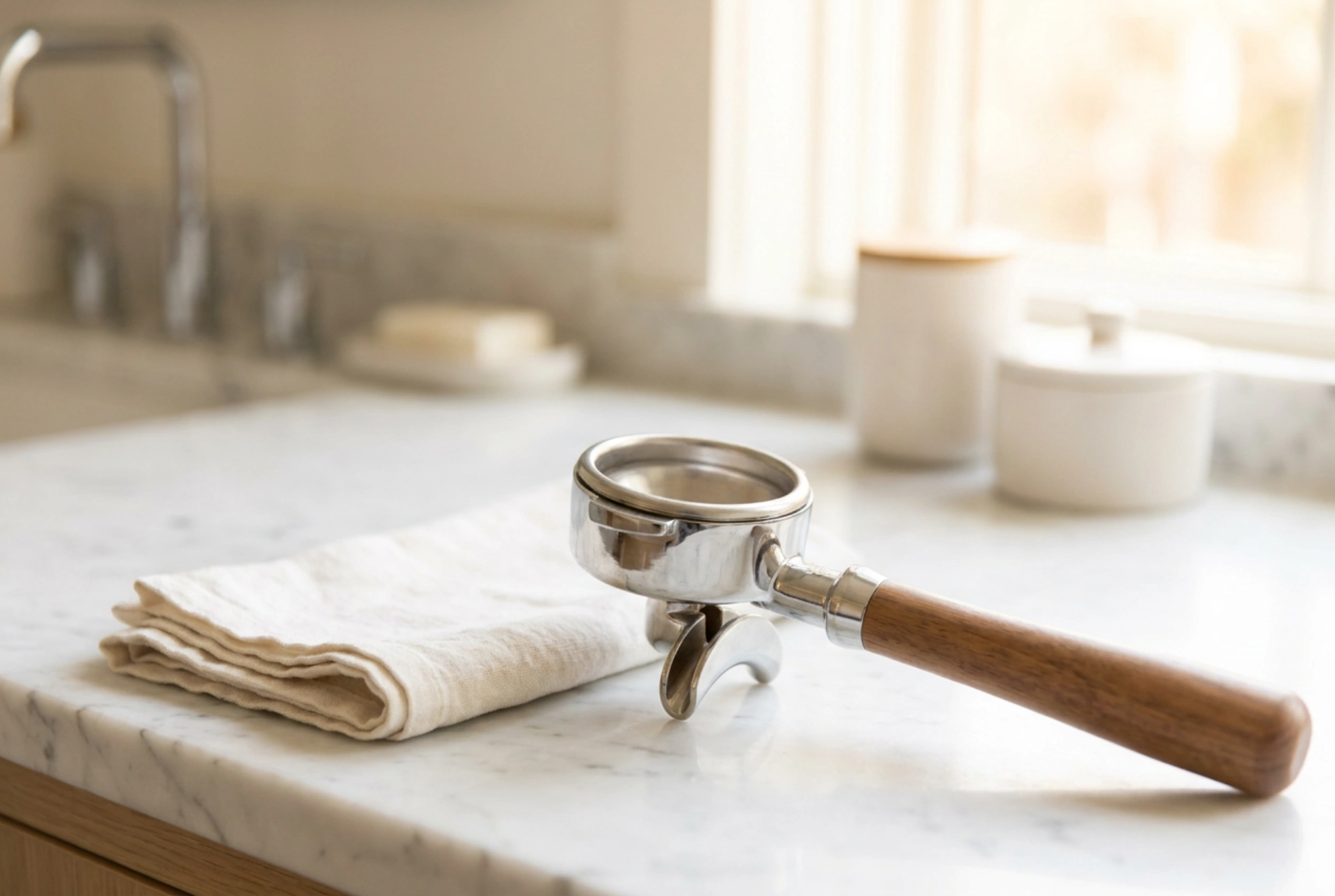
- Remove the portafilter immediately: Knock the spent coffee puck into a knock box. Leaving the hot, wet puck in the group head bakes the coffee solids onto the shower screen.
- Run a brief water flush: Start the water flow through the empty group head for three to five seconds. This thermal purge washes away loose coffee grounds from the shower screen and dispersion plate, while simultaneously stabilizing the temperature of the group head.
- Wipe the basket dry: Use a clean, dry microfiber cloth to wipe the inside of the portafilter basket. Removing moisture and remaining oils ensures that the next fresh coffee dose does not begin premature extraction or channel during tamping.
The Backflushing Technique with a Blind Filter
To clean the internal three-way solenoid valve that diverts excess water into the drip tray, a daily water backflush is essential. This mechanical process forces water backward through the group head assembly.
Step-by-Step Backflushing Protocol
Ensure your machine features a three-way pressure release valve before proceeding with this method:
- Insert the blind basket: Replace the standard filter basket in your portafilter with a solid, hole-free disc (often called a blind filter).
- Lock and pressurize: Insert the portafilter into the group head and turn on the pump. Let pressure build for approximately five to eight seconds. You will hear the pump quiet down as pressure maximizes.
- Release the pressure: Turn off the pump. The sudden pressure release forces water backward through the dispersion screen and out of the discharge tube into the drip tray, carrying hidden coffee oils with it.
- Repeat: Perform this water-only cycle three to five times until the discharge water running into the drip tray is completely clear.
Weekly Chemical Cleaning for Deep Degreasing
While water flushes remove loose particulates, they cannot fully dissolve polymerized coffee oils. Once a week, use a specialized oxygen-based cleaning powder designed for espresso machines. Place half a teaspoon of the cleaning agent into the blind filter basket and repeat the backflushing cycle five times, running the pump for ten seconds each time. After releasing the chemical solution, thoroughly rinse the group head by running plain water through the portafilter several times, ensuring no chemical residues remain to contaminate future extractions.