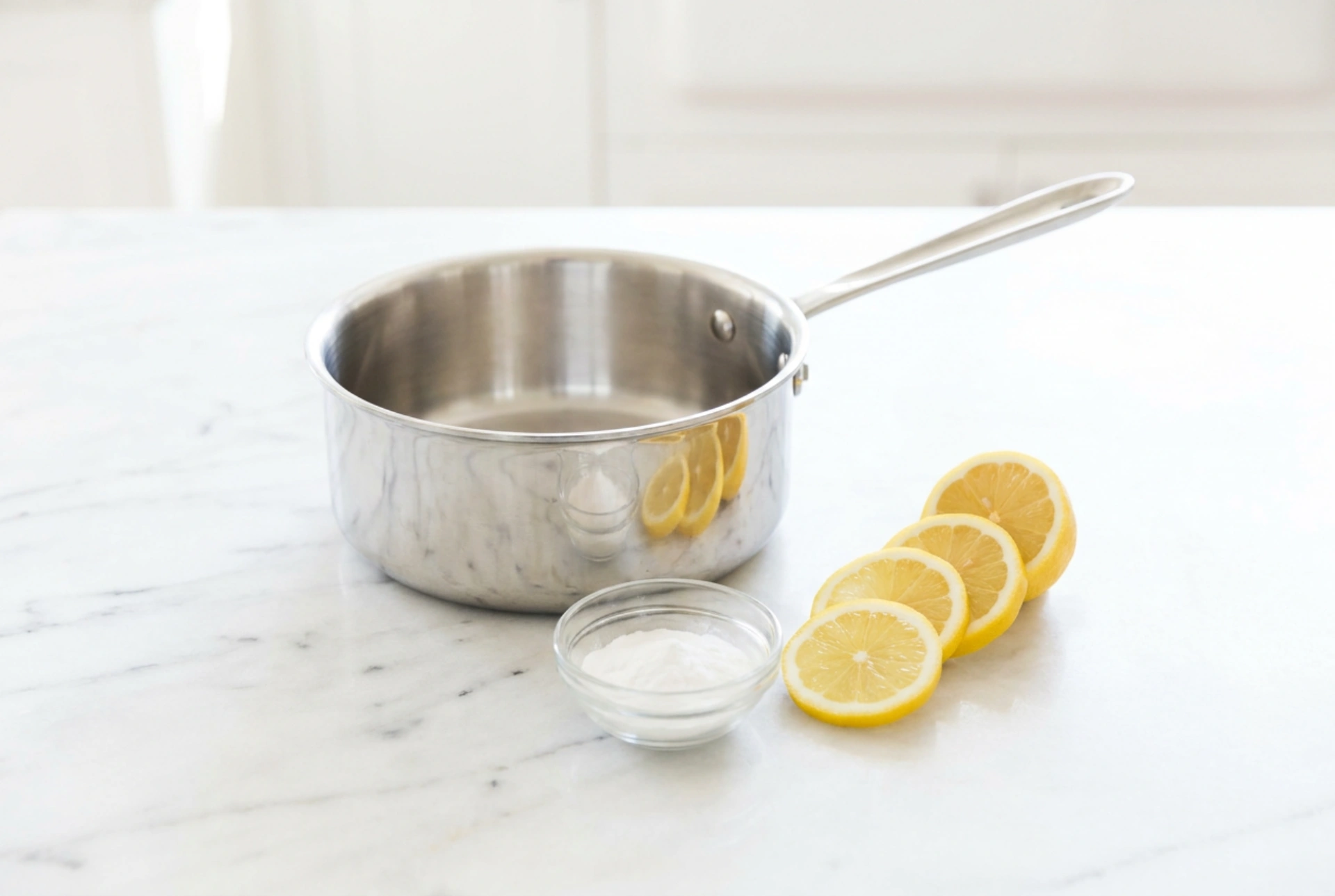


Restoring a scorched pot to its original shine does not require aggressive scrubbing or abrasive metal pads that permanently scratch the surface.
The Chemistry of Scorch Marks
When food burns, organic proteins, carbohydrates, and fats undergo pyrolysis, bonding tightly to the metal alloy of your cookware. Forcefully scraping these deposits damages the protective passive layer of stainless steel, making future food stick even faster. Instead of physical force, you should use thermal expansion and chemical dissolution to break down the carbonized crust.
The Alkaline Boil Method
For carbonized, protein-rich, or acidic food burns, sodium bicarbonate (baking soda) is highly effective. As a mild alkali, it neutralizes acidic compounds and softens tough organic matrices without reacting with stainless steel.
- Fill the pot with enough water to completely submerge the burnt residue by at least two centimeters.
- Add two tablespoons of sodium bicarbonate and stir gently to dissolve.
- Place the pot on the stovetop and bring the solution to a gentle simmer over medium heat.
- Allow the mixture to bubble for ten to fifteen minutes. The heat expands the metal slightly while the alkaline solution penetrates the loosened carbon structure.
- Remove from heat, let it cool to a safe handling temperature, and gently wipe the softened residue away using a non-scratch nylon sponge.
The Acidic Dissolution Method
If the burn is primarily mineral-based, sugary, or highly alkaline, an organic acid like acetic acid (white vinegar) works best to break the chemical bonds holding the crust to the metal.
- Pour equal parts water and white vinegar into the scorched vessel, ensuring the burnt areas are covered.
- Bring the liquid to a boil on the stove. This releases the tight grip of the scorched sugars on the metal floor.
- For extremely stubborn crusts, remove the boiling pot from the heat source and stir in two tablespoons of sodium bicarbonate. The resulting effervescent reaction releases carbon dioxide gas, which physically lifts the softened particles from the surface.
- Allow the mixture to fizz and settle for ten minutes before emptying and wiping clean with a soft microfiber cloth.
Restoring the Chromium Oxide Layer
Once the burnt food is removed, stainless steel can sometimes exhibit a rainbow-colored heat tint or cloudy white mineral deposits. This is a cosmetic alteration of the protective chromium oxide layer. To restore the uniform metallic finish, apply a small amount of citric acid powder or lemon juice directly to a damp cloth. Gently rub the affected area in a circular motion; the low pH neutralizes the mineral haze and restores the passive protective layer of the metal. Rinse thoroughly with clean water and dry immediately to prevent water spots.