

Maximizing the efficiency of a compact refrigerator with a bottom freezer requires a strategic understanding of thermodynamics and food preservation chemistry.
Understanding the Microclimates Inside Your Appliance
Every refrigerator operates on the principle of convection, where cold air sinks and warm air rises. In a compact appliance with a bottom-mounted freezer, this temperature gradient is particularly pronounced. The coldest zone is located directly above the freezer compartment, making it the ideal location for highly perishable items such as fresh meats, poultry, and fish. The upper shelves maintain a slightly warmer, highly stable temperature, which is optimal for dairy products, ready-to-eat meals, and leftovers.
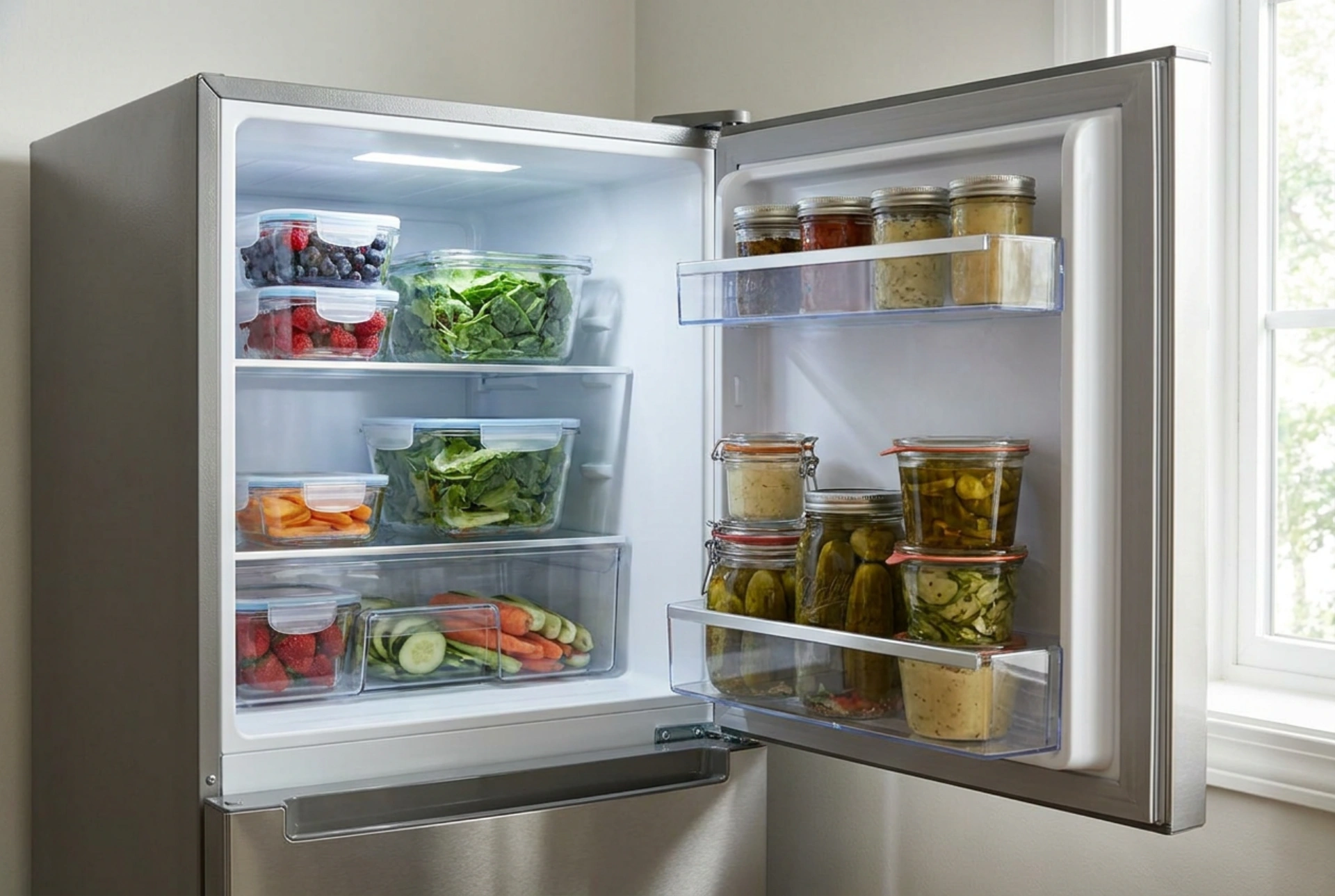
Door bins experience the most significant temperature fluctuations due to the frequent opening and closing of the appliance. Consequently, this area should never be used to store fresh milk or highly perishable goods. Instead, utilize the door for items containing natural preservatives, such as acidic condiments, fermented sauces, and high-sodium preserves, which can withstand minor thermal changes without spoiling.
The Chemistry of Ethylene and Moisture Control
Storing fresh produce in a confined space requires careful management of ethylene gas and moisture levels. Many fruits, such as tomatoes, apples, and avocados, naturally release ethylene gas as they ripen. When stored in close proximity to ethylene-sensitive vegetables like leafy greens, broccoli, and carrots, this gas accelerates cellular breakdown, leading to premature decay and yellowing.
To prevent this chemical reaction in a small refrigerator, physical separation is essential. Keep ethylene-producing fruits on a designated shelf in sealed, reusable containers, while keeping sensitive vegetables in the crisper drawer. Additionally, excess moisture is the primary catalyst for mold growth. Lining storage containers with reusable, dry cotton cloths helps absorb transpired moisture, maintaining the ideal relative humidity for leafy greens.
Efficient Stacking and Container Geometry
In a limited physical footprint, round storage containers create dead space and restrict airflow. Switching to square or rectangular borosilicate glass containers allows you to utilize every square centimeter of shelf space. Glass is highly recommended over plastic because it possesses superior thermal conductivity, allowing food to cool down faster and maintain a consistent temperature, which inhibits bacterial proliferation.
When organizing, implement the physical principle of first-in, first-out (FIFO). Arrange containers in columns based on their expiration dates, with the oldest items positioned at the front. Ensure a gap of at least two centimeters between containers and the interior walls of the refrigerator. This gap is vital to maintain free air convection; blocking the air vents forces the compressor to work harder, leading to localized freezing and increased energy consumption.
Optimizing the Bottom Freezer Compartment
Bottom freezers are highly efficient because cold air naturally remains at the base of the appliance. To maximize this space, transition from bulky original packaging to flat-freezing techniques. Place liquids, stews, or pre-portioned ingredients into reusable silicone bags, squeeze out all excess air to prevent oxidation and freezer burn, and lay them completely flat on a metal baking sheet to freeze.
Once frozen solid, these flat packages can be stacked vertically like books in a filing cabinet. This method not only triples the usable volume of the freezer drawer but also ensures rapid thawing, preserving the structural integrity and cellular wall structure of the food when it is defrosted.