

Cleaning a portable cool box after transport is essential to prevent the growth of bacteria, mold, and persistent odors that thrive in sealed, damp environments.
Understanding the Cool Box Environment
Cool boxes rely on insulated double-wall structures, typically made of polyurethane foam encased in polyethylene or polypropylene plastics. While these materials are excellent thermal barriers, their surfaces can absorb organic compounds and odors if left uncleaned. When food or liquids spill inside, the airtight seal of the closed lid creates a high-humidity microclimate. This dark, damp, and nutrient-rich environment is ideal for bacterial proliferation and mold sporulation, especially as the internal temperature rises after the ice packs melt.
Why Immediate Action is Necessary
Allowing food residues to sit inside the cooler leads to chemical breakdown. Fats rancidify, proteins decompose, and sugars ferment. These processes release volatile organic compounds (VOCs) that penetrate the microscopic pores of the plastic liner. Once these odors are absorbed into the polymer matrix, removing them becomes significantly more difficult. Prompt cleaning prevents this chemical absorption and ensures the longevity of the cooler's insulation lining.
The Multi-Step Cleaning Protocol
To effectively sanitize a cool box, you must follow a systematic approach that addresses physical debris, chemical residues, and biological contaminants.
- Empty and Rinse: Remove all contents, including melted ice packs and loose debris. Rinse the interior with lukewarm water to flush out surface liquids and crumbs. Avoid extremely hot water, as rapid thermal expansion can warp the plastic lining or damage the insulation bond.
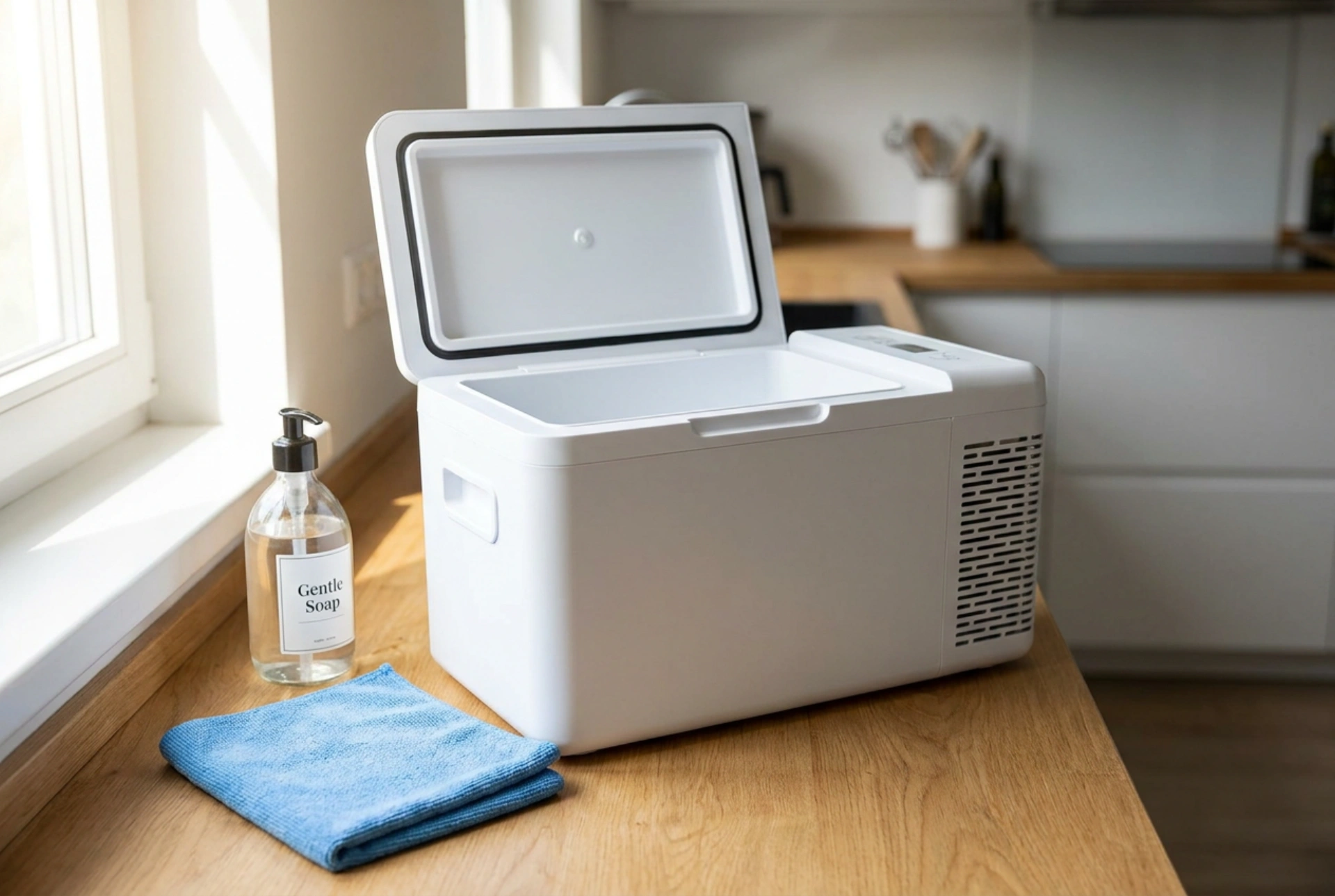
- The Surfactant Wash: Prepare a solution of warm water and a neutral, unscented dishwashing detergent. Surfactants in the detergent lower the surface tension of the water, allowing it to emulsify fats and oils left behind by food. Using a soft microfiber cloth, scrub all interior surfaces, paying special attention to the corners, drainage channels, and the rubber lid gasket.
- The Mechanical Action: Never use abrasive scrubbing pads or steel wool. These create micro-scratches in the plastic, which provide perfect hiding spots for future bacterial colonies. Stick to soft sponges or microfiber cloths that lift dirt through capillary action without degrading the surface.
Neutralizing Stubborn Odors and Mold
If the cooler has developed a musty smell or shows signs of mold, standard dish soap will not suffice. You need to employ chemical neutralizers that target the root cause of the odors.
Sodium Bicarbonate for Acidic Odors
Sodium bicarbonate (baking soda) is a mild alkali that chemically neutralizes acidic odor molecules, such as those from spoiled dairy or meat. Create a paste using three parts baking soda to one part water. Apply this paste to the stained or smelly areas, let it sit for twenty minutes to absorb the compounds, and then scrub gently before rinsing thoroughly.
Acetic Acid for Mineral Deposits and Disinfection
For mold spores and hard water deposits, a mild solution of white vinegar (acetic acid) is highly effective. Vinegar disrupts the cellular membrane of mold and bacteria. Spray a 1:1 mixture of water and vinegar inside the box, let it sit for ten minutes, and wipe it clean. This also helps dissolve any mineral film left behind by melted tap-water ice packs.
The Importance of the Gasket and Drying
The rubber or silicone gasket running along the lid is the most critical component for thermal efficiency, yet it is often the most neglected during cleaning. Food particles and moisture collect easily in the grooves of the gasket. Pull the gasket back gently and clean the channel with a soft-bristled brush dipped in the soapy solution. Rinse well and dry immediately.
The final and most crucial step is complete dehydration. Never store a cool box with the lid closed if there is any residual moisture inside. Wipe the entire unit down with a clean, dry towel and leave the lid propped open in a well-ventilated, dry area for at least twenty-four hours. Moisture sealed inside will inevitably lead to mold growth, rendering your cleaning efforts useless.