

Selecting the right window cleaning equipment requires understanding the physics of glass surfaces, capillary action, and mechanical leverage to maintain streak-free clarity with minimal effort.
The Physics of Glass Cleaning and Water Removal
To keep windows perfectly clean, you must address two main challenges: breaking down grease or environmental deposits, and removing the suspended dirty water before it evaporates. When water evaporates on a glass pane, it leaves behind dissolved minerals and dust particles, resulting in unsightly streaks. Manual squeegees and electric window vacuums use different physical principles to solve this issue.
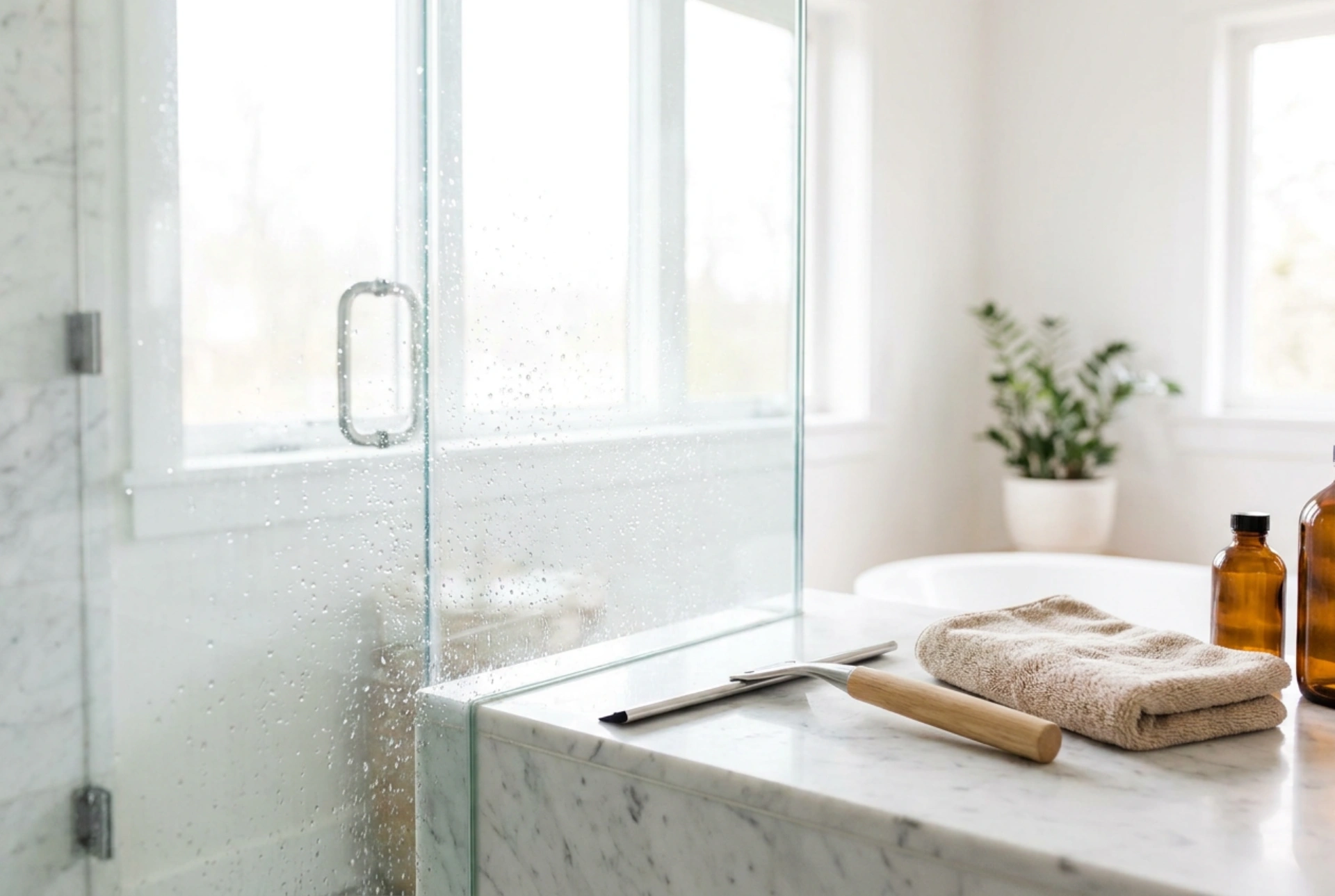
A manual squeegee relies on mechanical pressure and the flexibility of a rubber blade. The rubber must deform slightly to create a tight seal against the glass, shearing the water layer away as you pull the blade down. An electric window vacuum, on the other hand, uses suction to instantly draw the dirty liquid away from the rubber lip into a waste tank. This continuous airflow prevents the dirty film from settling back onto the glass, making it highly effective for rapid, frequent use across large glazed areas.
Evaluating Key Technical Specifications
When selecting a tool for frequent home maintenance, three technical parameters determine its efficiency and ease of use: weight distribution, suction power, and blade compound quality.
- Weight and Ergonomics: Since window cleaning involves extended overhead movement, every gram matters. A device weighing over 800 grams can quickly cause wrist fatigue. Look for balanced models where the center of gravity sits close to your hand.
- Suction Pressure: For electric models, consistent suction along the entire width of the nozzle is critical. Insufficient airflow at the edges of the blade causes water dripping, forcing you to wipe the frame repeatedly.
- Blade Material: High-grade silicone or vulcanized rubber blades adapt best to minor surface irregularities. Natural rubber is highly flexible but wears down faster when exposed to acidic cleaning agents, whereas silicone maintains its structural integrity longer.
The Correct Technique for Streak-Free Results
Even the best engineering cannot compensate for poor technique. The process of window cleaning should always follow a structured physical pattern to prevent dirty water from contaminating already cleaned sections.
Phase 1: Pre-washing and Emulsification
Apply a diluted cleaning solution of water and a surfactant to emulsify oils and loosen dust. Use a microfiber pad to distribute the liquid evenly. The mechanical action of the microfiber fibers traps the larger dirt particles, preventing them from scratching the glass during the squeegee phase.
Phase 2: The Pulling Movement
Whether using a manual blade or a vacuum device, maintain a consistent 45-degree angle relative to the glass surface. Pull the tool downward in smooth, continuous vertical strokes. If you must use horizontal strokes, work from top to bottom, overlapping each path by approximately two centimeters to ensure no water lines remain at the boundaries.
Phase 3: Edge and Frame Care
Water naturally pools near the rubber seals of the window frame due to surface tension. Use a dry microfiber cloth to wipe the very edges of the glass immediately after completing the vacuuming or squeegeeing process. This prevents capillary action from drawing dirty residue back onto the clean pane.
Maintenance and Longevity of Your Equipment
Frequent use demands regular maintenance of the cleaning device itself. The rubber blade is the most critical component; any nick, tear, or deformation in the rubber lip will immediately cause streaks. Wash the blade with warm water and a mild surfactant after every session, and store the device in a position where the rubber does not press against any hard surfaces. For electric vacuums, empty and rinse the wastewater tank thoroughly after each use to prevent microbial growth and hard water scale buildup inside the suction channel.