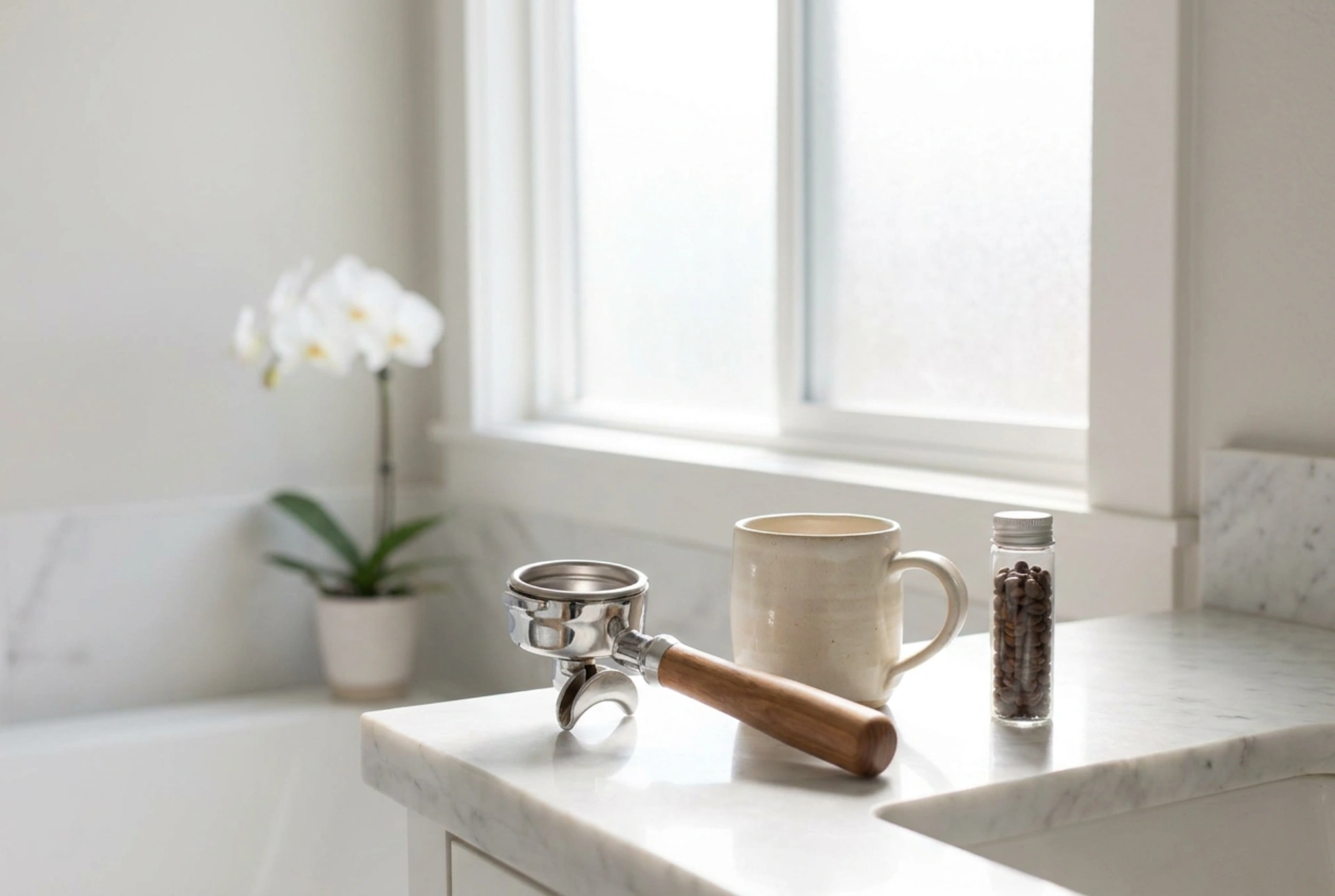


Maintaining a manual espresso machine with an integrated or standalone grinder is essential for preserving both the machine's mechanical longevity and the flavor profile of your daily coffee.
The Chemistry of Coffee Residues and Thermal Impact
Every time espresso is extracted, hot water under high pressure forces essential oils, lipids, and micro-particles out of the coffee grounds. These organic compounds deposit onto the metal surfaces of the portafilter, the shower screen inside the group head, and the basket mesh. When exposed to continuous heat, these trapped coffee oils oxidize rapidly, turning rancid and producing bitter, burnt flavors in subsequent extractions. Regular removal of these deposits prevents chemical degradation from altering your espresso flavor profile.
The Daily Grinder Routine: Preventing Oil Buildup
Coffee beans contain natural lipids that migrate to the surface during the roasting process, especially in darker roasts. These oils coat the steel burrs, the grinding chamber, and the discharge chute, attracting fine coffee dust that hardens over time. To prevent this, empty the bean hopper at the end of each day and run the grinder for a few seconds to clear any remaining beans from the chamber. Use a dry, stiff-bristled brush to sweep coffee particles out of the chute and around the burrs, as moisture in this area must be avoided to prevent rust and clumping.
Cleaning the Group Head and Portafilter after Every Shot
Accumulated coffee oils inside the group head can clog the delicate holes of the shower screen, causing uneven water distribution and channeling through the coffee puck. After every extraction, perform these steps immediately:
- Knock the spent coffee puck into a knock box and wipe the basket completely dry with a dedicated microfiber cloth to remove residual oils and moisture.
- Flush a short burst of hot water through the group head to wash away loose coffee particles stuck to the shower screen.
- Wipe the rubber gasket inside the group head with a damp cloth to prevent coffee grounds from baking onto the seal, which eventually compromises the pressure seal during extraction.
The Backflushing Process: Daily Deep Rinse
At the end of each day, perform a water-only backflush to clear the internal three-way solenoid valve. This valve diverts excess pressure and water away from the puck after extraction, pulling fine coffee oils back into the internal plumbing. Insert a blind metal filter basket into your portafilter, lock it into the group head, and run the pump for ten seconds. Release the pressure, repeat this cycle five times, and then remove the portafilter to flush any loosened particles out of the group. This simple routine prevents the internal valves from sticking or leaking.
Sanitizing the Steam Wand
Milk contains proteins and fats that coagulate instantly when exposed to the high temperatures of a steam wand. If left uncleaned, milk residue bakes onto the stainless steel exterior and can be drawn inside the wand as the metal cools and creates a vacuum. Purge the steam wand for two seconds immediately before and after foaming milk to clear internal pathways. Wipe the exterior wand immediately with a clean, damp cloth dedicated solely to this task to prevent bacterial growth and calcification of the steam holes.