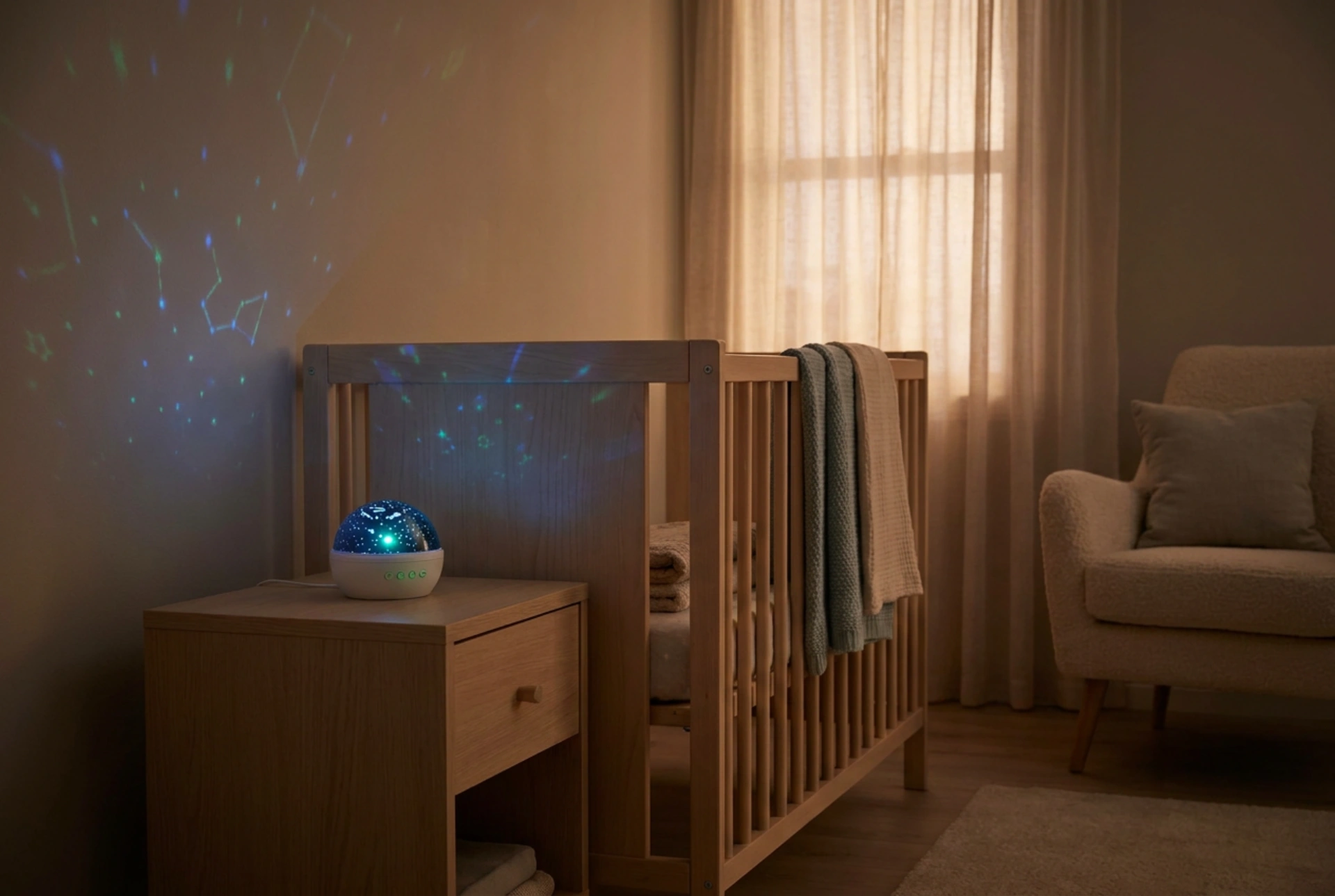


Integrating a picture projector into a child's bedroom creates a soothing environment that aids sleep transition and visual development through controlled light physics.
Understanding Light Intensity and Projection Distances
The successful operation of a wall or ceiling projector relies entirely on the inverse-square law of light. As the distance between the projector lens and the projection surface doubles, the light spreads over four times the area, reducing the brightness to one-quarter of its original intensity. In a child's room, positioning the device between 1.5 to 2.5 meters from the target wall or ceiling ensures optimal contrast without causing glare.
To achieve sharp focus, adjust the focal ring of the lens. The physics of optical projection require the lens to align precisely with the focal length of the light source. If the image appears blurry, slowly rotate the outer bezel until the edges of the projected shapes align sharply with the physical surface. Keep the projection angle perpendicular to the wall to prevent keystoning, which distorts the image geometry.
Managing the Circadian Rhythm with Color Temperatures
Human biological clocks are sensitive to light wavelengths, regulated by melanopsin receptors in the eyes. When selecting slides or color settings on the projector, the choice of spectrum is critical for sleep preparation:
- Red and Amber Wavelengths: These long-wavelength spectrums (600 to 700 nanometers) do not suppress melatonin production, making them ideal for pre-sleep routines and night light settings.
- Blue and Cool White Wavelengths: Short-wavelength light (450 to 480 nanometers) mimics daylight, actively suppressing melatonin and promoting alertness. Avoid these colors in the two hours leading up to bedtime.
Thermal Dynamics and Device Placement
Modern projectors use LED light sources because they produce significantly less thermal energy than older incandescent lamps. However, the driver circuitry inside the device still generates heat. Proper convective cooling is essential to prevent plastic degradation and prolong the life of the internal optical elements.
Place the projector on a flat, rigid surface such as a wooden shelf or nightstand. Never position the operating device on soft materials like bedding, carpets, or plush toys, which block the ventilation grates. Blocking airflow causes heat build-up, which can warp the internal film slides, degrade the lens coating, or trigger automatic thermal shutdown safety protocols.
Angle, Alignment, and Angle of Incidence
Achieving a clear projection without distracting shadows requires understanding the angle of incidence. Ensure the path of light is clear of high-traffic zones and tall furniture. Positioning the projector slightly higher, such as on a stable wall shelf at a height of 1.5 meters, allows the light beam to pass over the head of the bed. This setup prevents direct eye contact with the light beam, protecting sensitive eyes, while casting the images onto the ceiling where they are easily visible from a lying position.