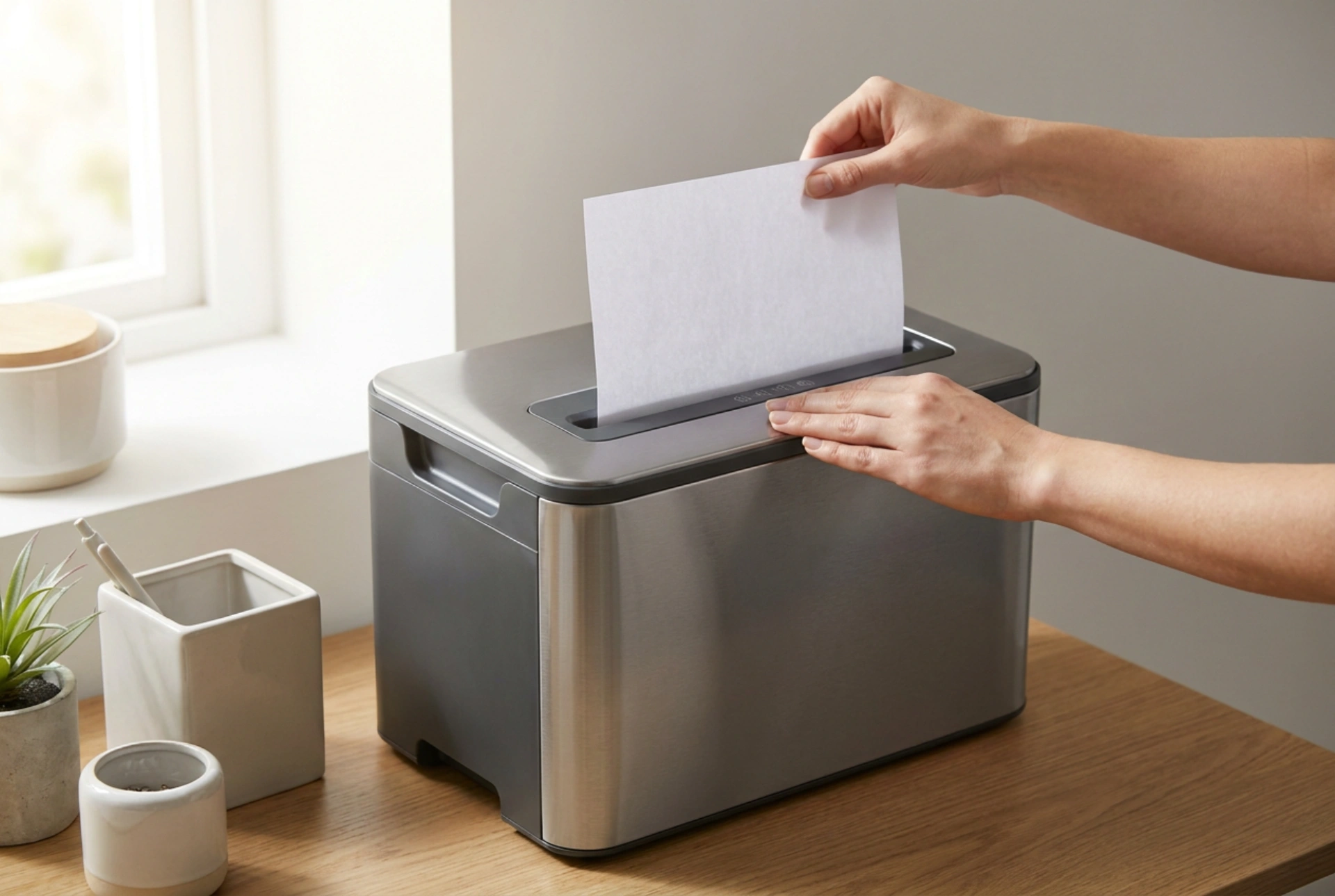


A compact home paper shredder is a vital tool for document security, but without regular maintenance, friction and paper dust will inevitably cause frustrating jams and motor strain.
The mechanics of shredder friction and dust accumulation
Inside a home shredder, heavy-duty steel cutting rollers rotate against each other at high speeds with incredibly tight tolerances. As paper passes through these cutting shafts, it creates micro-friction. This friction generates heat and shears off microscopic cellulose fibers, creating a fine paper dust. Over time, this dust mixes with existing lubricants, forming a sticky, abrasive paste that settles between the blades. Without intervention, this buildup increases resistance, forces the motor to draw more electrical current, and eventually leads to catastrophic jams or thermal overload shutdown.
The science of lubrication: Liquid oil versus lubricating sheets
To reduce friction and keep the cutting cylinders spinning freely, regular lubrication is essential. You must never use aerosol penetrating lubricants or standard vegetable oils, as these can gum up the mechanism or even present a combustion hazard due to low flashpoints. Instead, rely on specialized, high-flashpoint vegetable-based shredder lubricants. There are two primary methods for applying this protection:
- Direct oiling method: Apply the lubricant in a zigzag pattern directly onto a sheet of paper. Allow the paper to absorb the liquid for a few seconds, then feed it through the shredder in normal operating mode. Once shredded, run the machine in reverse for ten seconds to distribute the oil evenly across the entire width of the cutting shafts.
- Lubricant sheets: These pre-packaged sheets contain a measured amount of oil sealed between two layers of paper. Feeding them through the machine releases the oil directly onto the blades without any liquid mess, ensuring a precise application.
Optimizing feed capacity and mechanical load
Most home shredder jams occur because users push the machine to its theoretical maximum sheet capacity. A shredder rated for six sheets of standard eighty-gram paper should ideally only be fed four sheets at a time. The thickness of the paper, its moisture content, and the presence of adhesive residues (from envelopes or labels) significantly increase the physical load on the motor. To prevent structural strain on the gears, always feed sheets straight into the center of the entry slot, avoiding diagonal angles that can bunch the paper and cause uneven torque across the drive shaft.
Thermal duty cycles and cooling phases
Small household shredders are designed for light, intermittent duty. Unlike heavy industrial machines, they lack active cooling fans and rely on passive heat dissipation. Typically, a home shredder has a duty cycle of three minutes of continuous shredding followed by a cool-down period of twenty to thirty minutes. Exceeding this duty cycle degrades the internal gear lubricants and softens plastic drive gears, eventually leading to stripped teeth. To extend the lifespan of your machine, pace your shredding tasks and allow the motor to cool down before it triggers the automatic thermal safety switch.
Clearing minor blockages safely
If a minor jam does occur, avoid forcing more paper through the machine. Unplug the unit from the wall outlet immediately to eliminate any electrical risk. Switch the control to reverse mode, plug it back in, and gently pull the paper sheet upward as the blades rotate backward. If bits of paper remain wedged between the cutting teeth, use a pair of long-nose pliers or tweezers to carefully pull the fragments out from the underside of the cutter head, taking extreme care not to scratch the steel blades.