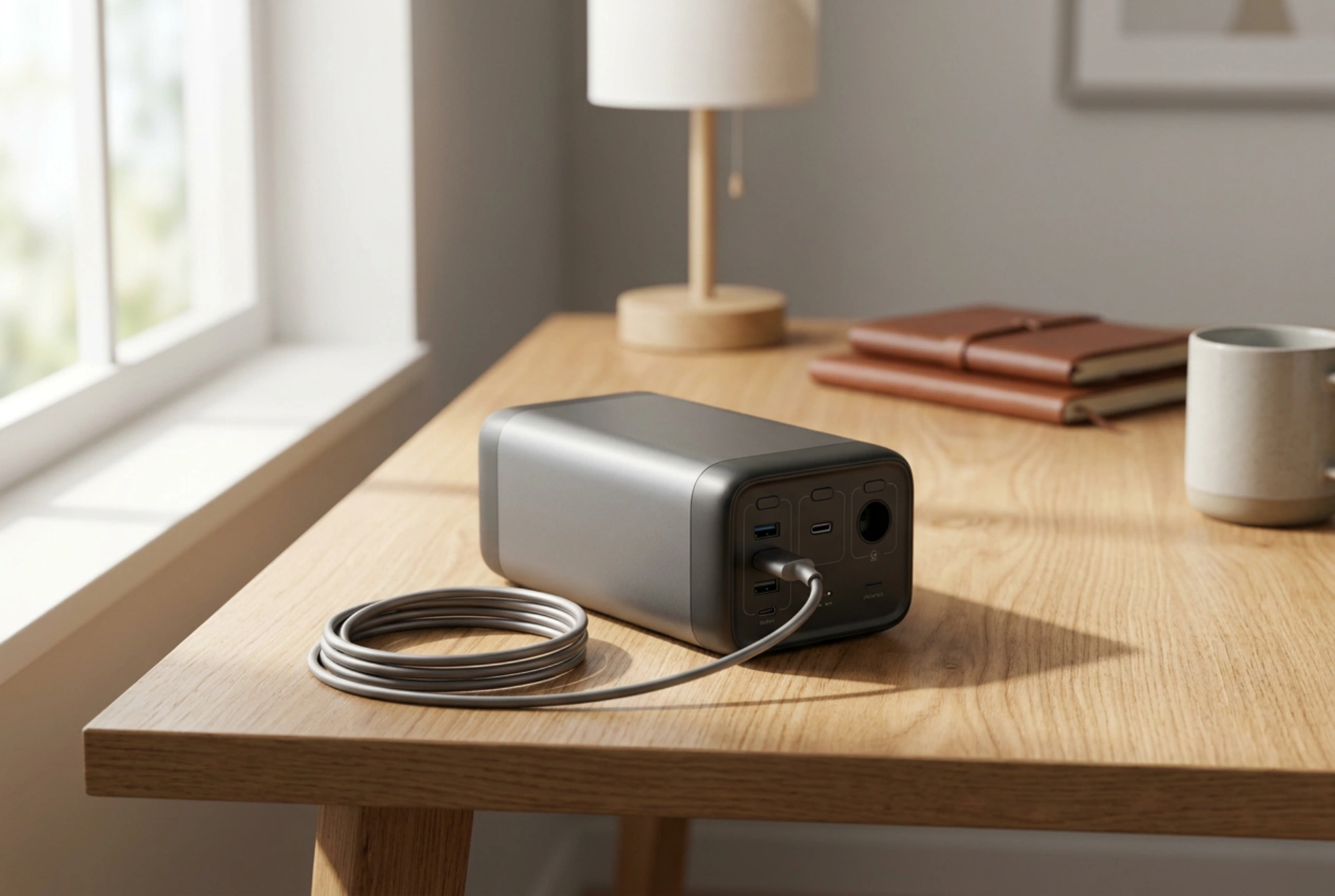


Portable power stations and heavy-duty power banks equipped with 12V cigarette lighter sockets offer incredible versatility, but managing their electrical load is critical to prevent system shutdowns or damage.
Understanding the Physics of the 12V DC Socket
The cigarette lighter socket, historically designed for heating elements in vehicles, operates on direct current (DC) and typically outputs between 12 and 13.6 volts. In portable power banks, this port is connected to an internal battery management system (BMS) that monitors voltage, current, and temperature. Unlike wall outlets in a home, DC sockets are highly sensitive to amperage spikes. Most portable power banks limit the output of their 12V port to 10 amperes (A). Using Ohm's law, where power (Watts) equals voltage (Volts) multiplied by current (Amps), a 12V port rated at 10A can deliver a maximum continuous output of approximately 120 Watts. Exceeding this threshold triggers the BMS protection, instantly cutting off power to prevent thermal runaway or fuse failure.
Calculating Load and Managing Inrush Current
Before plugging any appliance into your power bank, you must verify its electrical specifications. Check the rating plate on the appliance for the power consumption in Watts or Amps. If a device requires 150W, it cannot be run safely from a standard 120W DC port, even if the power bank's AC inverter output is rated much higher. Another crucial factor is inrush current—often called surge power. Devices with inductive loads, such as portable refrigerators, compressor pumps, or cooling fans, require significantly more energy to start their motors than they do to run continuously. A 60W portable fridge might spike to 150W for a fraction of a second during startup. If this spike exceeds the maximum surge limit of the DC port, the power bank will shut down to protect its internal circuitry.
Step-by-Step Connection Protocol
To ensure a stable connection and prevent overloading, always follow a systematic order of operations. First, ensure the power bank is switched off. Inspect the plug of the 12V appliance and the socket of the power bank for any dust, oxidation, or debris; high contact resistance generates localized heat, which drops voltage and artificially inflates amperage draw. Insert the plug firmly into the socket; a loose fit can cause micro-arcing and trigger safety shutdowns. Turn on the power bank's DC output button first, allowing the internal voltage to stabilize. Finally, turn on the connected appliance. If you are operating multiple devices via a multi-port splitter, activate them one by one, starting with the highest-draw appliance first, to distribute the startup spikes over time.
Preventing Thermal Build-Up and Voltage Drop
Heat is the primary enemy of DC power transmission. Standard cigarette lighter plugs rely on physical spring tension to maintain electrical contact. Over time, these springs can weaken, leading to a loose connection that increases resistance. According to Joule's first law, heat generated is proportional to the square of the current multiplied by the resistance. If the connection feels hot to the touch after ten minutes of operation, immediately power down the system. To minimize resistance and voltage drop, use thick-gauge copper wiring (ideally 14 AWG or thicker) and keep the cable length between the power bank and the appliance as short as possible. Never coil excess cable while in use, as this can create electromagnetic induction and trap heat.