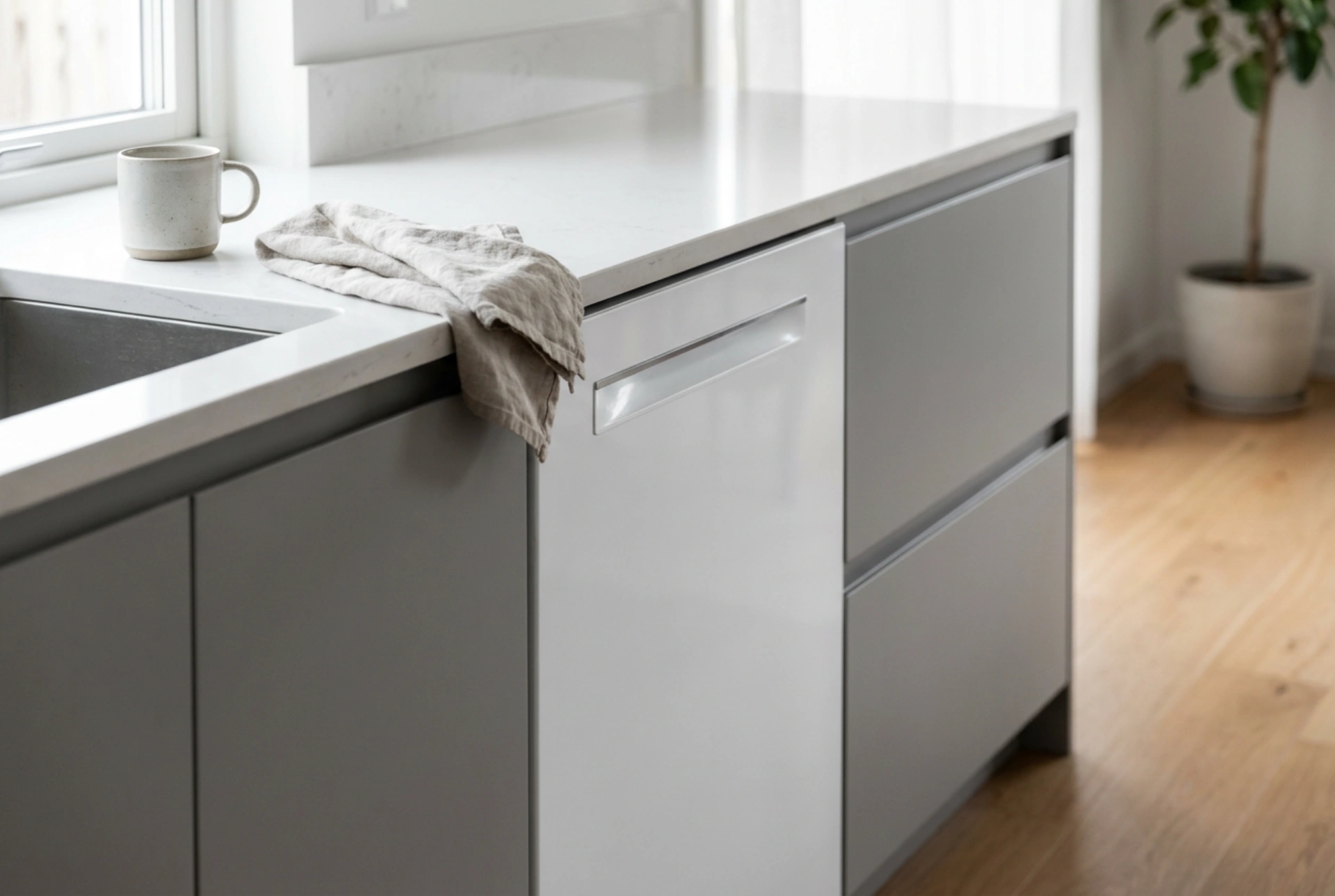


Fitting a freestanding dishwasher beneath a standard kitchen worktop requires careful consideration of physical clearances, thermal dynamics, and moisture management to protect your cabinetry and ensure optimal appliance performance.
Thermodynamics and Ventilation: Why Clearances Matter
Unlike fully integrated models designed with custom ventilation pathways, freestanding dishwashers release heat and moisture differently. During the drying phase, most models employ condensation drying, where moisture condenses on the cooler stainless-steel inner walls. This process generates significant ambient heat that radiates from the outer metal casing of the appliance. Without adequate surrounding airspace, this heat accumulates, potentially overheating the dishwasher's internal electrical components, increasing energy consumption, and degrading the surrounding cabinet materials.
Furthermore, air must circulate to carry away residual humidity. If a freestanding unit is wedged too tightly into a cabinet recess, stagnant moist air can become trapped. This trapped humidity often leads to localized mould growth on adjacent wooden panels or causes the adhesive on laminated cabinetry edges to fail over time.
Essential Clearance Dimensions for Safe Operation
To ensure adequate airflow and prevent mechanical interference, you must observe specific clearance zones on all sides of the appliance:
- Rear Clearance (Hoses and Airflow): Leave at least 50 mm of space between the back of the dishwasher and the wall. This space prevents the water inlet, drain hoses, and power cable from kinking or crushing, which can restrict water flow or create electrical hazards. It also forms the primary vertical channel for rising warm air.
- Side Clearance (Acoustics and Thermal Isolation): Maintain a gap of 3 to 5 mm on both sides. This minor gap prevents the dishwasher from vibrating directly against adjacent kitchen carcasses. Direct contact can amplify the operating noise of the wash cycles and transfer mechanical strain to your cabinetry joints.
- Top Clearance (Worktop Protection): Most freestanding dishwashers have a removable top lid, reducing their height from approximately 850 mm to 815-820 mm to fit beneath standard 850-900 mm high worktops. Ensure there is a 5 to 10 mm gap between the top metal plate of the dishwasher and the underside of the worktop to facilitate horizontal heat dissipation.
Moisture Protection: Safeguarding Your Worktop
When the dishwasher door is opened at the end of a hot wash cycle, a sudden plume of hot, saturated steam escapes. If your worktop is made of solid timber, laminate, or particleboard, this steam poses a significant risk. Over time, repeated exposure to steam causes wood fibres to swell and laminate edges to peel.
To prevent this structural damage, install a self-adhesive aluminium vapour barrier foil on the underside of the worktop directly above the dishwasher door opening. This foil acts as an impermeable shield, deflecting the moisture away from the vulnerable wood and forcing it to dissipate into the wider room volume. Solid stone, quartz, or composite worktops are chemically inert and highly water-resistant, meaning they do not strictly require this vapour shield, though it remains a recommended practice to protect the supporting cabinet joints.
Mechanical Stability and Levelling
The mechanical efficiency of a dishwasher depends heavily on it being perfectly level. Modern units feature adjustable screw-in feet at the base. Adjusting these feet serves a dual purpose: it stabilises the machine to prevent rocking during high-speed spray arm rotations, and it allows you to raise the unit to close the gap beneath the worktop, securing it against tipping forward when heavy, loaded racks are pulled out.
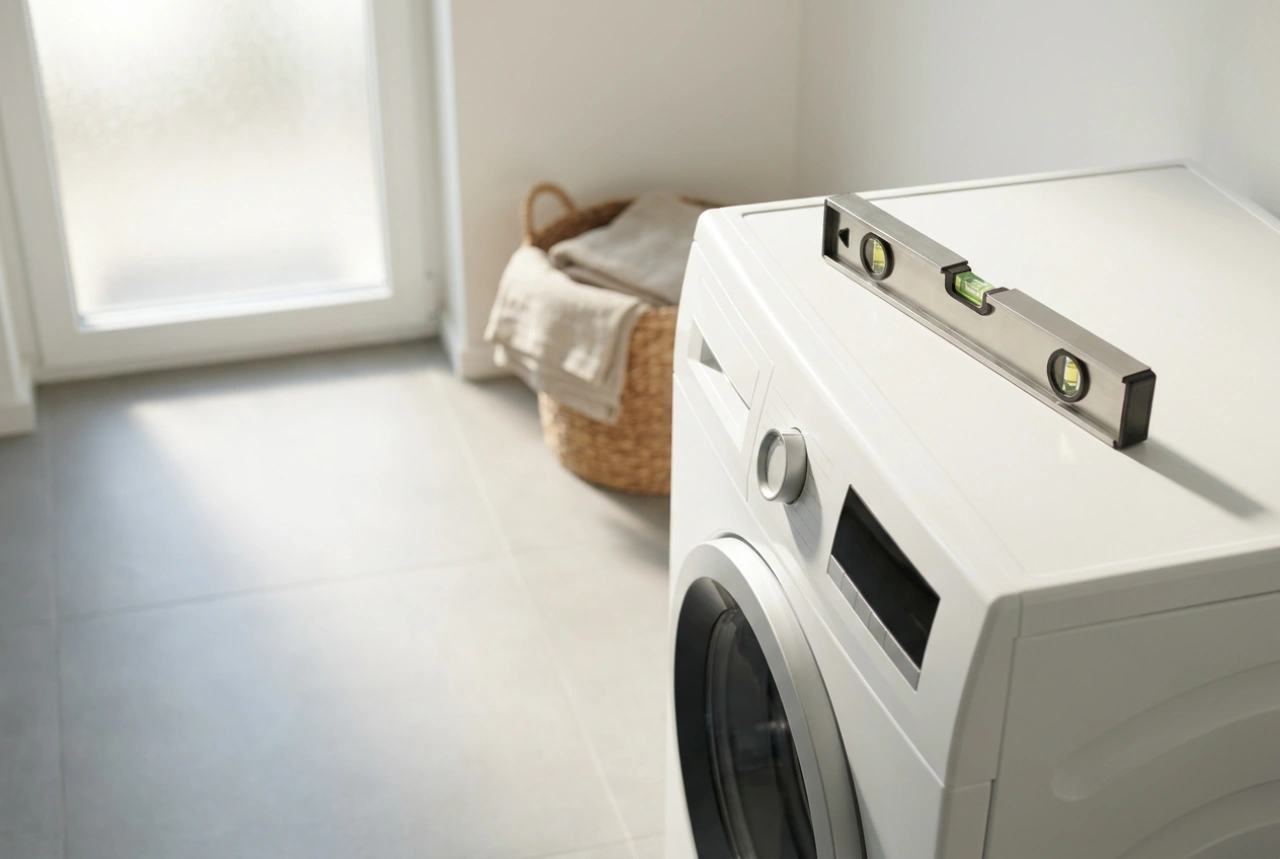
Use a spirit level placed across the open door frame (both front-to-back and side-to-side) to guide your adjustments. A tilted appliance can cause uneven water distribution across the internal sump, leading to inefficient pump operation, premature seal wear, and potential minor water leaks around the lower door gasket.