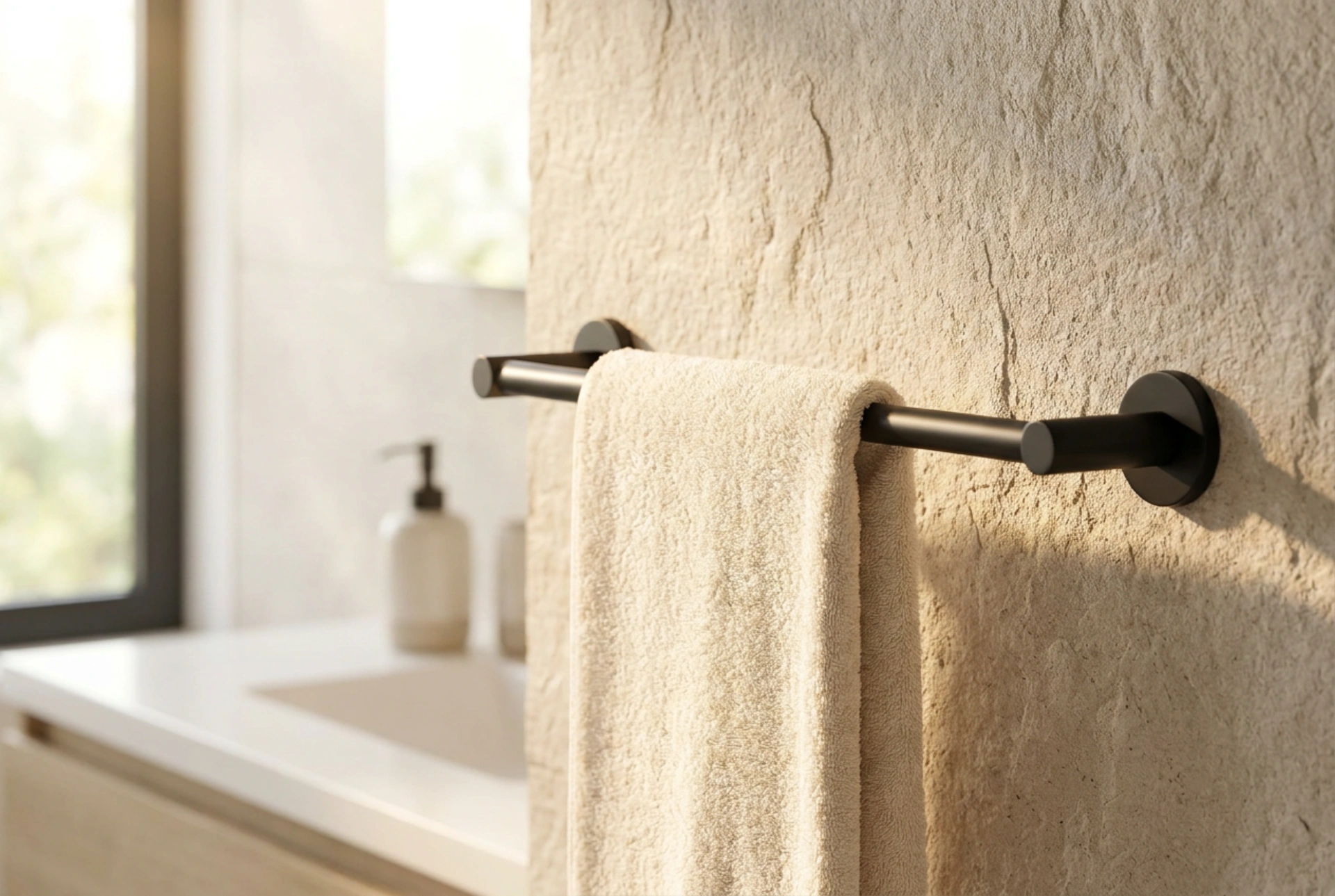


Positioning a bathroom towel rail correctly prevents water from dripping across floor surfaces, eliminating slip hazards and reducing moisture build-up on bathroom tiles.
The science of wet hands and water distribution
When you finish washing your hands, surface tension keeps a layer of water on your skin. As soon as you move your hands away from the sink basin, gravity and hand movement cause these water droplets to fall. To maintain dry, safe floors and prevent lime deposits on bathroom tiles, the transition from water source to drying medium must be as short and direct as possible. The ideal distance between the edge of the washbasin and the towel rail should be no more than 30 to 40 centimetres. This allows you to reach the towel without extending your arms over unprotected floor areas, catching any initial drips within the basin boundary.
Optimal height and ergonomics
Ergonomics play a vital role in determining the perfect mounting height for your hand towel holder. A standard basin sits between 85 and 90 centimetres above the floor. To keep the towel easily accessible and prevent it from dragging on the countertop or floor, the rail should be mounted at a height of 110 to 120 centimetres from the finished floor level.
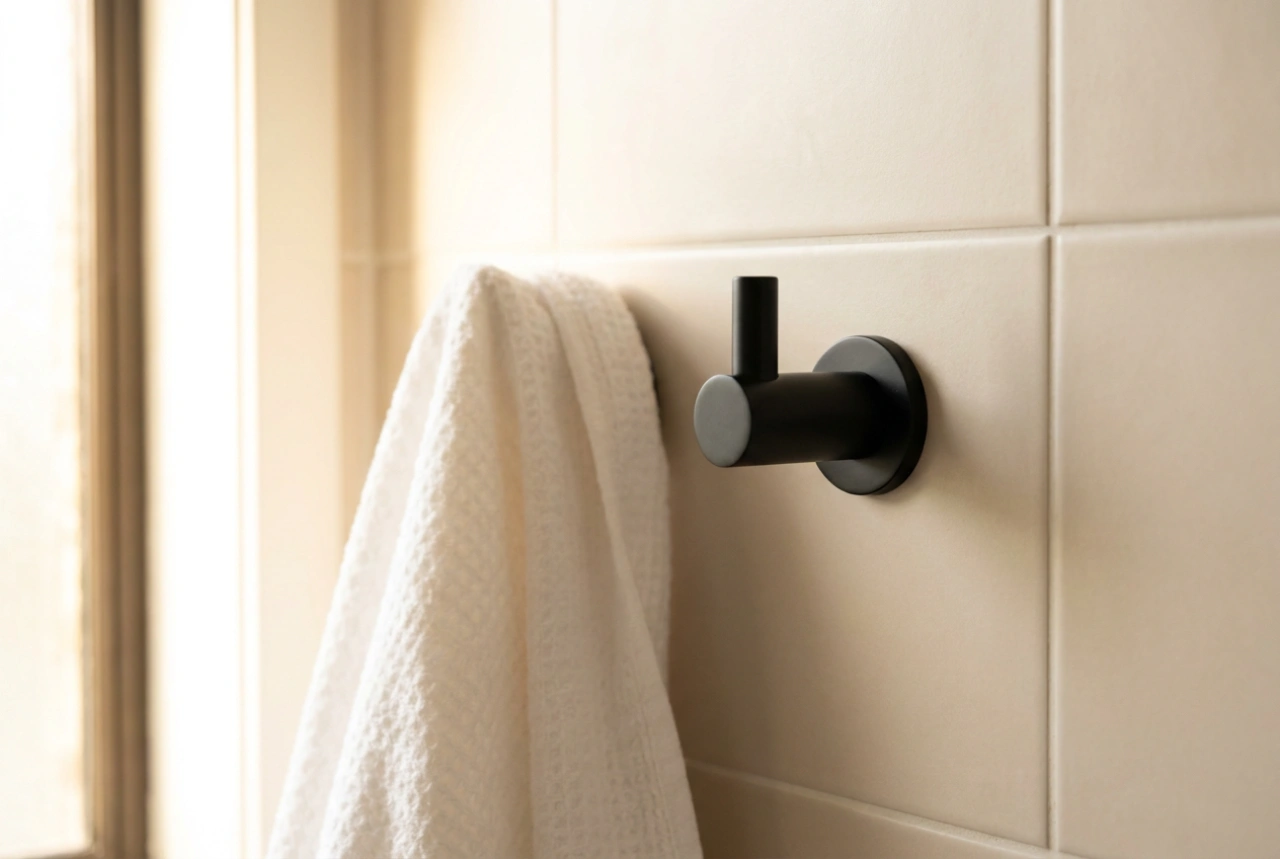
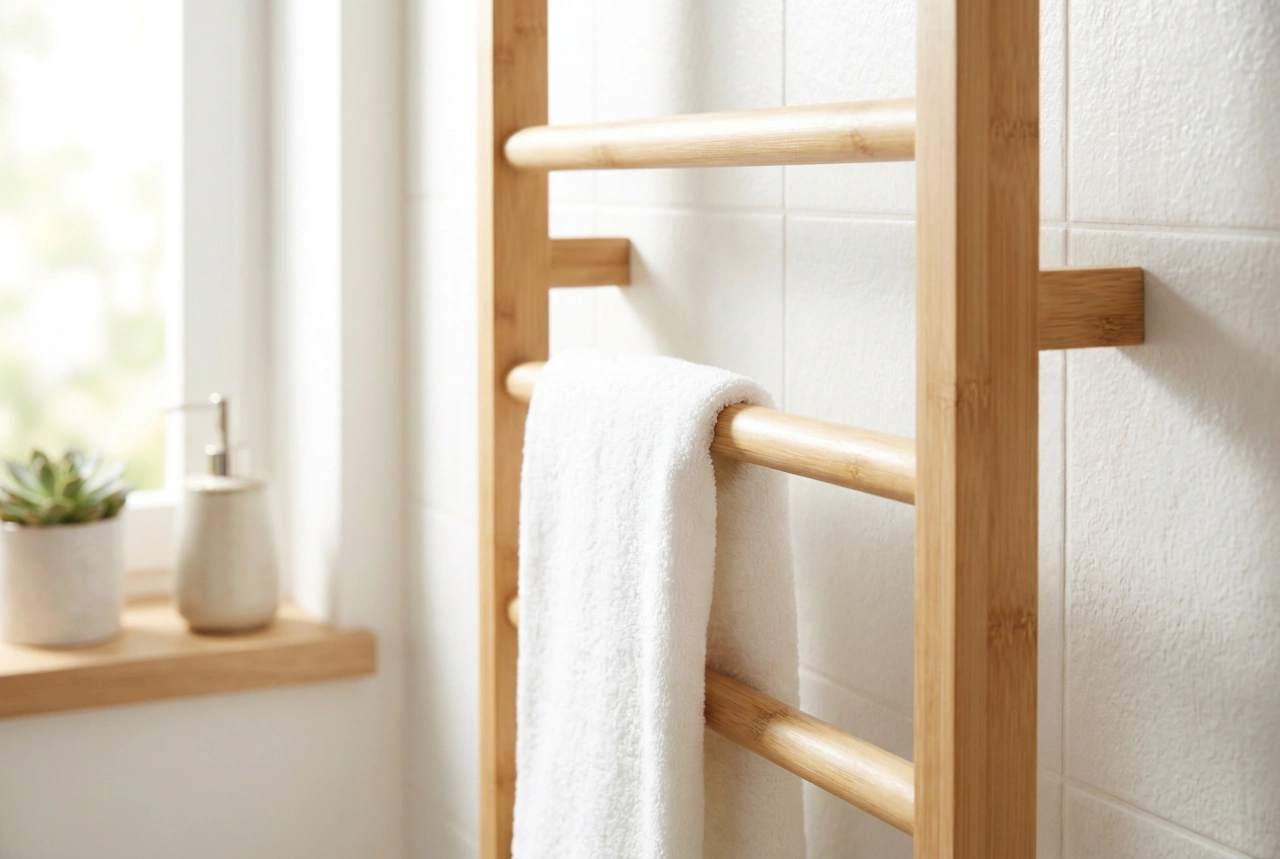
- For standard wall rails: Mount the bar so that the bottom of the hanging towel hangs approximately 10 centimetres above the level of the washbasin countertop.
- For towel rings: Secure the mounting bracket higher, around 120 to 130 centimetres, as the towel bunches up and hangs lower from a single point.
- For vanity-mounted bars: If mounting directly to the side of a wooden vanity unit, ensure the rail is positioned towards the front edge to avoid awkward reaching angles.
Selecting the right surface and mounting technique
The material of your bathroom wall determines the best installation method. For textured stone or ceramic tiles, drilling requires careful execution to avoid cracking the material. Using a carbide-tipped masonry drill bit at a low speed without the hammer action is crucial for a clean hole. Alternatively, modern high-performance modified silane polymer adhesives offer a drill-free solution. These adhesives distribute weight evenly across the mounting plate and can support towels weighing up to several kilograms when fully saturated with water. If you choose an adhesive method, the tile surface must be thoroughly degreased with isopropyl alcohol beforehand to ensure a strong chemical bond.
Towel physics: Airflow and drying efficiency
How a towel hangs directly affects how quickly it dries. A flat, extended towel dries significantly faster than a bunched one due to the increased surface area exposed to ambient air. When water evaporates from a damp towel, it cools the surrounding air, making it denser. This dense, moist air sinks. If a towel is hung flat against a wall with no gap, moisture becomes trapped between the fabric and the wall, leading to musty odours and potential mould growth. Choosing a towel rail that projects at least 5 to 7 centimetres from the wall creates an air chimney effect, allowing dry room air to rise through the gap and accelerate the evaporation process.