

A disorganized spice cabinet leads to duplicate purchases, expired ingredients, and interrupted cooking flows. Implementing a dedicated storage system restores order and ensures every herb and spice remains fully visible and accessible.
The Physics of Visibility in Deep Cabinets
Standard kitchen cabinets present a spatial challenge: depth without elevation. When uniform spice jars are placed on a flat shelf, the front row obscures everything behind it, creating a visual blind spot. This lack of line-of-sight leads to forgotten ingredients and wasted money on duplicate purchases.
Using tiered risers or pull-out systems solves this by utilizing vertical space. Tiered inserts elevate each subsequent row, ensuring that the labels of the back jars are visible over the tops of the front ones. Pull-out organizers bring the contents of the cabinet out into the room light, allowing you to view the inventory from above or from the side rather than peering into a dark, deep recess.
How Material Science and Light Influence Spice Preservation
Proper storage is not just about order; it also concerns the chemical preservation of the essential oils that give spices their flavor. Light and heat are the primary catalysts for the degradation of organic compounds in dried herbs. When choosing container materials, consider these factors:
- Glass vs. Plastic: Glass is non-porous and does not absorb volatile oils, ensuring flavor purity. However, clear glass offers no protection against ultraviolet light.
- Amber Glass: Amber or dark glass filters out harmful light wavelengths, significantly extending the shelf life of light-sensitive spices like paprika, oregano, and parsley.
- Airflow and Seals: Secure, airtight lids prevent the evaporation of essential oils and protect the dry contents from kitchen humidity, which causes clumping.
Optimizing Organizers for Maximum Efficiency
To establish a highly functional spice system, the physical arrangement must align with your cooking habits. This involves a systematic approach to sorting, labeling, and placing your jars.
1. Grouping by Frequency and Type
Divide your collection into daily essentials, baking spices, and occasional specialty blends. Keep your daily essentials (such as salt, black pepper, garlic powder, and onion powder) in the most accessible zone of the organizer, typically at the front or on the lowest tier.
2. Standardizing the Containers
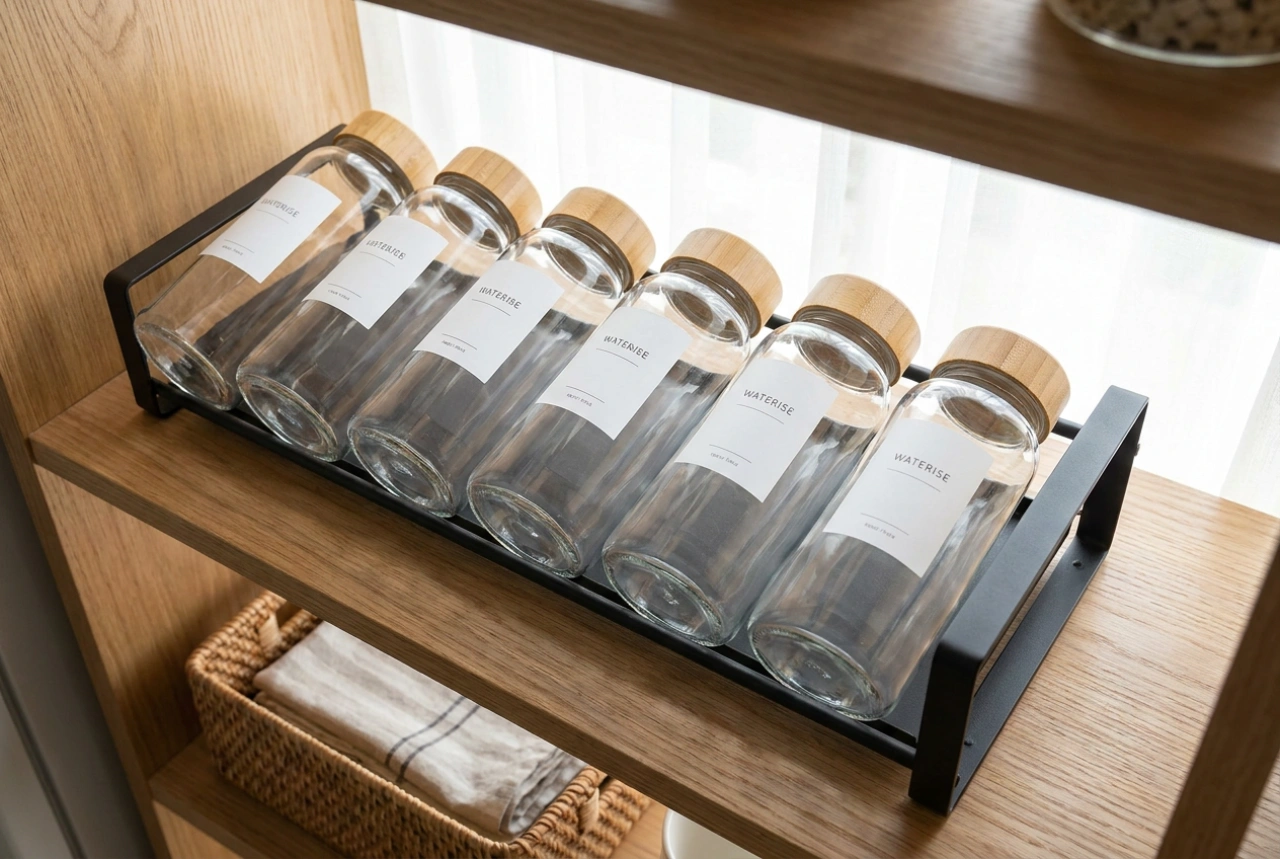
Transferring spices from miscellaneous store packaging into uniform jars eliminates visual clutter. When jars are identical in size and shape, they fit perfectly into the organizer slots without wasted space, preventing tipping and shifting when drawers or doors are opened.
3. Placement and Ergonomics
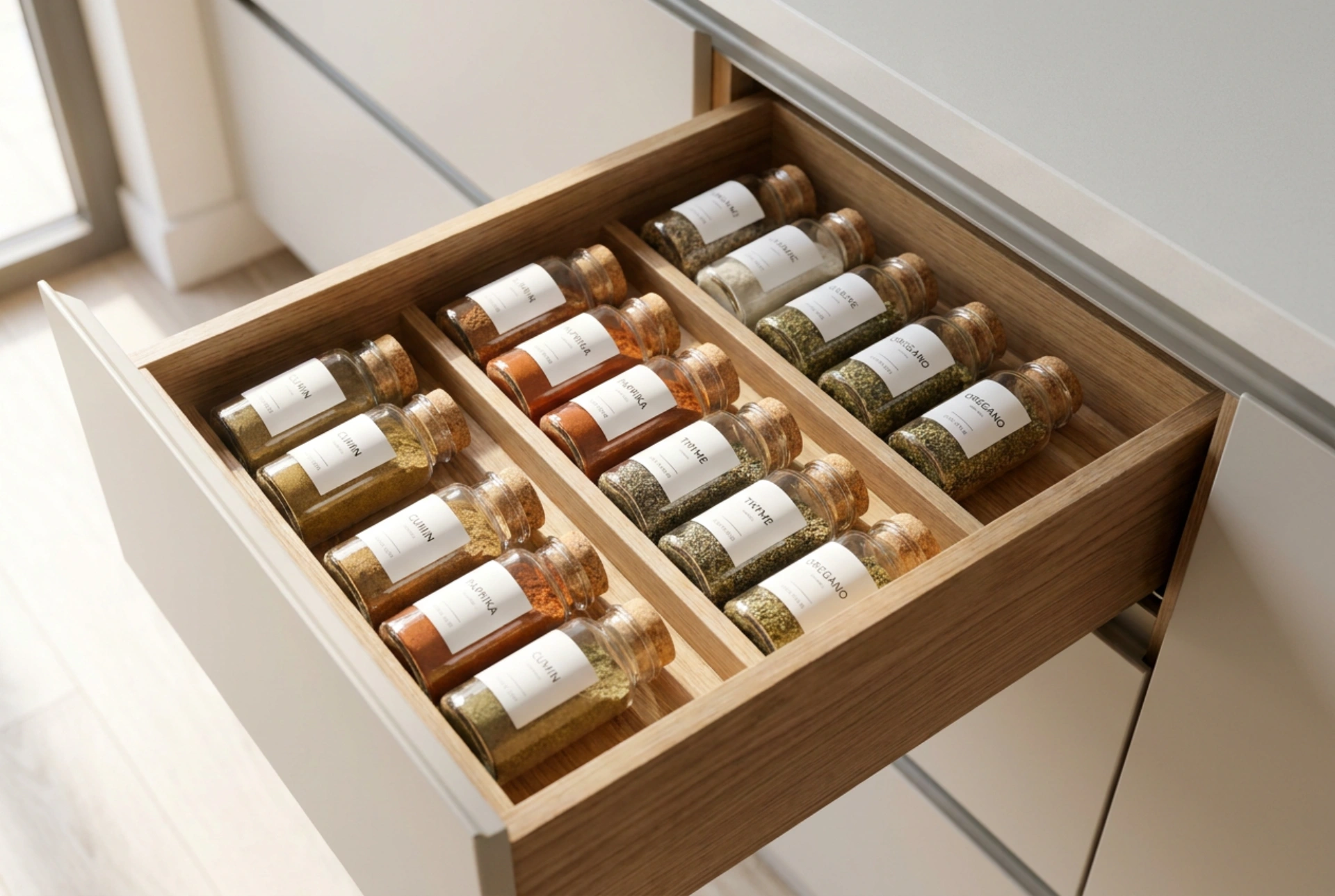
If using a drawer organizer, lay the jars horizontally with the labels facing upward. This angle allows you to scan the entire inventory in a single glance when the drawer is pulled open. For upper wall cabinets, a stepped shelf insert or a drop-down rack ensures you do not need a step stool to reach items stored on higher shelves.
Maintaining Your Inventory System
An organized cabinet is only effective if maintained. Every six months, conduct a quick audit. Check the aromatic quality of your ground spices; if they have lost their distinct scent, their essential oils have oxidized, and it is time to replace them. Use water-resistant, legible labels placed consistently on the lids (for drawer storage) or on the sides (for eye-level shelf storage) to keep the system running smoothly.