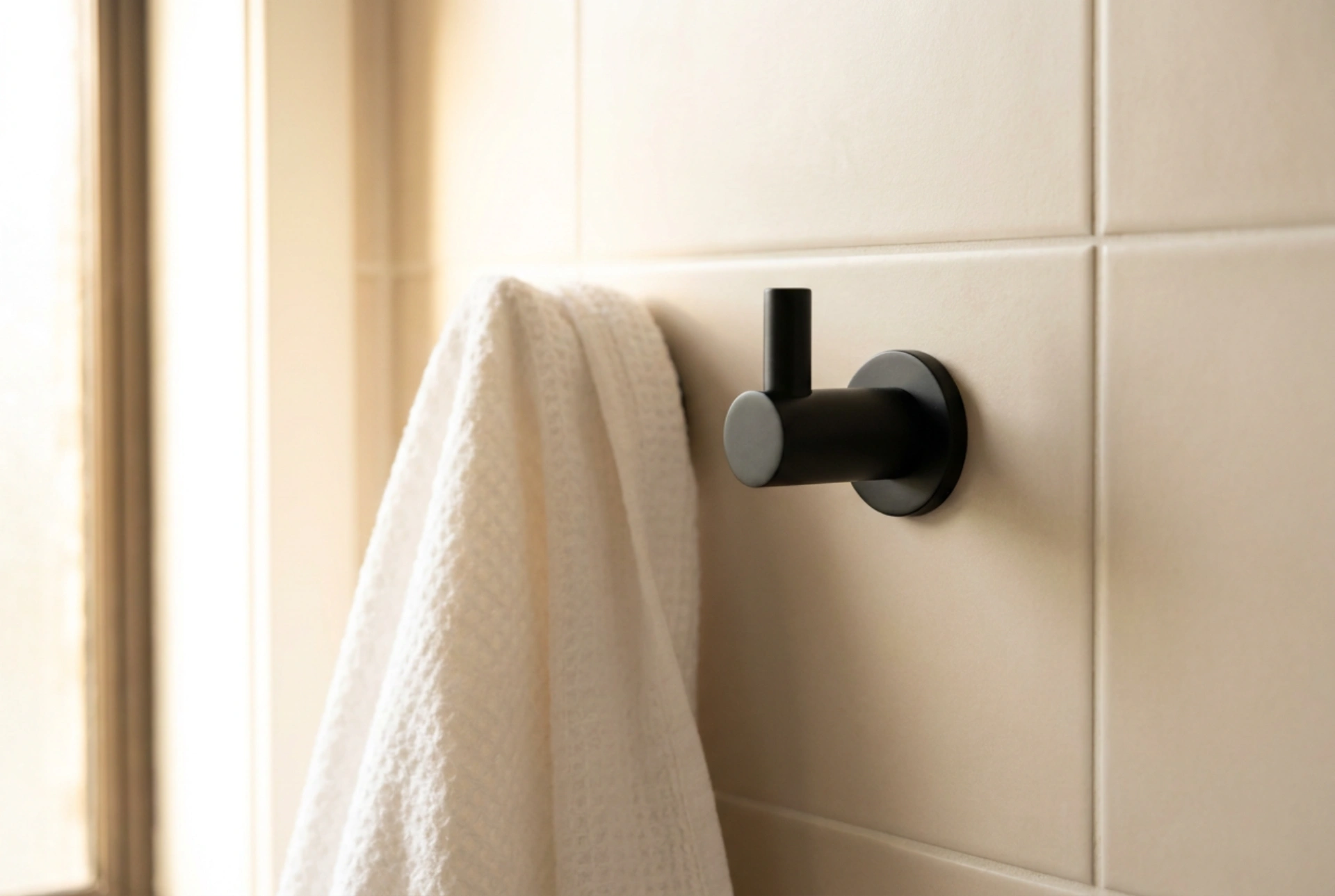


Matte black towel hooks and bathroom hardware add a sophisticated, modern touch to any bathroom, but their delicate surface finish is highly susceptible to limescale buildup, grease, and permanent clouding if cleaned incorrectly.
The Chemistry of Matte Black Finishes
To clean matte black surfaces without damaging them, it is essential to understand what gives them their deep, non-reflective appearance. Unlike chrome, which has a hard, smooth, electroplated metallic outer layer, matte black hardware is typically finished with an organic powder coating or a thin metal oxide layer created through physical vapor deposition (PVD). This textured surface scatters light in all directions, eliminating glare.
However, this microscopic roughness also creates the perfect environment for soap scum, skin oils, and calcium carbonate (limescale) deposits to cling. When you use aggressive cleaning agents or abrasive scrubbers, you actually polish down these microscopic peaks. Once these peaks are flattened, the surface becomes permanently shiny and patchy, destroying the matte effect. Acidic cleaners that are too strong can also chemically etch the delicate coating, leading to discolored, cloudy gray spots.
The Golden Rules of Maintenance
Preventing damage to matte black hooks relies on a few fundamental physical and chemical principles. By adopting these habits, you can keep the hardware pristine without relying on harsh chemicals.
- Never use abrasive pads: Steel wool, scouring pads, and even the rough side of a standard kitchen sponge will instantly micro-scratch the coating, leaving shiny patches. Only use soft microfiber cloths.
- Avoid strong acids and chlorine: Concentrated citric acid, hydrochloric acid, and chlorine-based bleach will strip or discolor the protective top layer of the black finish.
- Dry after use: Limescale only forms when water evaporates and leaves dissolved calcium minerals behind. Wiping your towel hooks dry with a soft cloth after a shower prevents mineral deposits from bonding to the surface in the first place.
Step-by-Step Cleaning Process for Limescale and Soap Scum
When daily wiping is not enough and a white film begins to develop on your black towel hooks, follow this gentle, chemically balanced cleaning routine to dissolve the minerals without harming the finish.
1. Prepare a Diluted Cleaning Solution
Mix a mild, pH-neutral liquid dish soap with warm water. Soap molecules are amphiphilic, meaning they bond to both water and oil, allowing you to lift away greasy fingerprints and body oils without chemical abrasion. If you are dealing with stubborn limescale, create a highly diluted solution of water and white vinegar in a 5:1 ratio. The weak acetic acid in the vinegar will break down the calcium carbonate bonds slowly and safely.
2. Application and Dwell Time
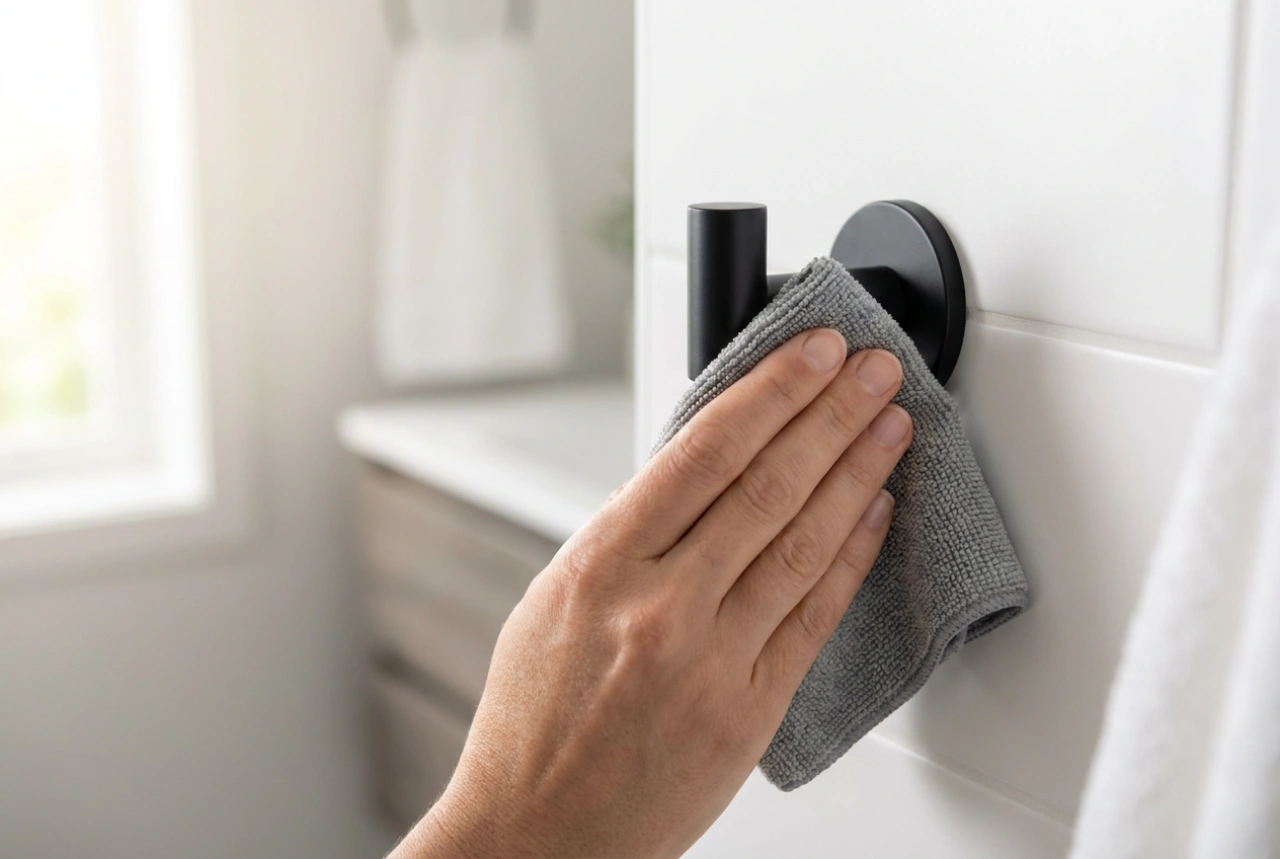
Dampen a clean, high-density microfiber cloth in the solution. Do not spray cleaners directly onto the hooks, as liquid can pool in the joints and mounting brackets, leading to internal corrosion. Press the damp cloth against the hook and let it sit for two to three minutes. This gives the liquid time to break down the surface tension of the grease and dissolve the mineral buildup without requiring physical scrubbing.
3. Gentle Friction and Rinsing
Using light, circular motions, wipe the hook with the soft microfiber cloth. Focus on the areas where the towel contacts the metal, as this is where oils accumulate. Once the debris is lifted, rinse the cloth thoroughly in clean, cold water, wring it out, and wipe the hook again to remove all soapy residue.
4. Buffing Dry
Immediately dry the towel hook using a dry, clean microfiber cloth. Use light buffing motions to eliminate any remaining water droplets. This step is crucial to prevent new water spots from forming immediately after cleaning.
Long-Term Protection Strategies
To minimize the frequency of cleaning, you can apply a microscopic barrier to the metal. A thin layer of natural beeswax or a specialized matte silicone spray can be applied with a dry cloth. This fills the deepest microscopic pores of the coating without making the surface shiny. It creates a hydrophobic (water-repelling) effect, causing water droplets to bead up and roll off rather than drying in place, keeping your black hardware flawless for longer.