

Protecting the volatile compounds in whole coffee beans is a matter of organic chemistry and material science. To prevent your coffee from becoming flat and stale, you must control four environmental catalysts: oxygen, moisture, heat, and ultraviolet light.
The Chemistry of Coffee Degradation
Roasted coffee beans are highly complex organic structures containing delicate lipids, carbohydrates, and volatile aromatic compounds. Once roasting is complete, the beans begin an irreversible process of degradation. The primary culprit is oxidation. When oxygen contacts the lipids within the bean, it initiates a chemical reaction that breaks these fats down into free fatty acids, leading to rancidity and a stale, papery taste. Concurrently, volatile organic compounds—the molecules responsible for the rich, complex aromas—evaporate into the surrounding air.
Moisture also plays a destructive role. Coffee beans are highly hygroscopic, meaning they readily absorb water vapor from their environment. This moisture triggers hydrolysis, breaking down the water-soluble solids that give coffee its body and flavour. Additionally, ultraviolet (UV) light acts as a catalyst for photo-oxidation, accelerating the breakdown of chemical bonds even in the absence of heat.
The Dynamics of Degassing and Carbon Dioxide
During roasting, thermal reactions generate a significant volume of carbon dioxide (CO2) inside the cellular structure of the bean. For days after roasting, the beans slowly release this gas—a process known as degassing. This CO2 plays a protective role; as it escapes, it creates a positive pressure boundary layer around the bean, keeping oxygen at bay.
To manage this natural phenomenon, storage vessels require specific engineering. A completely sealed, rigid container without a mechanism for gas release can bulge due to pressure buildup. Conversely, leaving a container open allows oxygen to flood the system. The optimal solution is a container equipped with a one-way degassing valve. This mechanical valve allows the expanding CO2 to escape once the internal pressure exceeds atmospheric pressure, while preventing external oxygen from entering.
Material Science: Selecting the Right Container
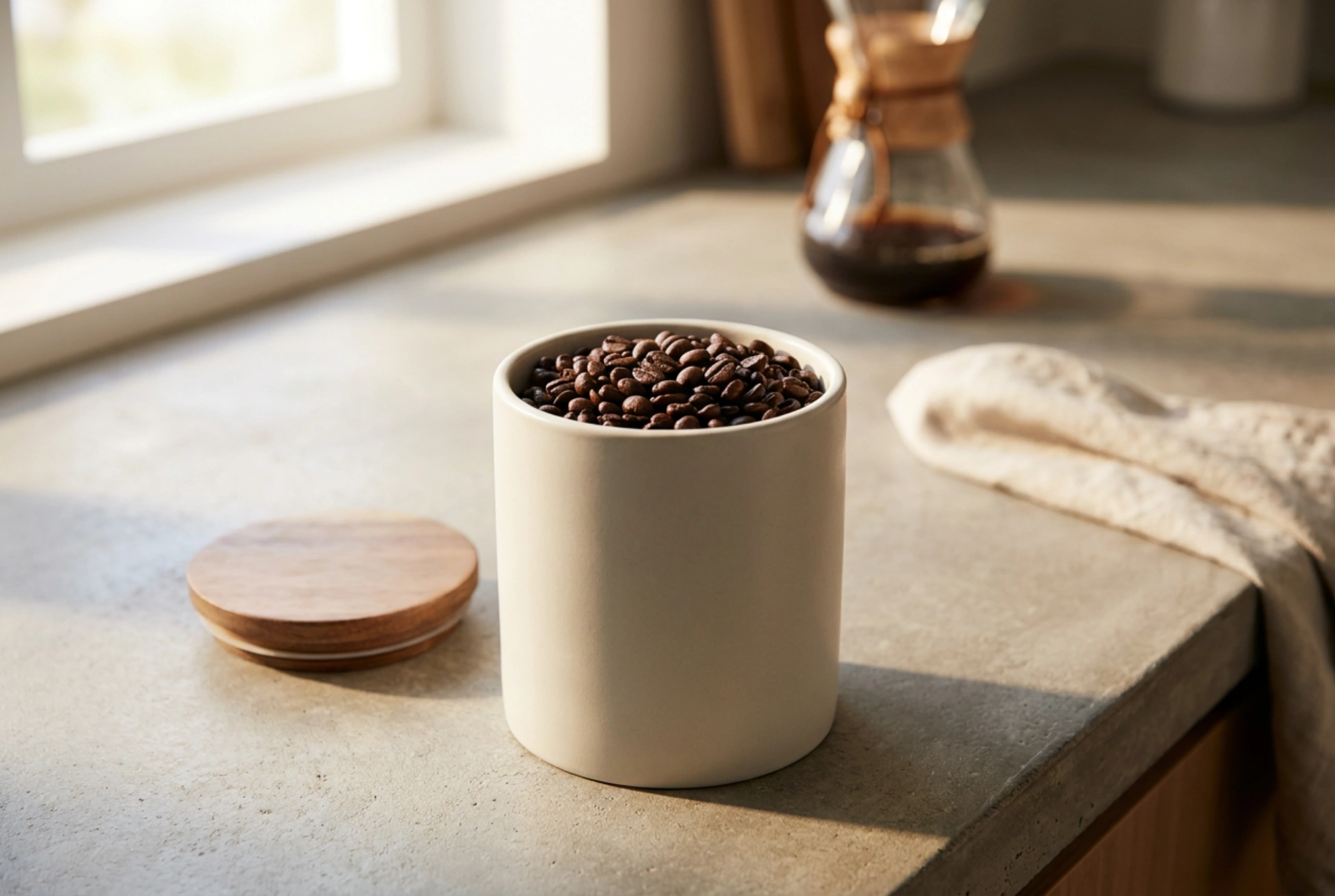
The physical properties of your storage container dictate the rate of chemical degradation. Non-reactive materials are essential to prevent off-flavours from leaching into the beans. Ceramic and stainless steel are superior options because they are completely opaque, preventing light exposure, and do not absorb coffee oils, which can rot over time and contaminate fresh batches.
If utilizing glass jars, they must be stored inside a completely dark pantry or cabinet to mitigate UV exposure. Regardless of the material, the mechanical closure is what determines success. Look for containers with thick silicone gaskets and mechanical clamp locks that exert physical pressure to create an airtight seal, or active vacuum canisters that physically evacuate air from the chamber.
The Physics of Temperature and the Freezer Risk
Chemical reaction rates roughly double with every 10-degree Celsius increase in temperature. Therefore, coffee must be stored in a cool environment, ideally between 15°C and 20°C. However, transferring coffee to the domestic refrigerator or freezer for daily use is a common mistake that accelerates staleness.
When cold coffee beans are exposed to warm room air, water vapor instantly condenses on their cold surfaces. Because the cellulose matrix of the bean is highly porous, it rapidly adsorbs this moisture, initiating hydrolysis. Furthermore, home freezers contain high levels of ambient humidity and odors, which the porous beans will absorb. If you must freeze coffee for long-term storage, portion the beans into small, single-use portions, seal them in airless, moisture-impermeable bags, and allow them to thaw completely to room temperature before opening the seal.
A Protocol for Daily Preservation
- Buy in small quantities: Purchase only what you can consume within two to three weeks of the roast date to minimize oxygen exposure.
- Keep beans whole: Grind your beans immediately before brewing. Grinding increases the surface area exposed to oxygen by thousands of times, accelerating degassing and oxidation to mere minutes.
- Decant with minimal headspace: Choose an airtight canister that matches the volume of coffee. Minimizing the empty space (headspace) inside the container reduces the volume of trapped oxygen.
- Store in a stable environment: Position your storage container in a dark cabinet away from heat sources like ovens, cooktops, or direct sunlight.