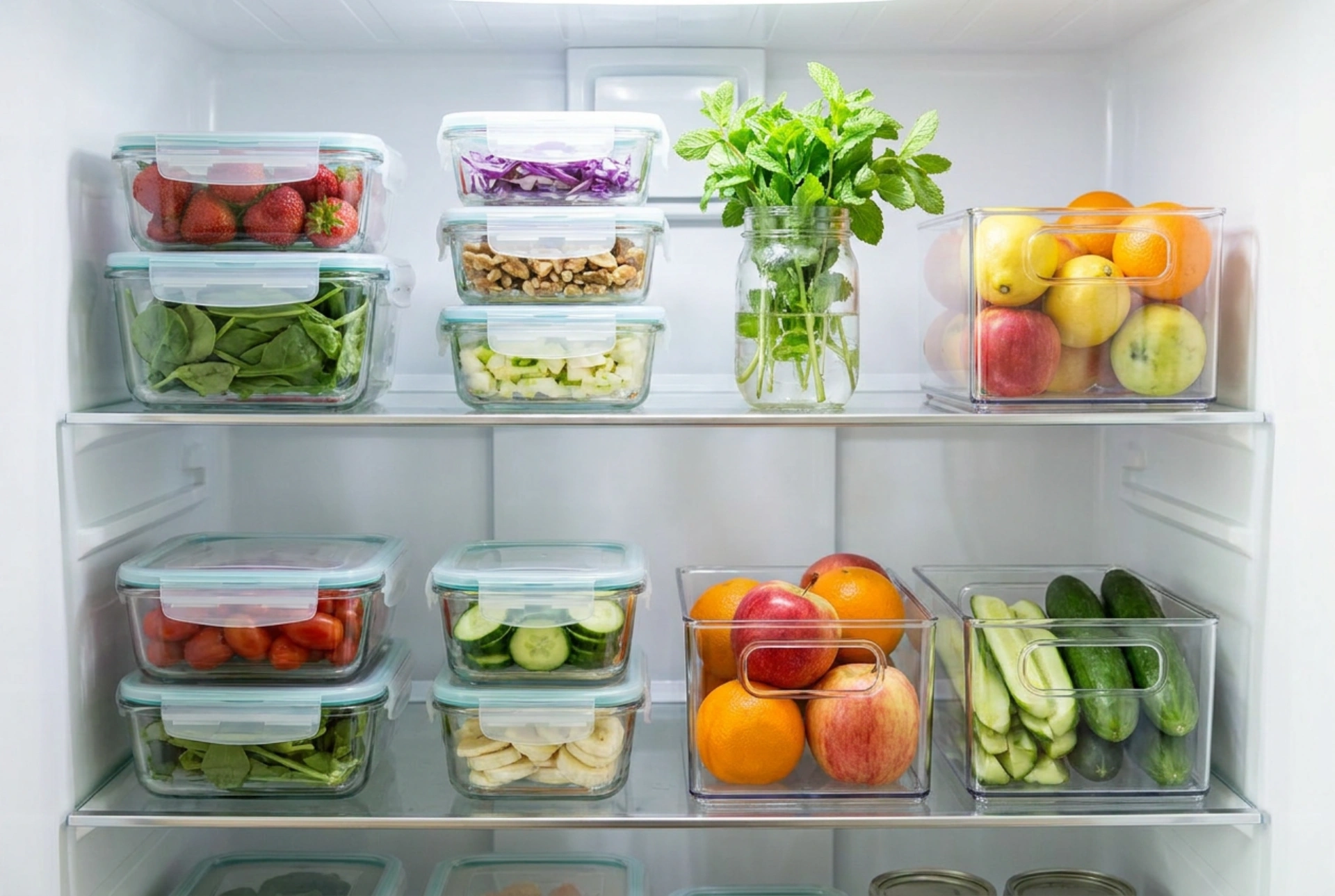


Optimising a small fridge-freezer is not just about neat stacking; it is a matter of managing thermodynamic principles, humidity zones, and air circulation. By understanding how cold air moves and how different materials store thermal energy, you can significantly extend the shelf life of your food while maximising every square centimetre of storage.
Master the Thermodynamics of Air Circulation
A refrigerator relies on convection currents to distribute cold air. Cold air is denser and sinks, while warmer air rises. In a compact fridge-freezer, the margins for error are small. Blocking the internal cooling vents or crowding the back wall restricts this natural circulation, leading to localized warm spots and premature food spoilage. To maintain an even temperature, always leave a two-centimetre gap between food items and the refrigerator walls. Never press containers directly against the back plate, as the moisture on them can freeze, causing frost build-up and blocking the appliance's drainage system.
Additionally, understand the vertical temperature gradient within your appliance. The top shelf and door balconies are the warmest zones, making them ideal for condiments, preserves, and butter. The middle shelves offer stable, moderate temperatures suitable for dairy and cooked leftovers. The bottom shelf, being the coldest part of the main compartment, should always be reserved for highly perishable items such as raw meat and fish, which prevents cross-contamination from drips.
Utilise the Science of Thermal Mass and Geometry
The physical shapes of your storage containers dictate how much space is wasted. Round bowls and containers create dead space in the corners of your shelves. Switching to square or rectangular modular containers made of borosilicate glass or food-safe plastics allows you to stack items efficiently and utilise every corner. Glass containers are particularly effective because they act as excellent thermal conductors. They absorb and retain the cold, contributing to the appliance's overall thermal mass.
A fridge with high thermal mass maintains its internal temperature much better when the door is opened. When warm ambient air enters the fridge during opening, the cold air is lost instantly, but dense items like glass containers and jars of liquids retain their temperature. Once the door is closed, these cold items quickly cool down the newly trapped air, reducing the workload on the compressor and lowering energy consumption. However, ensure the fridge is not packed beyond eighty percent capacity, as some air space is vital for active circulation.
Manage Humidity and Ethylene Gas Dynamics
In a limited space, different food types are forced into close proximity, which can accelerate decay. Many fruits, such as apples and tomatoes, release ethylene gas, a natural ripening hormone. When stored next to ethylene-sensitive vegetables like leafy greens or broccoli, the vegetables will rot quickly. Keep these categories strictly separated. Use the crisper drawer specifically for high-humidity items like vegetables, and keep them separated from ethylene producers.
Moisture control is equally critical. To prevent moisture build-up—which encourages mould and bacterial growth—never wash fresh produce before storing it, as the residual water accelerates decay. Instead, wash it immediately before consumption. To manage the ambient humidity inside the crisper drawer, line the bottom with a clean, dry cotton cloth to absorb excess condensation while keeping the air humid enough to prevent wilting.
The Physics of Efficient Freezing
Freezer compartments in compact appliances fill up rapidly, often resulting in a disorganised block of ice. To maximise this space, utilise the "freeze-flat" technique. Instead of freezing liquid-based meals like soups, stews, or sauces in bulky plastic tubs, pour them into food-grade, sealable freezer bags. Lay these bags completely flat on a metal tray in the freezer until solid. Once frozen, these flat sheets can be stacked vertically like books on a shelf.
This method not only saves immense amounts of space but also increases the surface-area-to-volume ratio of the food. A high surface-area-to-volume ratio allows the food to freeze much faster, preventing the formation of large ice crystals that damage cellular structure and degrade food texture. Fast freezing also ensures that defrosting is quicker and safer, minimizing the window of opportunity for bacterial growth during the thawing process.