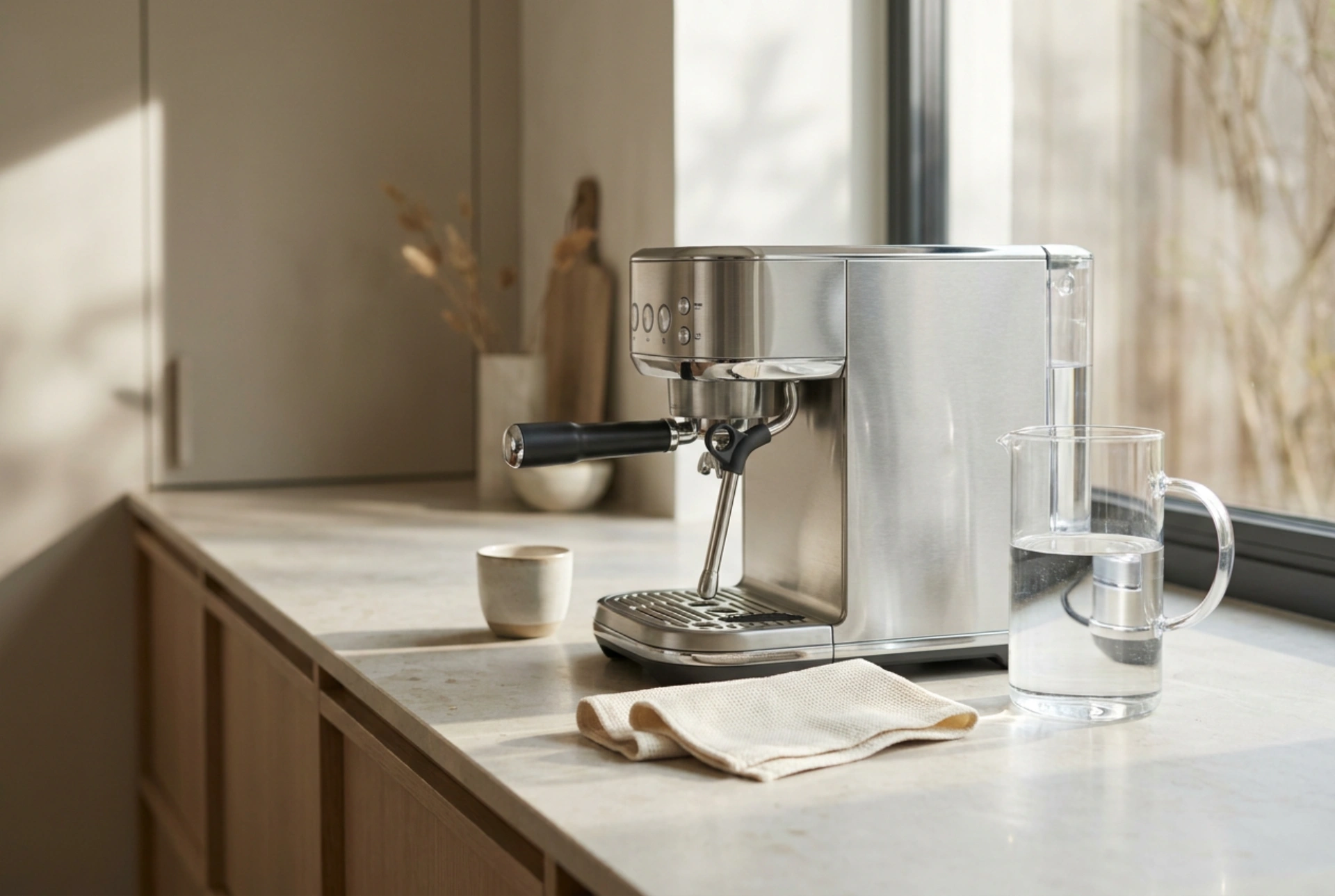


Maintaining a bean-to-cup coffee machine requires targeting two distinct types of residues: hydrophobic coffee oils that turn rancid, and milk proteins that quickly foster bacterial growth. Understanding the chemistry of these organic compounds allows for efficient, targeted cleaning that preserves both the mechanical components of your appliance and the flavour profile of your espresso.
The Science of Coffee Oils and Grinder Preservation
Coffee beans contain lipids (oils) that are released during the roasting process. When these oils come into contact with oxygen, they undergo lipid oxidation, turning rancid and sticky. Over time, these oxidized oils coat the hopper, the grinding burrs, and the internal chute, attracting fine coffee dust and creating a dense, bitter-smelling paste that taints subsequent brews.
Water must never be introduced to the grinding chamber, as steel burrs are highly susceptible to oxidation (rust), and residual moisture will cause ground coffee to swell and clog the mechanism. Instead, clean the hopper weekly by wiping it with a dry microfibre cloth to remove surface oils. For the burrs, use generic cleaning pellets made from gluten-free binder grains. As these pellets pass through the grinder, they mechanically scrub the burrs and absorb the hydrophobic oil buildup. Afterward, grind a small handful of coffee beans to purge any remaining pellet residue from the chamber.
Dissolving Coffee Residues in the Brew Group
The brew group is the mechanical heart where water meets the compressed coffee puck. Here, high pressure forces hot water through the grounds, leaving behind a complex mixture of insoluble micro-particles and oils. If left uncleaned, these particles clog the delicate metal mesh of the shower screen, causing uneven water distribution and channeling.
Weekly maintenance requires removing the brew group (if accessible) and rinsing it thoroughly under warm, running water. Avoid using dishwashing liquids, as they strip the food-grade silicone grease necessary for the smooth movement of the mechanical joints. For deep cleaning, run a backwashing cycle using specialized cleaning tablets containing sodium percarbonate. When dissolved in hot water, sodium percarbonate releases active oxygen, which chemically breaks down and lifts the stubborn organic binder compounds of the coffee oils without damaging the internal seals.
The Chemistry of Milk Frother Sanitisation
Milk is a complex emulsion of water, lipids, and proteins (primarily casein and whey). When milk is steamed, the proteins denature to trap air bubbles, creating foam. However, if milk residue is allowed to cool inside the steam wand or frothing carafe, these proteins undergo a structural change, binding tightly to plastic and stainless steel surfaces to create a hard, stubborn film known as milk stone.
To prevent this, purge the steam wand immediately after every use to blow out any milk forced back into the nozzle by the vacuum created when the steam flow stops. Wipe the exterior with a damp cloth. For the milk circuit, water alone is insufficient because lipids are hydrophobic and proteins do not dissolve in neutral water. Use a dedicated milk system cleaner containing mild alkaline surfactants. The alkaline environment breaks the peptide bonds in the milk proteins, liquefying the hardened film, while the surfactants emulsify the fats so they can be easily flushed away. Rinse thoroughly with clean water afterward to remove any chemical residue.
Descaling: Neutralising Mineral Scale
As tap water is heated inside the thermoblock, dissolved calcium and magnesium ions precipitate out, forming calcium carbonate (limescale). This crystalline structure acts as an insulator, reducing heating efficiency, restricting water flow, and eventually blocking the narrow water lines.
Descaling must be performed using specific organic acids, such as citric acid or lactic acid. These acids react with the insoluble calcium carbonate, converting it into highly soluble calcium citrate or calcium lactate, which is then easily flushed out of the system. Avoid using vinegar (acetic acid), as its aggressive nature can degrade internal rubber gaskets and leave a persistent smell that is incredibly difficult to purge.