

Managing domestic pet odours requires understanding the biochemical breakdown of animal waste rather than simply masking scents with synthetic perfumes. By utilising natural mineral absorbers and basic chemical neutralisation, you can maintain a fresh indoor environment that remains entirely safe for feline respiratory systems.
The Chemistry Behind Litter Box Odours
To neutralise odours effectively, we must understand their chemistry. Cat urine contains urea, which bacteria hydrolyse into pungent, alkaline ammonia gas. Concurrently, faecal waste releases sulphur-based compounds, such as methyl mercaptan and hydrogen sulphide, creating distinctive odours. Commercial air fresheners only mask these molecules with synthetic fragrances that can irritate a cat's highly sensitive olfactory system. Real control relies on trapping or chemically altering these volatile compounds at the molecular level.
The Power of Adsorption: Activated Carbon and Zeolites
Physical adsorption is one of the most efficient, non-toxic ways to capture airborne molecules. Unlike absorption, where a substance enters the bulk of a liquid or solid, adsorption is a surface phenomenon where molecules adhere to the outer and inner surfaces of a highly porous material.
Activated carbon is a processed carbonaceous material with a vast network of submicroscopic pores, offering a surface area exceeding one thousand square metres per gram. When volatile compounds drift near the carbon, weak intermolecular forces (Van der Waals forces) pull the gas molecules into these micropores, trapping them. To use this, integrate a thin layer of fine-grained activated carbon at the bottom of the litter tray before adding clean litter, or place a porous sachet of granular carbon nearby.
Zeolites offer a physical mechanism with specific chemical affinity. These natural, hydrated aluminosilicate minerals feature a regular, three-dimensional crystalline cage structure. Carrying a negative charge, they attract positive ions. Since ammonium ions are positively charged, zeolites exchange their non-toxic sodium or calcium ions for the ammonium ions present in urine, chemically binding the precursor to ammonia before it volatilises.
Chemical Neutralisation: Sodium Bicarbonate
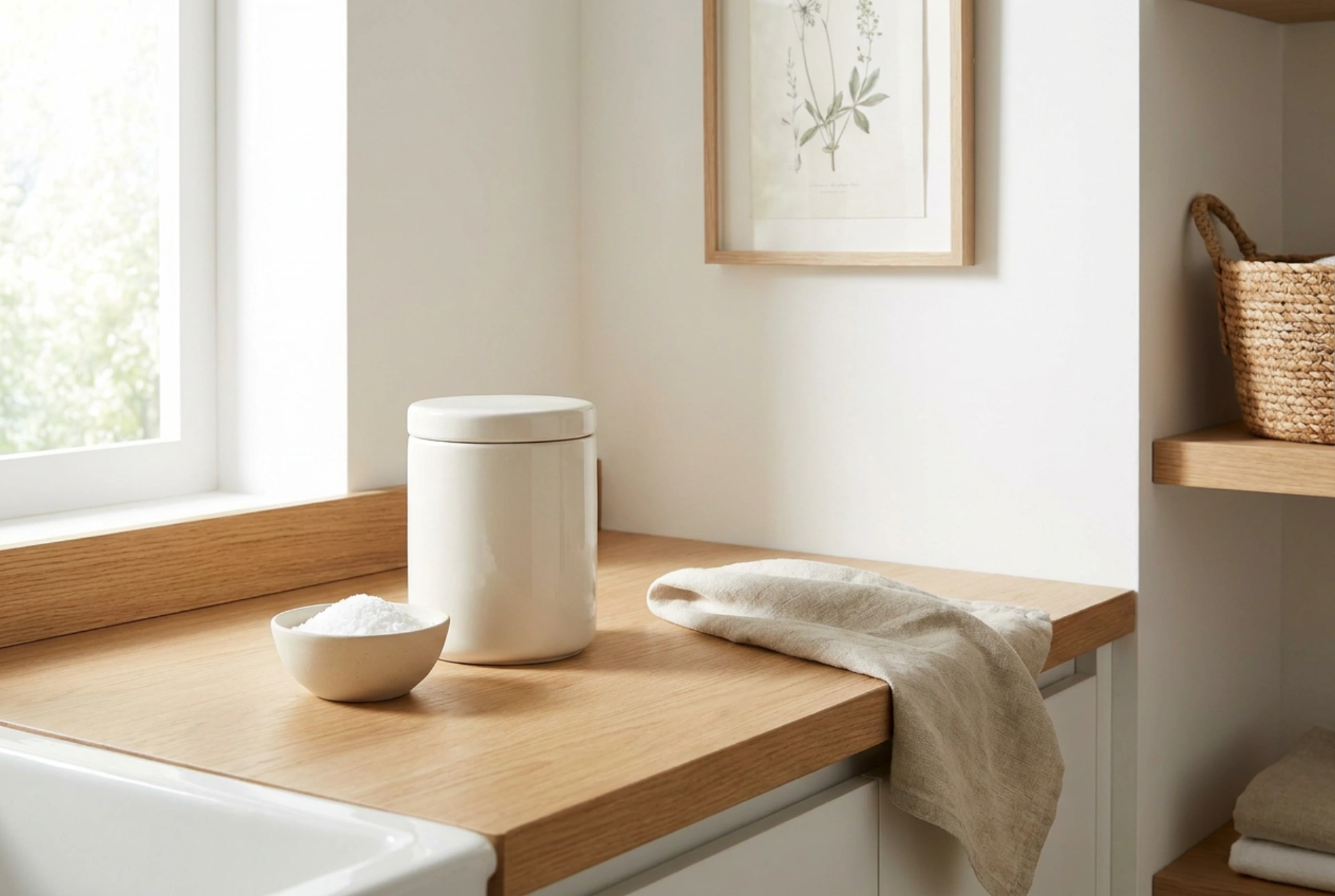
Sodium bicarbonate is an amphoteric compound, meaning it reacts as both an acid and a base. This property allows it to neutralise diverse odour compounds. Acidic compounds, such as the fatty acids in waste, are converted into non-volatile sodium salts that remain bound in the litter rather than dispersing. When using sodium bicarbonate, distribute a light, even dusting of one to two tablespoons across the tray base. Avoid heavy layers, as excessive ingestion of fine powder during grooming can disrupt a cat's electrolyte balance.
Order of Operations for Optimal Odour Control
How you clean and apply these natural absorbers is just as important as the materials themselves. Follow a systematic protocol to prevent odour build-up:
- Deep Cleanse: Empty the tray completely. Wash the plastic with hot water and a fragrance-free, oxygen-based detergent. Avoid chlorine bleach, which reacts with ammonia to produce hazardous chloramine gases.
- Dry Thoroughly: Moisture accelerates urea breakdown. Ensure the tray is completely dry before adding materials.
- Base Layer: Sprinkle a thin, uniform layer of activated carbon or zeolite minerals directly onto the dry floor to capture liquids that seep through.
- Litter Application: Add litter to a depth of five to seven centimetres, ensuring urine is absorbed before reaching the base layer.
- Top Dressing: Dust the top layer lightly with zeolite powder or sodium bicarbonate, mixing it into the upper centimetre.
Temperature and Placement Factors
Ambient temperature and humidity play critical roles in the rate of odour generation. High temperatures increase the kinetic energy of molecules, leading to faster evaporation and gas diffusion. Placing a litter box near heat sources, such as radiators, tumble dryers, or in direct sunlight, accelerates the breakdown of urea into ammonia. Maintain the litter box in a cool, well-ventilated area with consistent airflow to allow gaseous compounds to disperse naturally while giving your mineral absorbers ample time to trap local molecules.