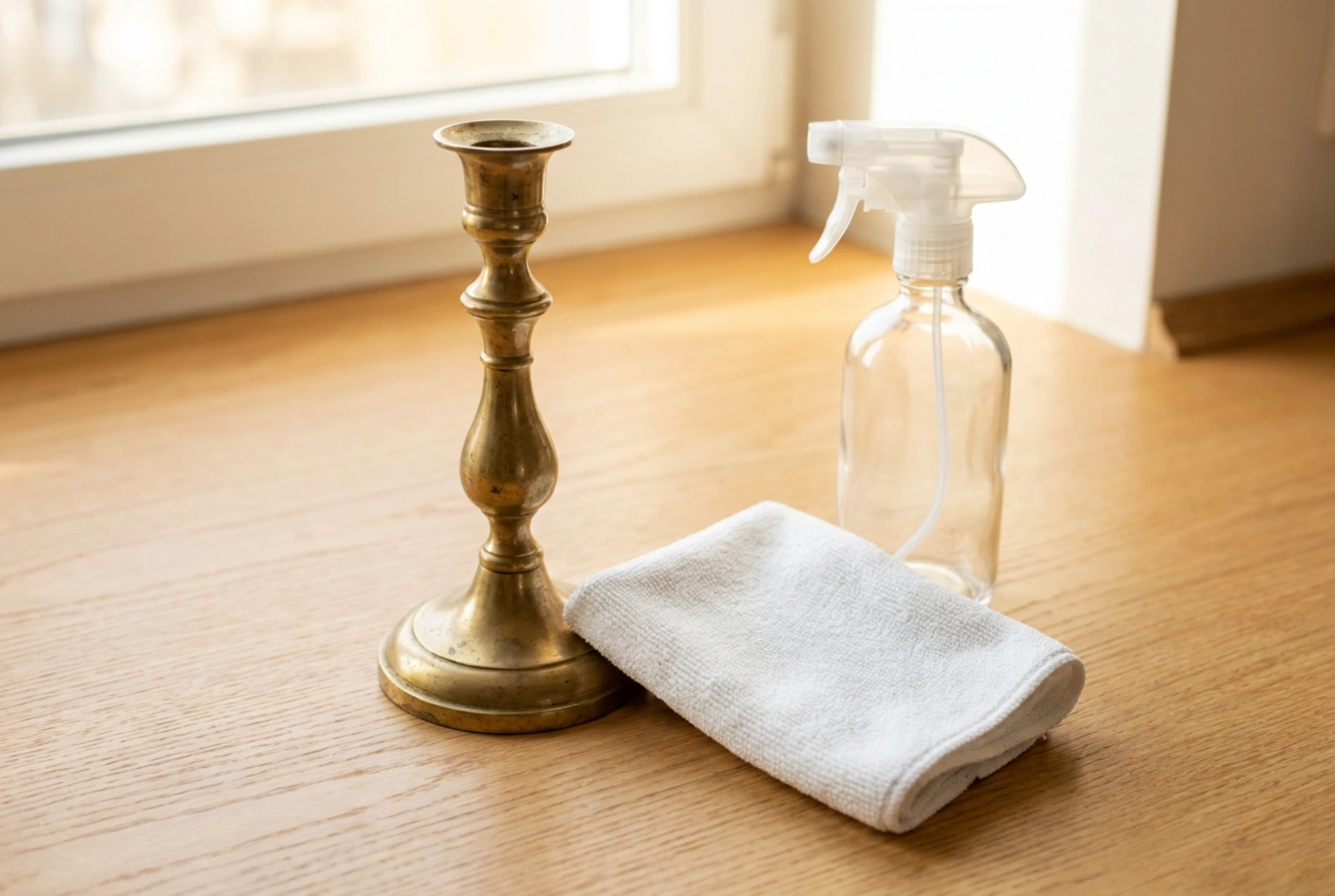


Brass adds a timeless elegance to any home, but its copper-zinc composition makes it highly susceptible to oxidation, resulting in a dull, dark tarnish over time. Choosing the right cleaner requires understanding how chemical agents interact with these delicate metal oxides to restore luster without damaging the alloy beneath.
The Chemistry of Brass Tarnish
Brass is an alloy primarily composed of copper and zinc. When exposed to oxygen, moisture, and trace sulfur compounds in the air, a chemical reaction occurs on the surface. This process forms copper oxides, carbonates, and sulfides, visible as a dark brown or greenish layer known as tarnish. An effective brass cleaner must target these specific compounds. Rather than simply scratching off the tarnish mechanically, which ruins the smooth metal finish, a high-quality cleaner utilizes chemical reactions to break the bonds of the oxides, converting them into water-soluble complexes that can be easily wiped away.
Balancing Acidity to Prevent Dezincification
The primary active ingredients in brass cleaners are often mild acids. Acids are highly effective at dissolving copper oxides, but their strength must be carefully balanced. If a cleaner is too acidic, it can cause a damaging phenomenon known as dezincification. In this process, the acid preferentially leaches the zinc out of the alloy, leaving behind a weak, porous, and unsightly pinkish copper layer. A superior brass cleaner utilizes weak organic acids, such as citric or sulfamic acid, paired with buffering agents to maintain a safe pH. This ensures the tarnish is dissolved while the structural integrity of the copper-zinc lattice remains completely intact.
The Role of Chelating Agents and Surfactants
An outstanding brass cleaning formula does not rely on acidity alone; it incorporates chelating agents. Molecules like ethylenediaminetetraacetic acid (EDTA) or citric acid derivatives act as molecular claws. They bind to the dissolved metal ions, trapping them in a soluble complex and preventing them from redepositing onto the brass surface. Additionally, non-ionic surfactants are crucial. They reduce the surface tension of the liquid, allowing the cleaner to penetrate deep into ornamental grooves, engravings, and filigree where tarnish often concentrates, lifting away grease and oils that block the acid from reaching the metal.
Gentle Mechanical Action: Fine Suspended Abrasives
While chemical dissolution does most of the heavy lifting, stubborn, thick tarnish layers often require light mechanical assistance. Brass is a relatively soft metal, ranking around 3 on the Mohs hardness scale. Using harsh abrasives will leave permanent micro-scratches that dull the reflection. High-quality cleaners use ultra-fine, suspended mineral abrasives such as kaolin clay, silica, or diatomaceous earth. These particles are microscopic and flat-shaped, designed to gently polish away loosened oxides through shear force without cutting into the brass itself. When choosing a cleaner, a smooth, creamy emulsion is always preferable to a gritty paste.
Post-Cleaning Protection and Application Technique
Once the tarnish is removed, the freshly exposed brass is highly reactive and will begin to oxidize immediately. Therefore, a premium cleaner should contain a corrosion inhibitor, such as a microscopic synthetic wax or benzotriazole, which binds to the metal surface to create a temporary hydrophobic barrier against moisture and oxygen. To apply, always wash the object first with mild soap to remove dust. Apply the cleaner using a soft microfiber cloth in gentle, circular motions. Afterward, rinse thoroughly with warm water to stop any ongoing chemical reactions, and dry immediately with a clean cloth to prevent mineral water spots.