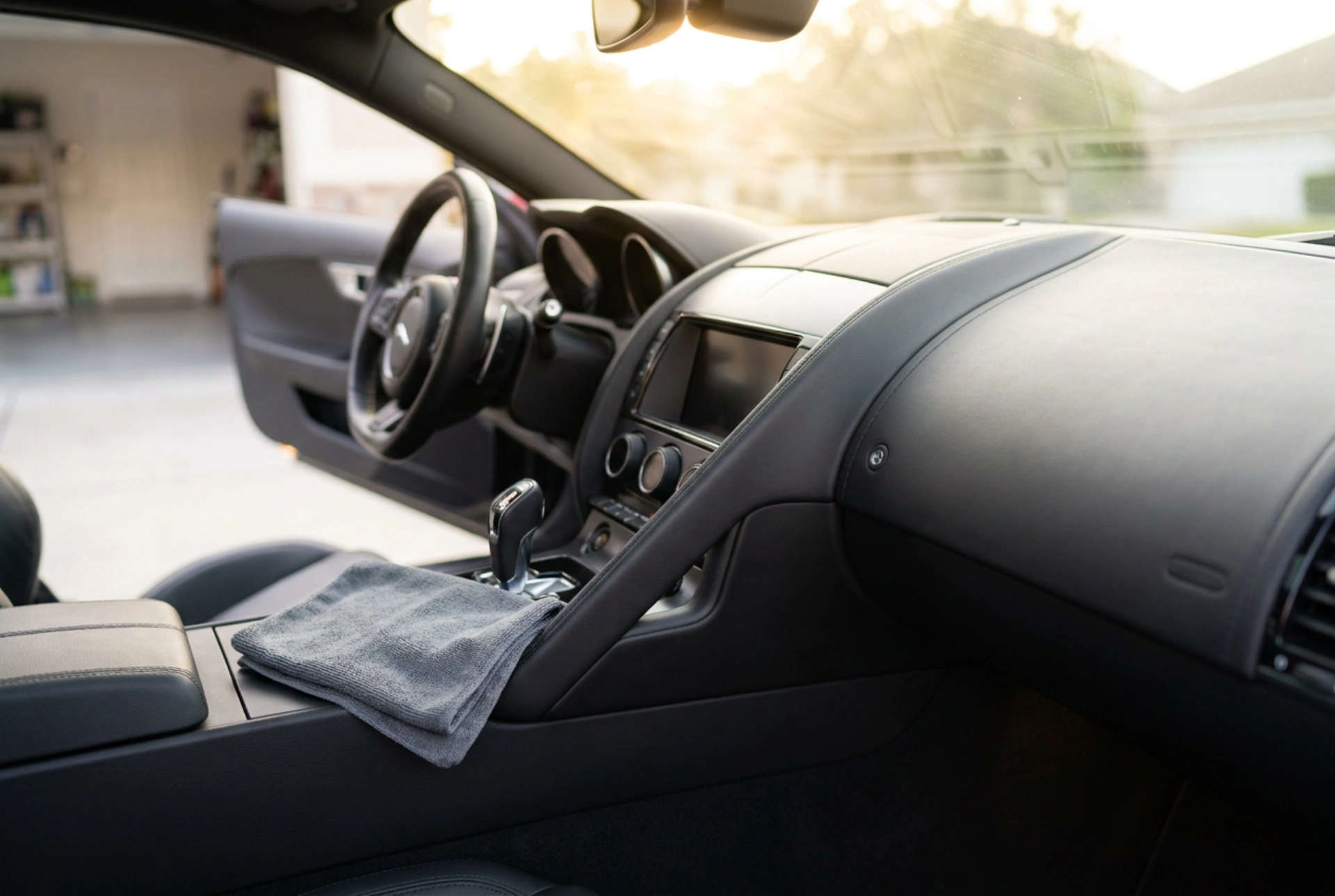


Maintaining a clean and matte finish on your car\'s dashboard and upholstery requires understanding the chemical interactions between cleaning agents and synthetic materials like vinyl, leather, and plastic.
The Chemistry of the Greasy Dashboard
Many commercial car interior care products rely on heavy silicone oils to deliver a temporary shine. While silicone makes surfaces look instantly glossy, it acts as a magnet for airborne dust, pollen, and microscopic road grime. Over time, UV radiation from the sun bakes this mixture of oil and dirt into the porous surfaces of your dashboard, leading to discoloration, stickiness, and premature cracking. To achieve a pristine, factory-fresh matte look, you must strip away these old oil layers and use surfactant-based cleaners that lift grime without leaving behind non-volatile organic compounds.
The Order of Operations for Dust-Free Surfaces
A successful interior cleaning routine follows a strict top-down physical approach to prevent cross-contamination of surfaces. Attempting to wipe down a dashboard before removing loose particulate matter will only grind abrasive dust particles into the soft plastics, creating micro-scratches that permanently dull the material.
- Dry Extraction: Begin by using a soft-bristled brush coupled with a vacuum cleaner. Gently agitate the dust inside air vents, crevices, and seams while holding the vacuum nozzle close to capture the airborne particles immediately.
- Surface Decontamination: Mix a mild, pH-neutral surfactant solution. A few drops of vegetable-based liquid soap in warm distilled water is ideal, as distilled water lacks the mineral ions that cause spotting.
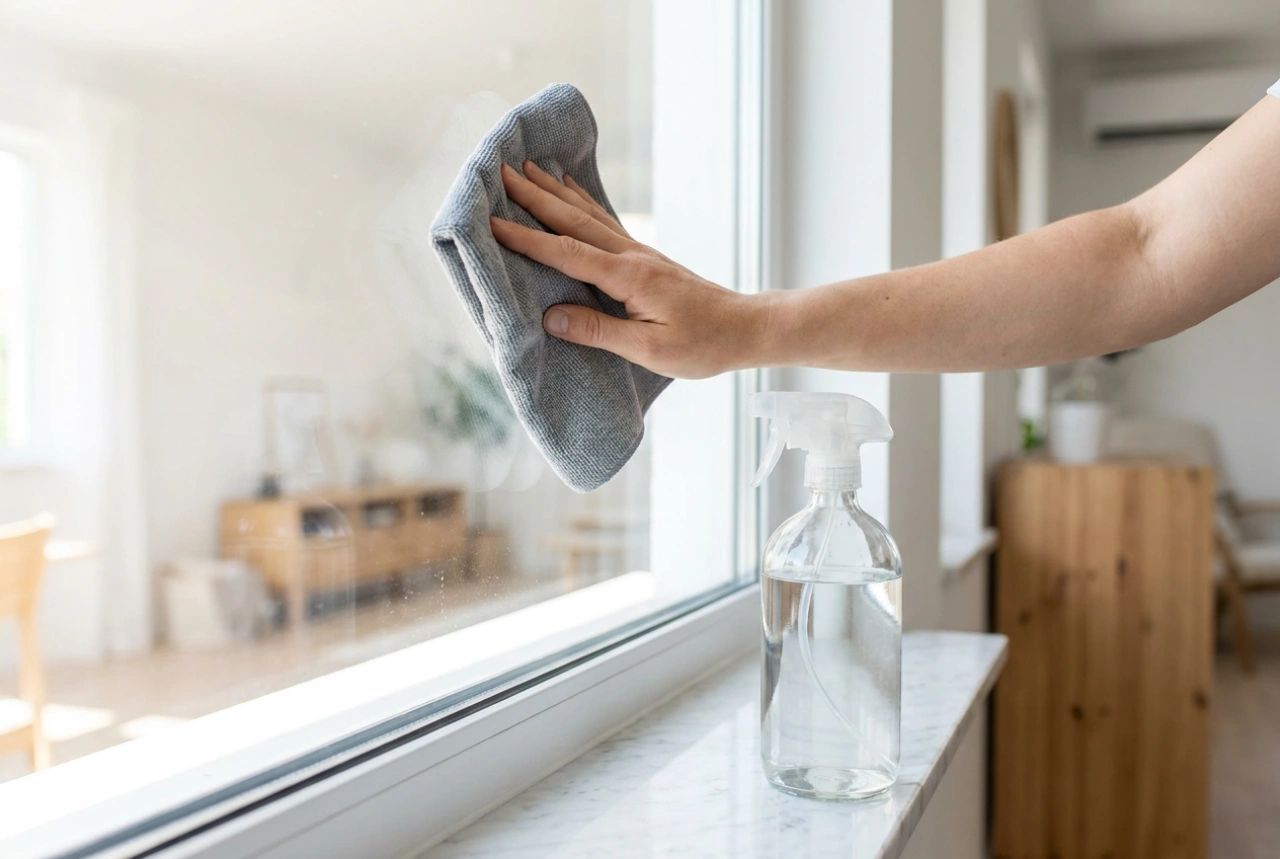
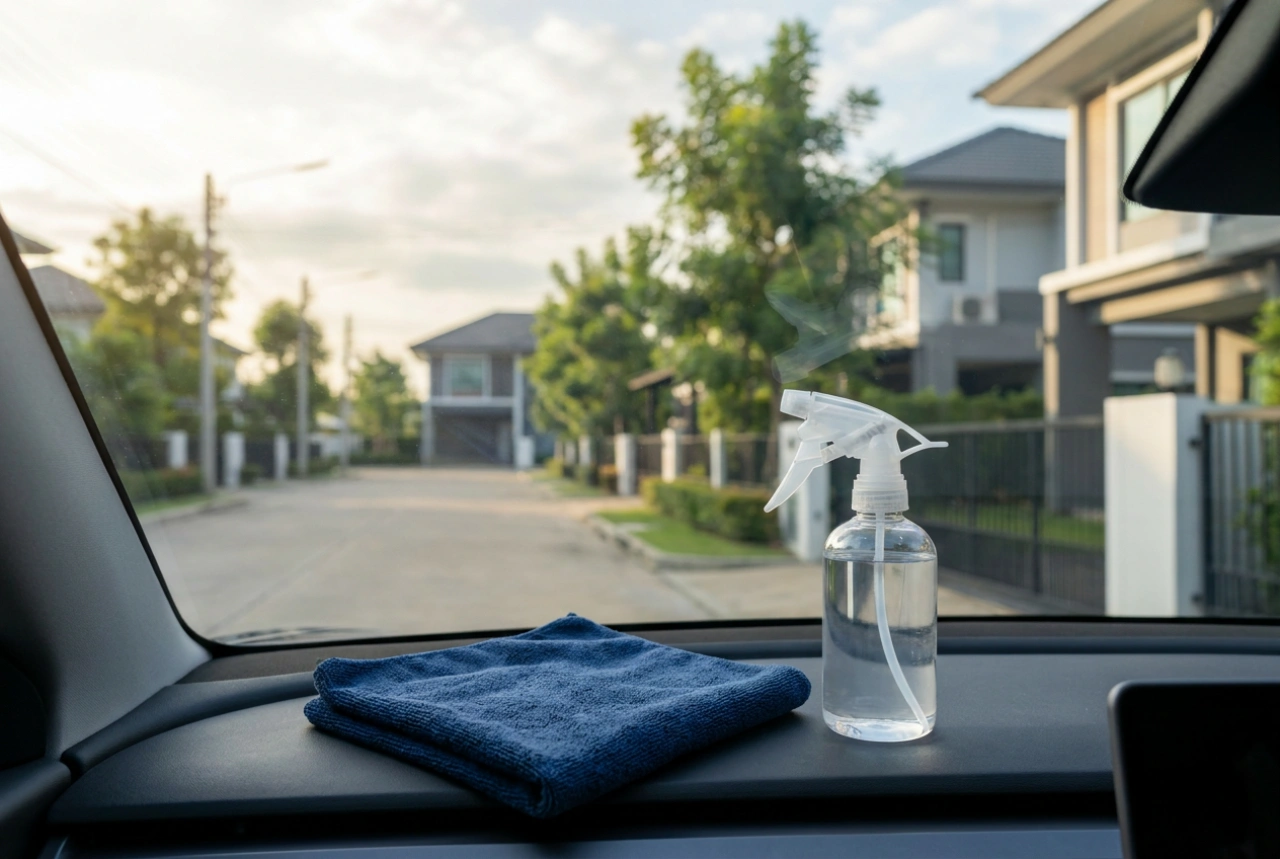
- The Two-Cloth Technique: Spritz the solution sparingly onto a short-pile microfiber cloth—never directly onto the electronics or dashboard. Wipe the surface using linear, overlapping strokes. Immediately follow with a second, dry, high-pile microfiber cloth to buff away any remaining moisture before it evaporates and leaves mineral halos.
Maintaining Upholstery and Plastic Integrity
For modern synthetic leather and textured plastics, avoid harsh degreasers or alcohol-based solvents, which strip the plasticizers that keep the materials flexible. Instead, use specialized cleaning mixtures containing mild non-ionic surfactants. These molecules possess a hydrophilic (water-attracting) head and a lipophilic (fat-attracting) tail. When applied with light circular motions using a melamine foam pad or a soft brush, the lipophilic tails bind to body oils and greasy residues on the steering wheel and gear shift, encapsulating them so they can be easily wiped away with a clean cloth. This restores the natural, non-reflective matte finish of the material, enhancing driving visibility by reducing windshield glare.
Long-Term UV Protection Without the Shine
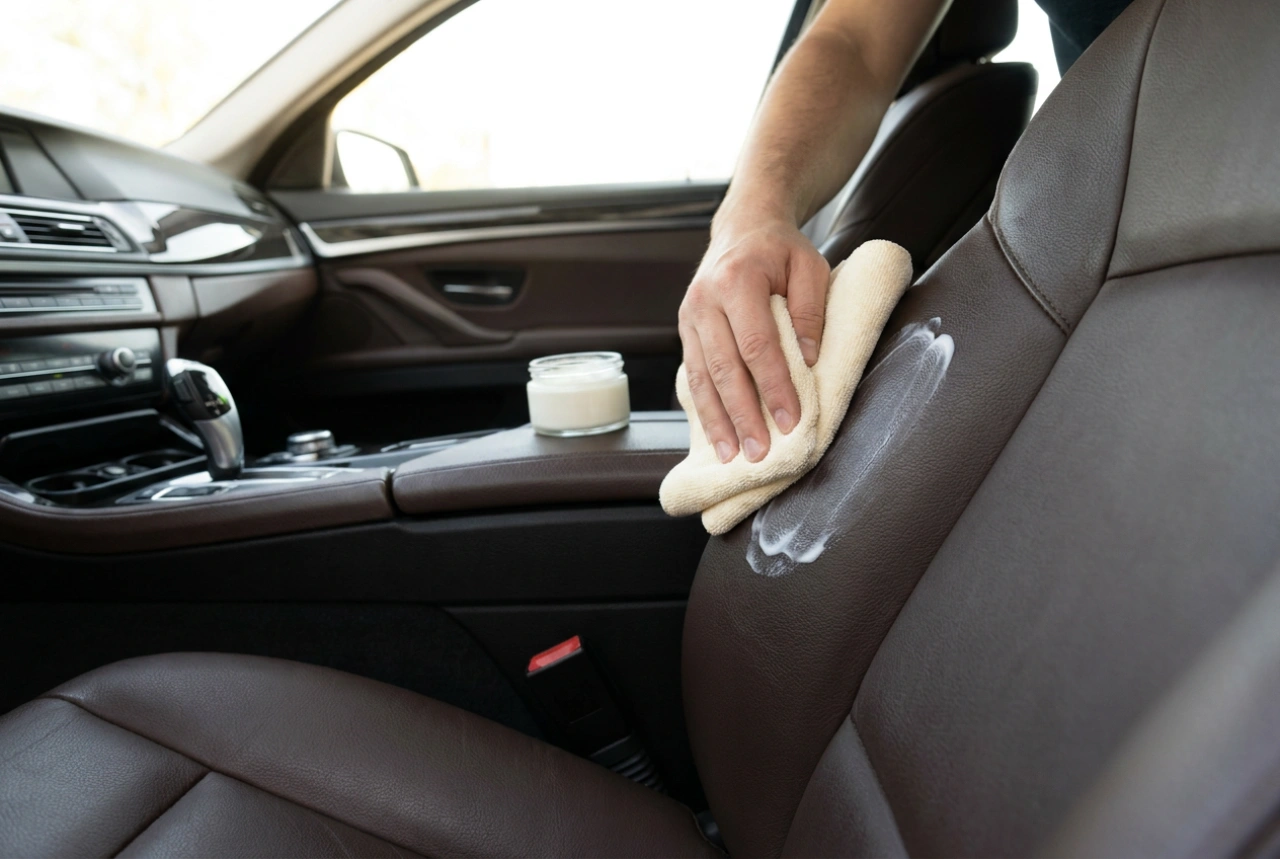
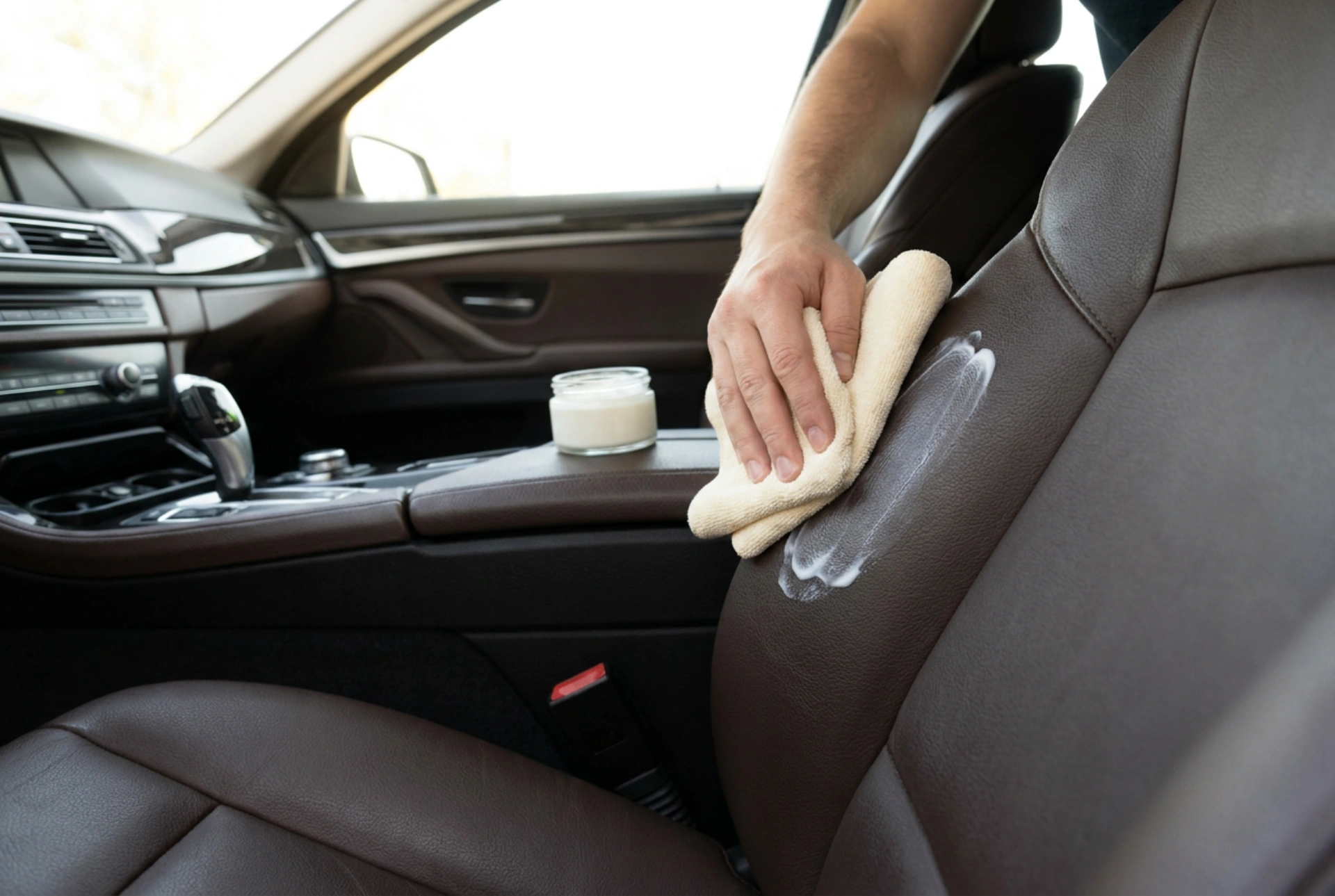
Once the surfaces are chemically clean, they require protection from ultraviolet radiation, which breaks down polymer chains in plastics and causes fading. Opt for water-based UV blockers that contain micro-emulsified protectants rather than silicone oils. These products dry completely matte and form a microscopic sacrificial barrier. Apply a thin layer with a microfiber applicator pad, let it sit for two minutes to bind with the substrate, and then vigorously buff the surface with a clean microfiber cloth to remove any excess product. This ensures deep-level protection against cracking without creating a greasy, dust-attracting film.