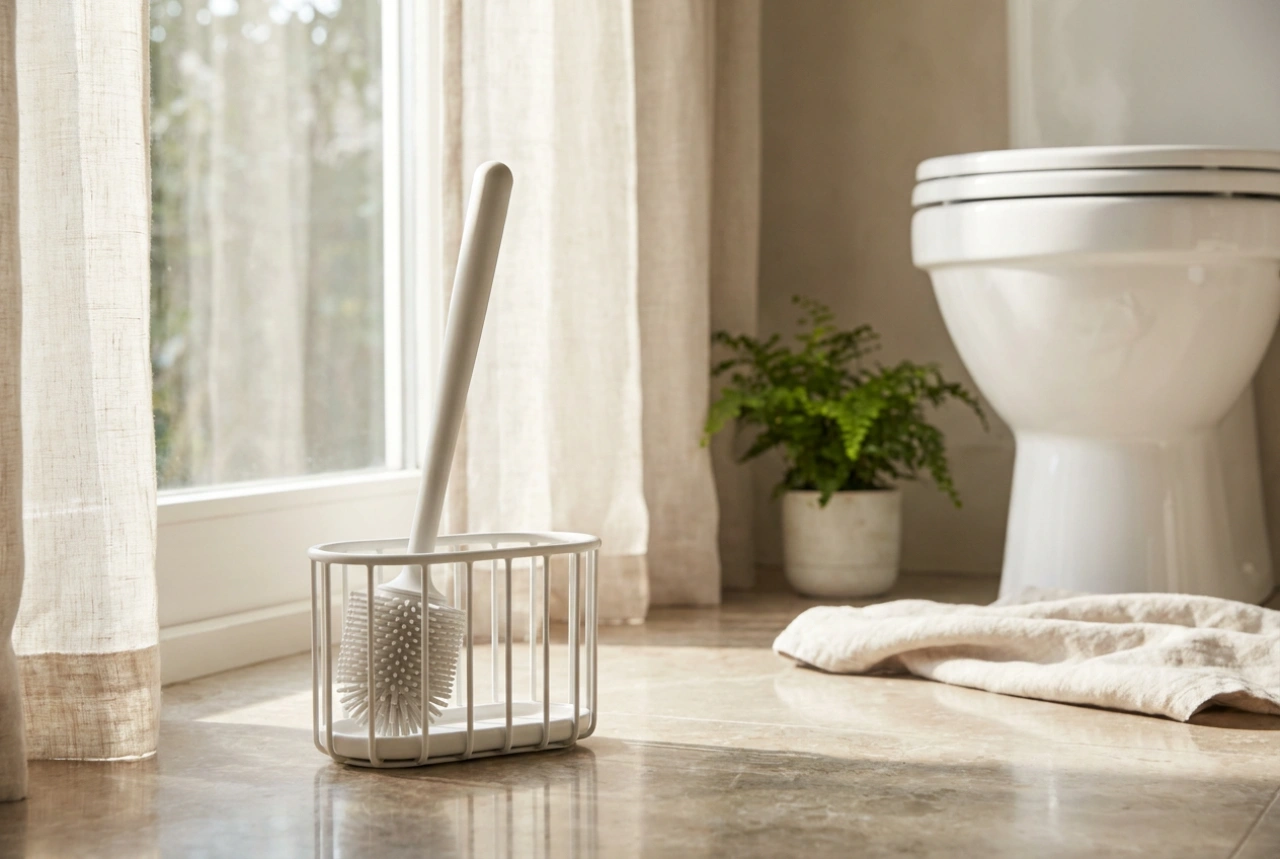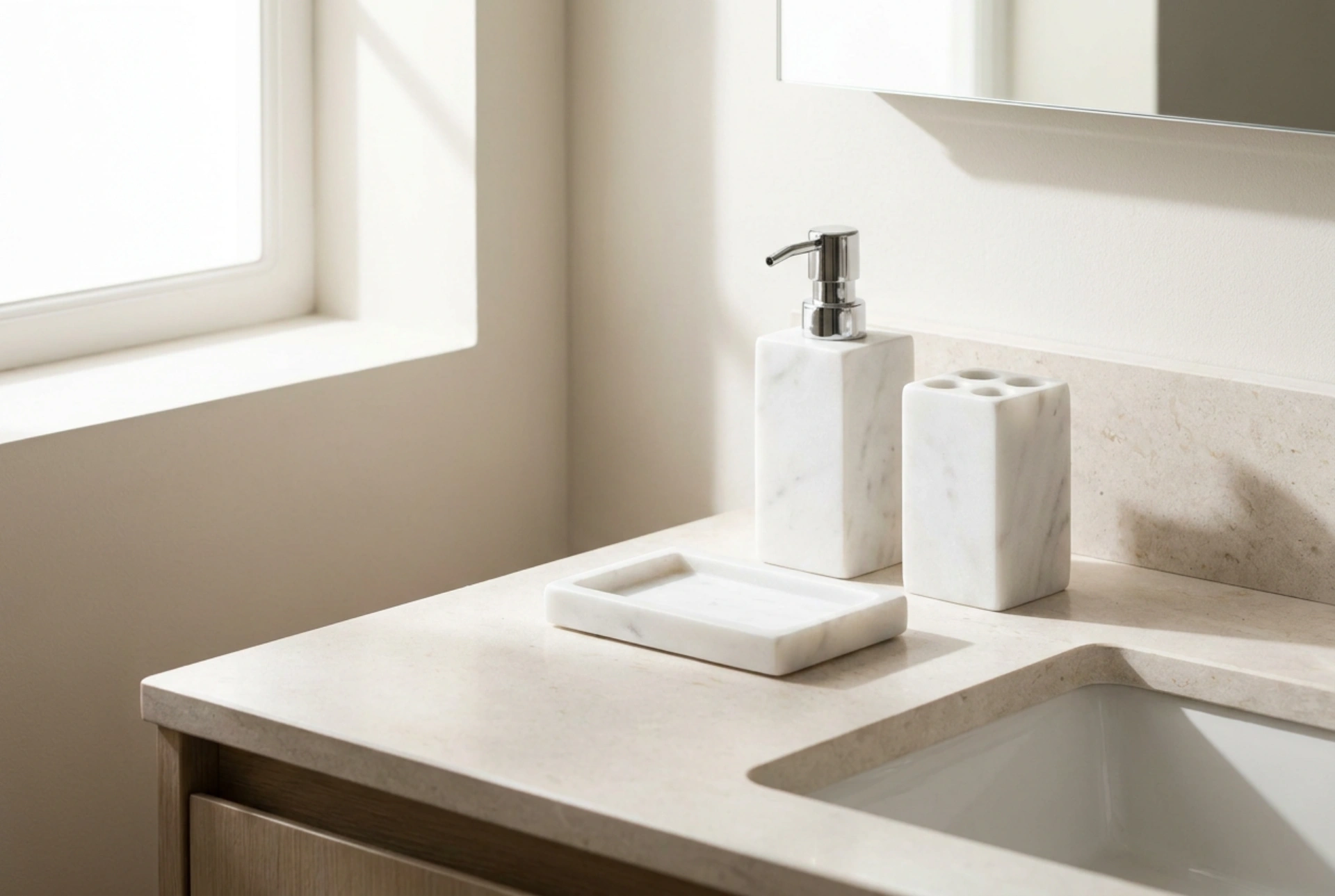


Natural marble toilet brush holders add a sophisticated touch to bathrooms, but their porous calcium carbonate structure makes them highly susceptible to chemical etching, staining, and water marks.
The Chemistry of Marble and Why Common Cleaners Fail
Marble consists primarily of calcium carbonate, a chemical compound that reacts instantly with acidic substances. Standard bathroom cleaners containing citric acid, vinegar, sulfamic acid, or hydrochloric acid will dissolve the top layer of the stone upon contact. This chemical reaction, known as etching, destroys the polished finish and leaves dull, rough, white spots that cannot be washed away. Furthermore, strong alkaline solutions like chlorine bleach can break down the protective sealants applied to the stone, causing discoloration and leaving the marble vulnerable to deep moisture penetration and organic staining from dirty toilet brush water.
The Safe Cleaning Protocol: Step-by-Step
To clean and sanitize both the marble stand and the toilet brush without altering the stone's surface, you must use pH-neutral surfactants and targeted mechanical action.
- Step 1: Dissolving Organic Residues: Mix a few drops of a pH-neutral liquid detergent (such as a basic dish soap or a dedicated stone soap) in lukewarm water. This solution lowers the surface tension of water, allowing it to lift grime and dust without reacting with the calcium carbonate.
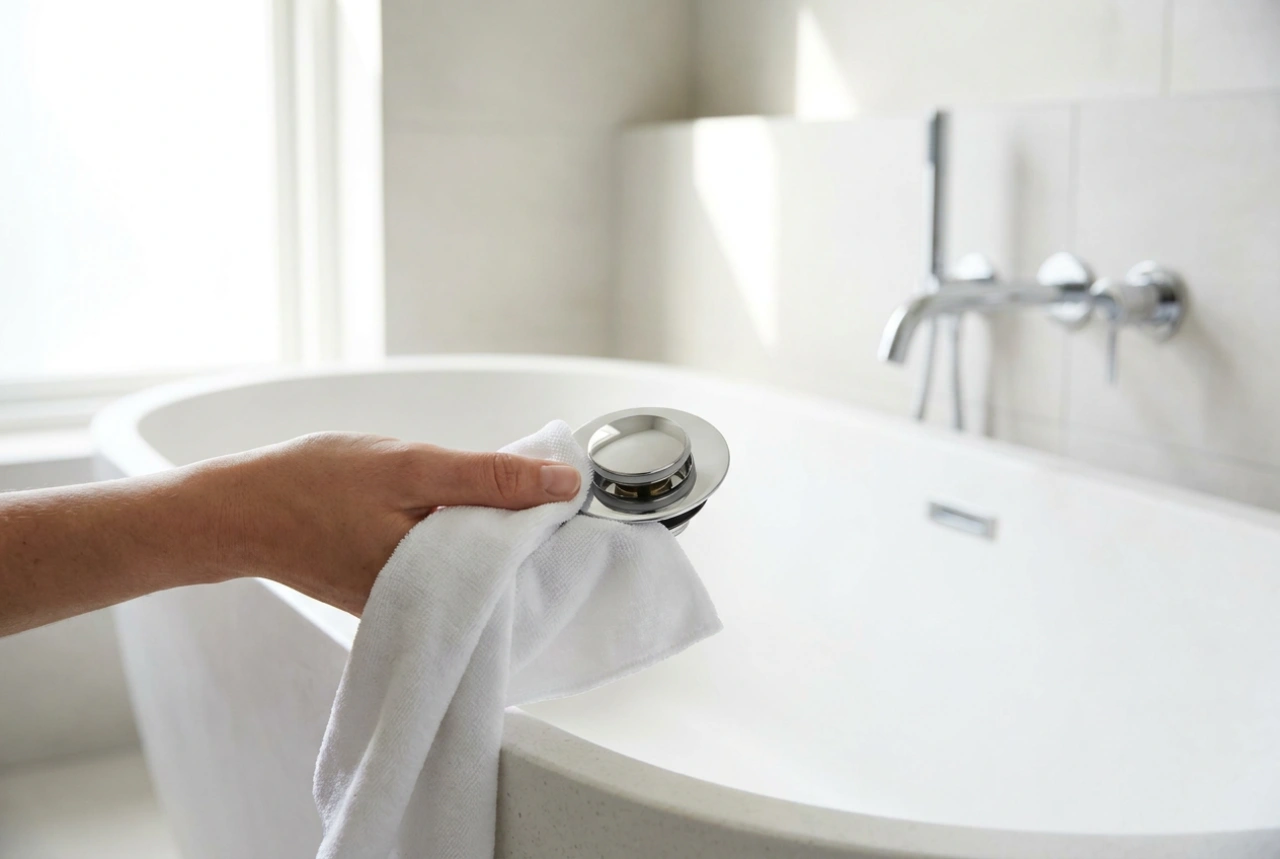
- Step 2: Cleaning the Exterior: Dip a soft microfiber cloth into the soapy water, wring it out thoroughly, and wipe down the exterior of the marble stand. Avoid using abrasive scrubbing pads, steel wool, or stiff brushes, which can create microscopic scratches on the polished surface.
- Step 3: Sanitizing the Interior: The interior cavity of the stand often holds stagnant water and bacteria. Pour in a mixture of lukewarm water and a non-acidic, quaternary ammonium-based disinfectant or a specialized stone disinfectant. Let it sit for three to five minutes to neutralize pathogens, then pour it out.
- Step 4: Cleaning the Brush: Wash the plastic or synthetic bristles of the toilet brush separately in a bucket of hot water mixed with oxygen bleach. Oxygen bleach (sodium percarbonate) releases hydrogen peroxide, which disinfects and removes stains without leaving acidic residues that could drip back onto the marble.
Preventing Water Stains and Limescale Build-Up
Limescale occurs when hard water evaporates, leaving behind calcium and magnesium deposits. Removing these deposits from marble is difficult because the acids required to dissolve limescale also dissolve the marble itself. Prevention is the only viable strategy. Never place a wet toilet brush directly back into the marble stand. Shake the brush thoroughly over the toilet bowl after use, and suspend it between the rim and the seat for a few minutes to air-dry completely. For added protection, apply a breathable, solvent-based impregnating sealer designed for natural stone once a year. This creates a hydrophobic barrier inside the pores, preventing water and organic matter from penetrating the stone.
Eliminating Stubborn Stains with Poultices
If rusty water or organic material has already penetrated the marble and created a dark stain, a liquid cleaner will not work. You must draw the stain out of the stone's pores using a poultice. Mix kaolin clay or baking soda with a tiny amount of hydrogen peroxide to form a thick, paste-like consistency. Apply a five-millimeter layer of this paste directly over the stain, cover it with plastic wrap, and tape down the edges. Let it dry for 24 to 48 hours. As the paste dries, it draws the liquid and the dissolved stain out of the marble and into the clay. Scrape the dry paste away gently with a plastic spatula, rinse with clean water, and wipe dry with a soft cloth.