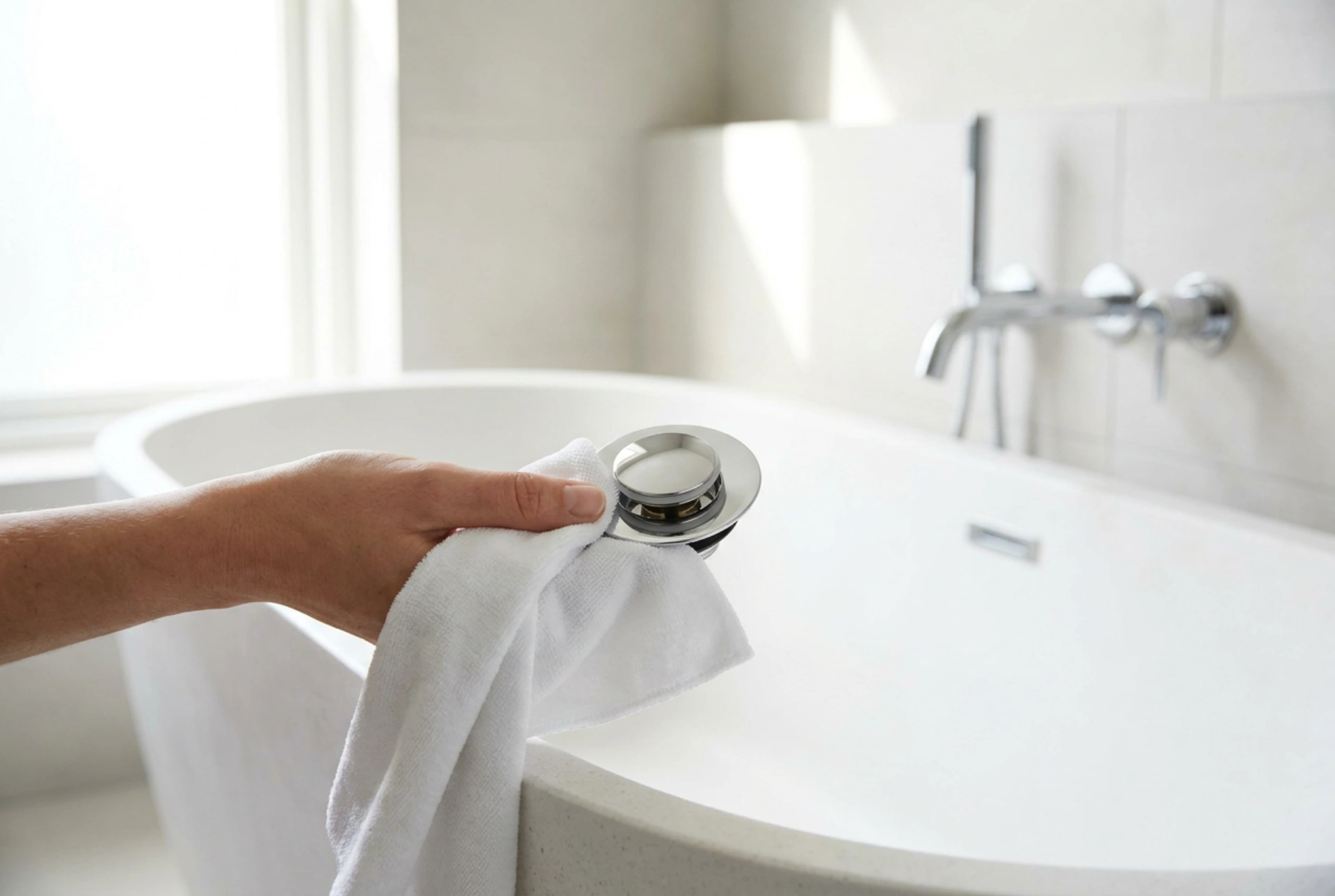


An automatic bathtub pop-up drain that sticks or refuses to budge is usually the result of accumulated limescale, hair, and soap scum seizing the internal mechanical linkages. Restoring its smooth, effortless glide requires understanding the chemistry of these deposits and applying systematic, non-invasive maintenance techniques.
The Anatomy of Pop-Up Drain Friction
To keep an automatic drain operating smoothly, it helps to understand its physics. Most bathtubs use one of two systems: a click-clack (push-push) spring mechanism, or a rotary cable system operated by turning the overflow dial. Both rely on tight mechanical tolerances and smooth sliding surfaces to seal and open. When hard water evaporates around these components, it leaves behind calcium carbonate (limescale). Soap scum, which consists of calcium and magnesium salts of fatty acids, binds to this limescale, creating a sticky, high-friction coating. Hair then wraps around the central pin or spring housing, acting as a reinforcing fiber that physically locks the mechanism in place. If left untreated, the increased resistance can bend the internal brass rods or snap the driving cable behind the tub wall.
The Chemistry of Gentle Limescale Removal
Removing these hardened deposits requires a targeted chemical approach that dissolves the mineral matrix without damaging the delicate chrome, brass, or plastic parts of the drain. Harsh mineral acids, such as hydrochloric acid, should be avoided as they can strip the polished chrome plating or corrode the brass underneath. Instead, utilize weak organic acids like citric acid. Citric acid acts as an excellent chelating agent; it binds to the calcium ions in the limescale, converting insoluble calcium carbonate into highly soluble calcium citrate. To optimize this reaction, prepare a warm solution (approximately 40 to 50 degrees Celsius) using two tablespoons of citric acid powder dissolved in half a litre of water. This temperature accelerates the chemical reaction without reaching levels that could warp or degrade the synthetic rubber gaskets sealing the assembly.
Step-by-Step Maintenance and Cleaning
Regular maintenance should be performed every few months to prevent complete seizure of the mechanism. Follow these systematic steps to restore free movement safely:
- Extract the Plug: For click-clack plugs, unscrew the metal cap counterclockwise. If it rotates without unscrewing, gently hold the lower brass shaft with pliers wrapped in a soft cloth to protect the threads, then unscrew the top. For cable-operated systems, simply lift the plug straight up; it is usually held in place by gravity on a guiding rocker arm.
- Remove Physical Obstructions: Use a small, flexible plastic hook or a pair of tweezers to extract hair and lint from the drain crosshairs. Do not shove sharp metal tools deep into the drain, as this can puncture the flexible overflow pipe or dislodge the seals.
- Soak the Components: Submerge the removed plug assembly and its brass spring mechanism in the warm citric acid solution for 15 to 20 minutes. You will observe effervescence as the acid neutralizes the alkaline limescale.
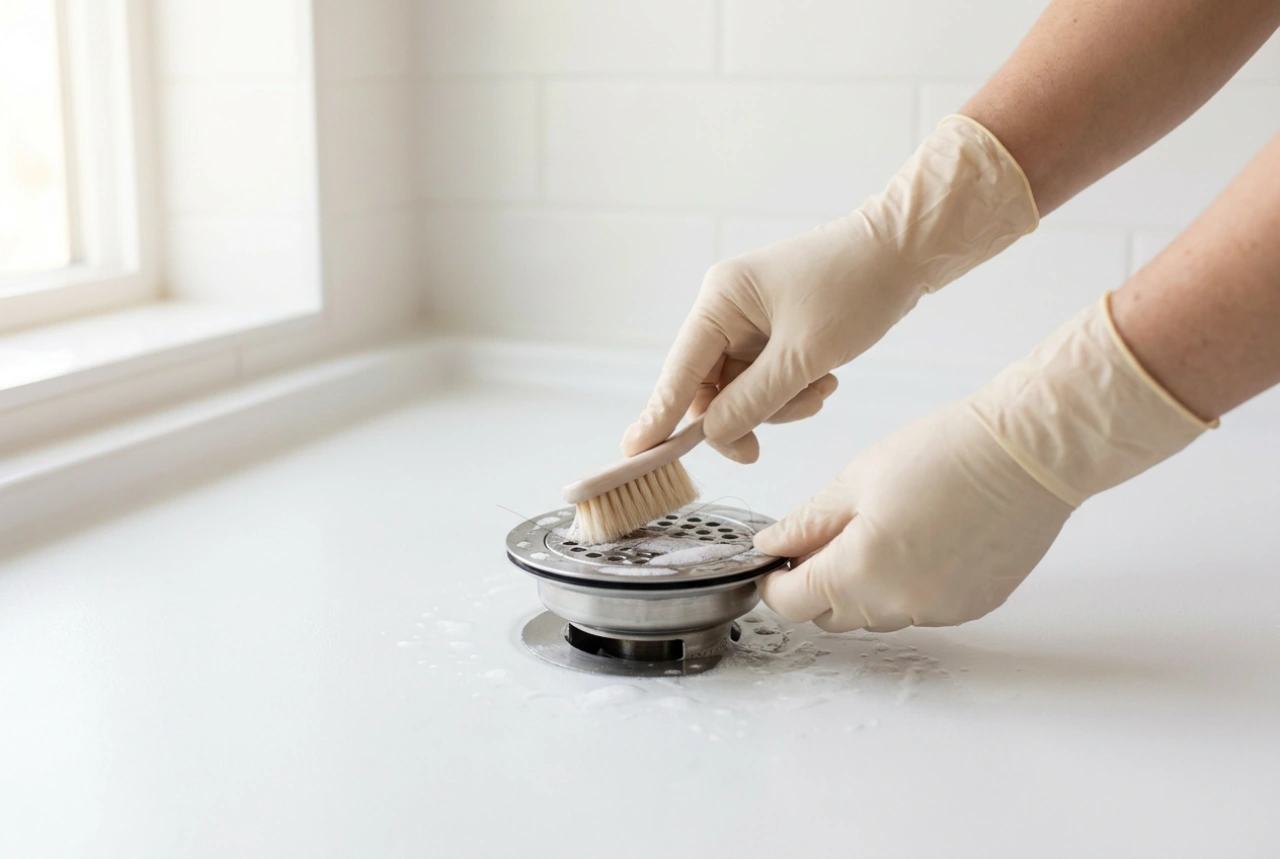
- Clean the Drain Well: Dip a stiff-bristled utility brush into the acid solution and thoroughly scrub the inside of the drain housing, focusing on the guide channels where the plug shaft slides.
Lubrication and Seal Protection
After cleaning and drying the components, proper lubrication is vital to prevent future binding. Never use petroleum-based lubricants or penetrating oils, as these hydrocarbons swell and degrade the synthetic rubber O-rings, ultimately causing the seal to fail and stick. Instead, apply a thin, even layer of pure silicone grease (often sold as plumber's grease). Silicone is highly hydrophobic, meaning it repels water and prevents soap scum from adhering to the sliding surfaces. It is also chemically inert, ensuring it will not degrade the rubber seals or plastic guides. Coat the rubber O-ring, the central brass shaft, and the spring housing before reassembling the unit.
Preventive Habits for Daily Use
Maintaining a smooth drain mechanism also relies on daily habits. Always flush the drain with hot water for several seconds after emptying the tub; this melts away residual fatty acids from bath oils and soaps before they cool and solidify on the mechanism. Additionally, cycle the drain mechanism open and closed a few times during your weekly cleaning routine, even if the tub is not in use. This simple physical movement breaks up microscopic mineral crystals before they can bond into a solid, stubborn crust.