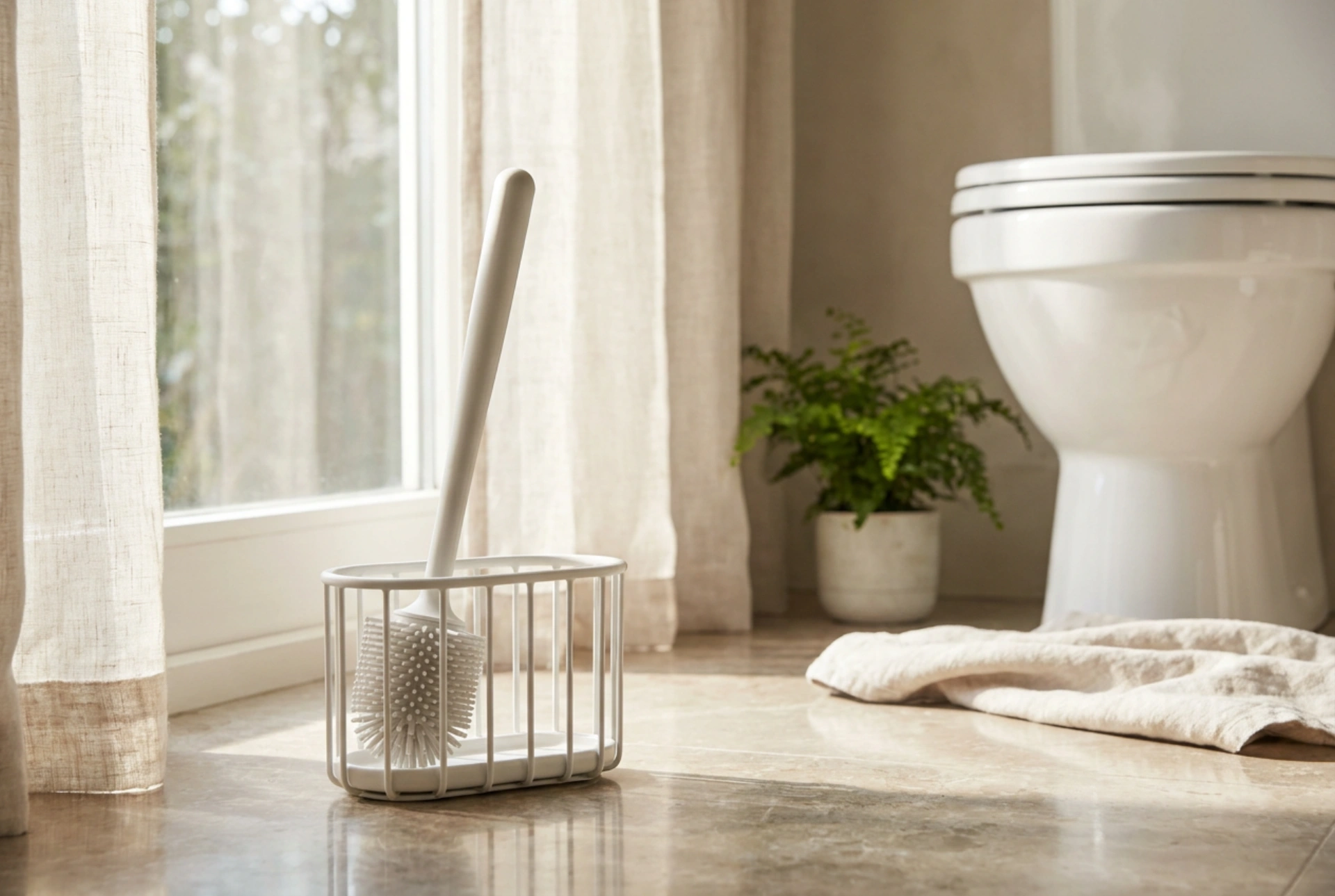


Silicone toilet brushes dry significantly faster than traditional nylon-bristled brushes due to fundamental differences in material physics, surface tension, and structural design. Understanding how water interacts with these materials helps explain why silicone remains a superior hygienic choice for modern bathrooms.
The Physics of Hydrophobicity in Silicone
The primary reason silicone toilet brushes dry so quickly lies in the hydrophobic nature of the material. Silicone is a synthetic polymer made of silicon, oxygen, carbon, and hydrogen. The chemical structure of silicone gives it a very low surface energy. When water comes into contact with a low-energy surface, it cannot easily spread out or wet the material. Instead, the water molecules, driven by their own cohesive forces, pull themselves together into tight, spherical beads.
This phenomenon is measured by the contact angle of the water droplet. On a highly hydrophobic surface like silicone, the contact angle is large (typically over 90 degrees), meaning the droplet maintains a spherical shape with minimal contact area. Because the water cannot cling to the silicone nubs, gravitational force easily overcomes the weak adhesion between the droplet and the brush. When you lift a silicone brush, the vast majority of water instantly slides off, leaving only microscopic traces that evaporate in minutes. In contrast, standard plastic or nylon bristles have higher surface energy, allowing water to wet the fibres and remain trapped.
Capillary Action and Bristle Architecture
To understand why traditional brushes remain wet for hours, we must examine capillary action. Traditional toilet brushes consist of hundreds of thin, flexible nylon bristles packed tightly together at the base. The microscopic spaces between these bristles act as capillary tubes. When the brush is submerged, water is drawn into these narrow gaps by capillary forces, where surface tension drags the liquid upward against gravity. This trapped water cannot drain easily and remains suspended within the brush head for a long time.
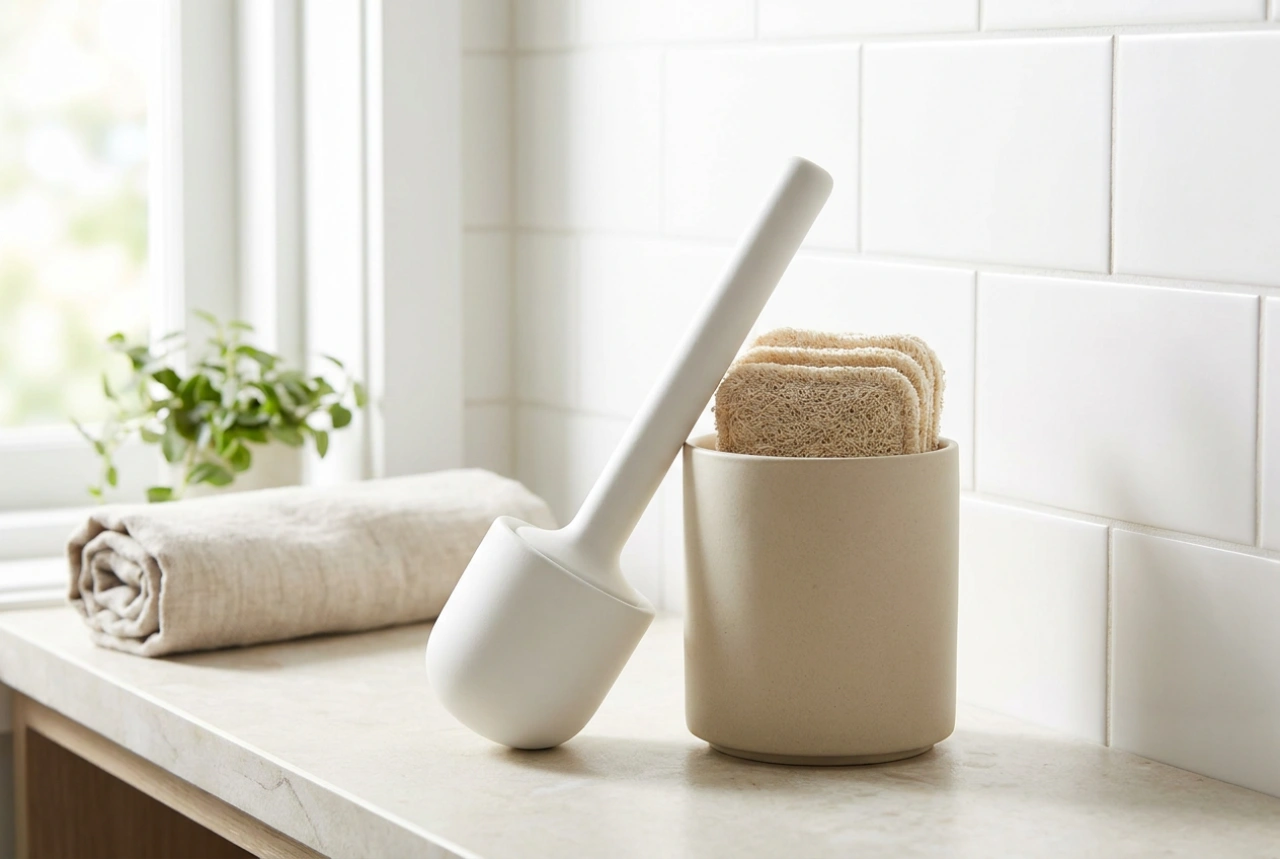
Silicone brushes completely eliminate this problem through their design and spacing. Instead of tightly packed, thin fibres, silicone brushes feature thicker, widely spaced individual nubs or a single integrated D-shaped head. Because the distance between these silicone elements is large, capillary action cannot occur. There are no narrow channels to pull or hold water, allowing gravity to pull the liquid down unimpeded. The physical layout of the brush ensures that water has nowhere to hide.
The Impact of Material Density on Hygiene
Nylon and other synthetic plastics used in traditional brushes are microscopic-level porous materials. Over time, physical wear, friction, and exposure to acidic or alkaline cleaning agents create microscopic scratches and crevices where moisture and organic matter can hide. This damp, sheltered environment is ideal for bacterial colonisation and unpleasant odours.
Silicone, however, is highly dense, elastic, and non-porous. It does not absorb water, nor does it develop the microscopic surface degradation that traps moisture. Because the surface remains smooth, flexible, and impermeable, water cannot penetrate the material. Once the surface droplets shed, the brush is functionally dry, depriving bacteria of the liquid medium required to survive and multiply.
Best Practices for Post-Cleaning Maintenance
To ensure your silicone toilet brush dries as efficiently as possible, a simple physical routine should be followed after every use. Implementing these steps maximises the material benefits of silicone:
- Mechanical Agitation: Before returning the tool to its holder, gently tap the brush head against the inner rim of the toilet bowl. This mechanical force easily dislodges any remaining water beads due to the low adhesion of the silicone surface.
- Optimised Air Circulation: Select a brush holder with an open-air suspension design or a ventilated base. Proper air circulation allows the minimal residual moisture on the silicone surface to evaporate rapidly.
- Proper Placement: Ensure the brush head is suspended within the holder rather than sitting in a pool of collected liquid, which prevents air from circulating around the individual nubs.
By relying on material science rather than harsh chemicals, a silicone brush maintained with these simple habits remains dry, odourless, and sanitary for significantly longer than its traditional counterpart.