

Washing a backpack in a washing machine requires a careful balance of mechanical protection, thermal control, and chemical selection to avoid deforming the padded straps and stripping the protective zipper coatings. By understanding how synthetic textiles and hardware react to the wash cycle, you can safely restore your bag's cleanliness without compromising its structural integrity.
The Science of Backpack Materials and Mechanical Stress
Most modern backpacks are constructed from synthetic polymers, primarily nylon (polyamide) or polyester. These fibers are exceptionally durable and resistant to abrasion, but they are often paired with polyurethane (PU) internal coatings for water resistance. High temperatures and aggressive mechanical agitation in a washing machine can cause this coating to crack, peel, and delaminate. Furthermore, the supportive shoulder straps and back panels contain open-cell or closed-cell polyethylene foam. Under intense pressure and high spin speeds, this foam can fold, compress permanently, or shift within its fabric sleeve, leading to lumpy, uncomfortable straps that lose their load-bearing ergonomics.
Protecting Zippers and Hardware from Impact
Metal and plastic zippers, buckles, and adjustment slides are highly vulnerable during a machine wash. Loose straps can wrap around the agitator or become wedged between the drum and the door seal, causing catastrophic tearing. Zippers are subjected to repeated impact against the metal drum, which can chip their protective paint, bend individual teeth, or misalign the slider. To mitigate these risks, all zippers must be completely closed before washing. This stabilizes the zipper chain, making it less susceptible to twisting and breaking. Additionally, turning the backpack inside out—if the stiffness of the back panel allows—creates a physical fabric barrier that shields the hardware from direct impact.
The Physics of the Mesh Laundry Bag
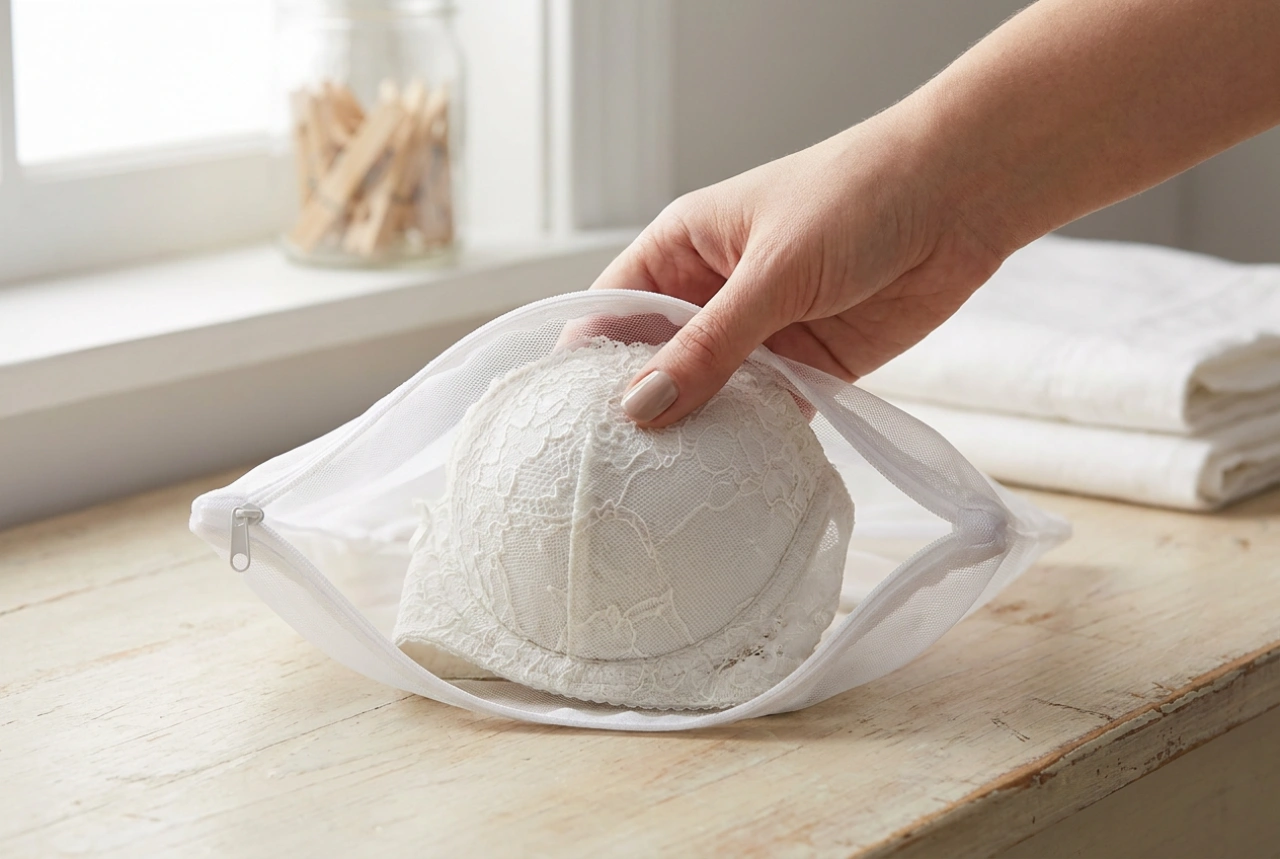
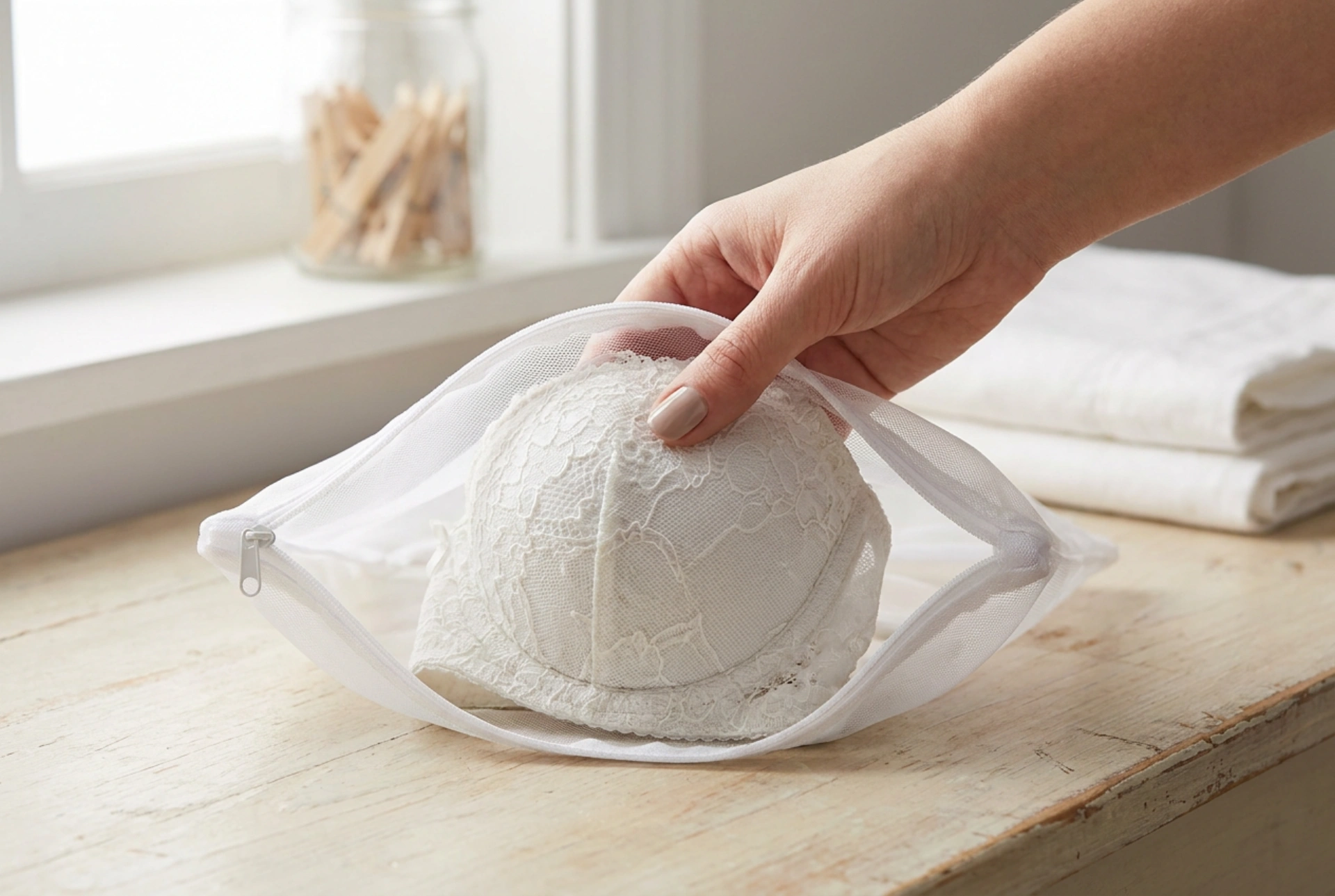
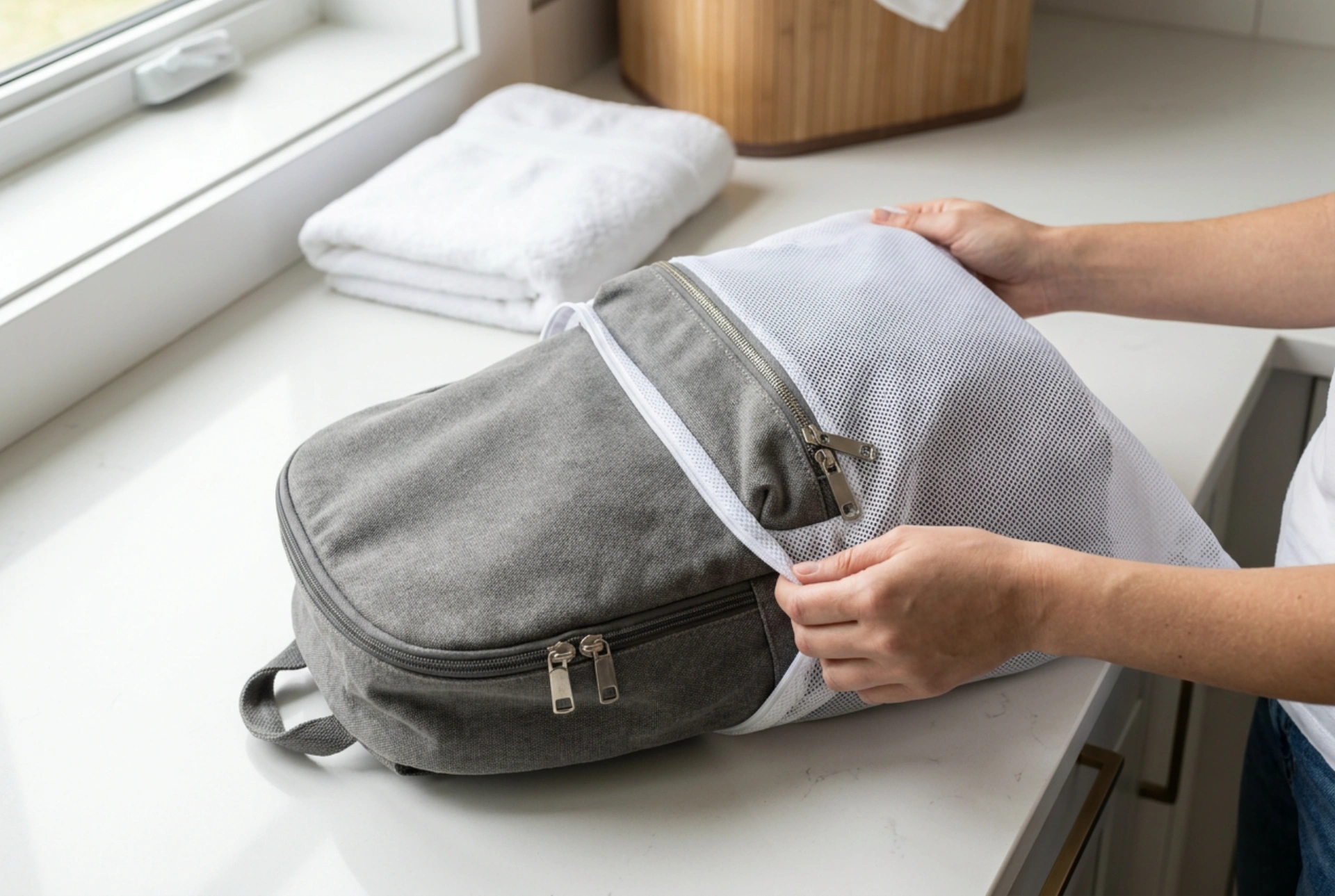
Using a spacious, breathable mesh laundry bag is the single most effective way to prevent physical damage. The mesh bag acts as a kinetic buffer, absorbing the friction of the rotating drum while allowing water and detergent to flow freely through the fabric. It confines loose straps, buckles, and pull tabs, preventing them from catching on the drum's perforation holes. If a mesh bag of sufficient size is unavailable, an alternative is placing the backpack inside a sturdy, uncolored cotton pillowcase and tying the open end securely with a fabric strip. This simple physical barrier prevents friction-induced pilling of the nylon fibers.
Detergent Chemistry and Cycle Settings
When selecting a cleaning agent, avoid standard powder detergents. Undissolved powder granules can act as physical abrasives, lodging in the zipper teeth and grinding down the sliding mechanism over time. Instead, opt for a mild liquid detergent free of optical brighteners and fabric softeners. Fabric softeners leave a chemical residue that degrades the breathability of technical mesh fabrics and weakens the adhesion of water-repellent coatings. Set your machine to a delicate or wool cycle with a maximum water temperature of 30°C (86°F). This cool temperature prevents thermal shrinkage of the synthetic fibers and protects the structural adhesives. Crucially, reduce the spin speed to a minimum (no higher than 400 to 600 RPM) or disable it entirely to eliminate the crushing centrifugal force that deforms foam padding.
Drying Techniques: Preserving Form and Preventing Mildew
Never place a backpack in a tumble dryer. The high heat of a dryer will warp plastic buckles, shrink synthetic fibers, and permanently melt the internal polyurethane waterproof backing. Instead, rely on gravity and airflow. After the wash cycle, gently press the padded areas with a clean towel to absorb excess water—do not wring or twist the straps. Hang the backpack upside down by its bottom straps or a sturdy clothes hanger in a well-ventilated, shaded area. Hanging it upside down allows water trapped in the deep pockets and foam padding to drain downward and evaporate quickly, preventing the formation of mold and mildew within the internal seams.