

Restoring the bright, snow-white appearance of delicate sheer curtains while keeping them entirely wrinkle-free relies on understanding fiber physics and precise water temperature control.
The Chemistry of Yellowing and How to Reverse It
Over time, synthetic curtain fibers like polyester, nylon, and organza attract dust, grease, and nicotine residues, which bond to the material and cause yellowing. Standard detergents often fail to break these bonds, but specific chemical reactions can dissolve the discoloration without damaging the delicate structure.
- Oxygen Bleach Reaction: Sodium percarbonate, when dissolved in water above 40 degrees Celsius, releases active oxygen. This process breaks down organic stains and yellowing through oxidation, lifting particles from the fabric fibers without the fiber-weakening effects of chlorine.
- Acidic Neutralization: Mineral deposits from hard water can stiffen synthetic fibers, making them prone to creasing. Adding citric acid or distilled white vinegar to the rinse cycle neutralizes alkaline detergent residues and dissolves calcium buildup, relaxing the yarns.
Pre-Soaking: The Essential First Step
Never place dusty curtains directly into the washing machine. Doing so forces loose dust and soot deeper into the heated wet fibers, graying the fabric permanently. Begin with a structured pre-soak.
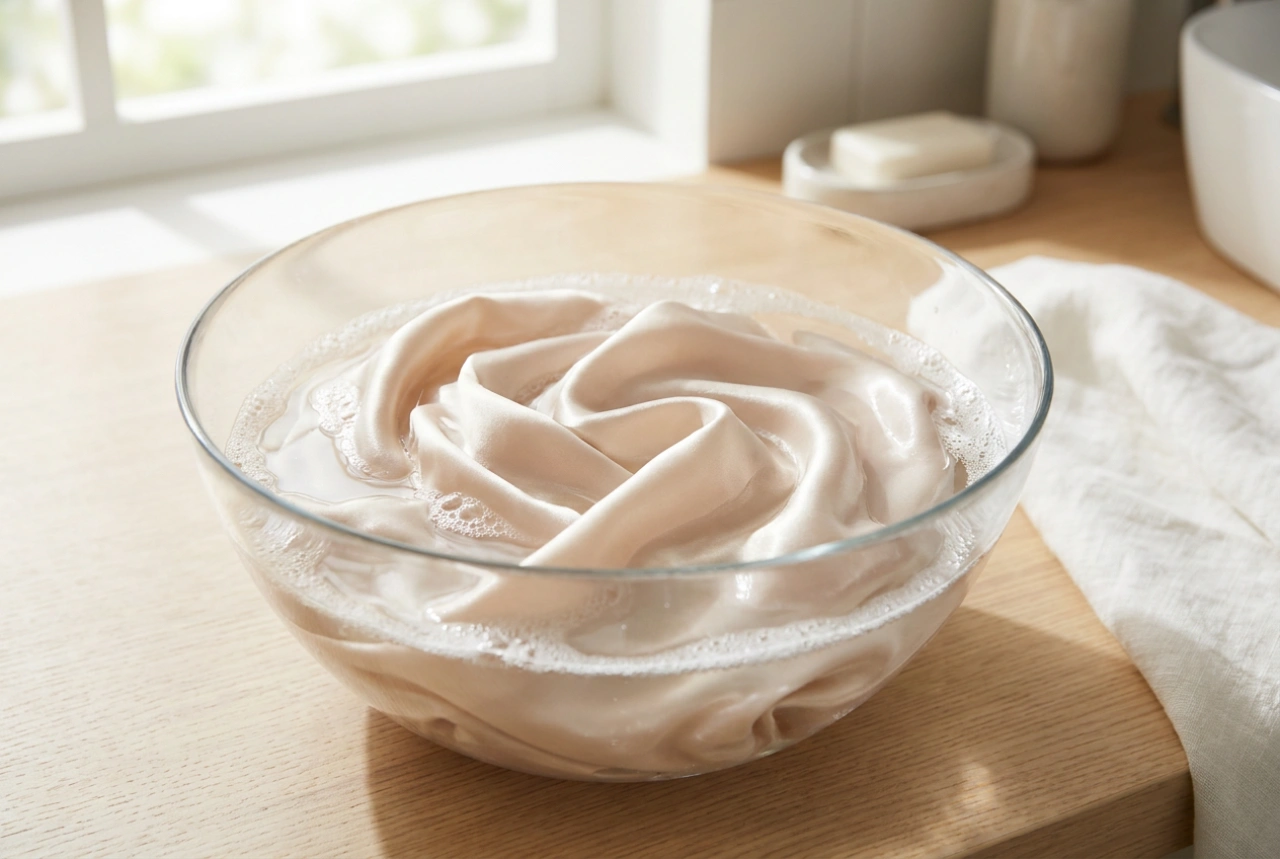
Fill a large tub with lukewarm water (around 30 degrees Celsius) and dissolve half a cup of oxygen bleach or sodium bicarbonate. Submerge the folded curtains gently. Avoid squeezing or wringing, which creates sharp micro-creases in synthetic polymers. Allow the fabric to soak for at least three to four hours. The water will turn cloudy as surface dust dissolves. Drain this water completely before moving to the machine wash.
The Physics of a Wrinkle-Free Machine Wash
Avoiding the tedious task of ironing curtains requires managing mechanical friction, thermal shock, and water retention within the washing machine drum.
1. Load Capacity and Folding Technique
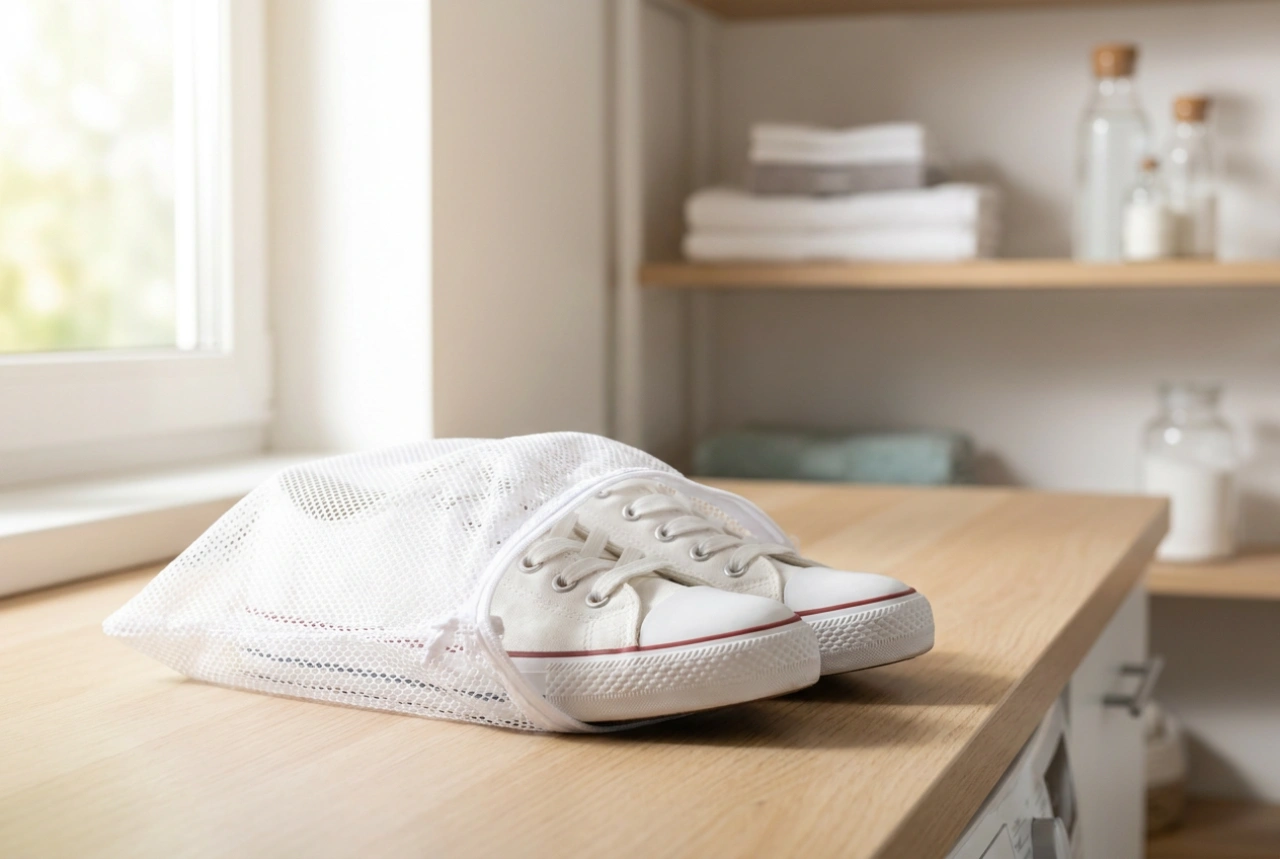
Friction inside a crowded drum is the primary cause of stubborn creases. Only fill the drum to one-third of its maximum capacity. Before loading, fold the curtains loosely into a neat rectangle and place them inside a large mesh washing bag. This limits the chaotic twisting and tangling of fabric during the wash cycle.
2. Temperature and Cycle Selection
Select a delicate or hand-wash cycle. The water temperature must not exceed 30 degrees Celsius. High temperatures soften synthetic fibers, making them highly susceptible to permanent deformation and creasing when subjected to spinning. Keep the spin speed to a maximum of 400 RPM, or turn off the spin cycle entirely to let the water drain naturally.
3. The Role of Fabric Softeners and Rinsing
Avoid heavy commercial fabric softeners, which leave a coating that attracts dust and speeds up future yellowing. Instead, use a simple rinse solution of water and citric acid in the softener compartment to ensure all detergent residues are thoroughly flushed out, leaving the fibers soft and naturally weighted.
Drying and Gravity: Natural Tension Alignment
The final step to eliminating the need for ironing lies in utilizing gravity while the fibers are still wet and pliable.
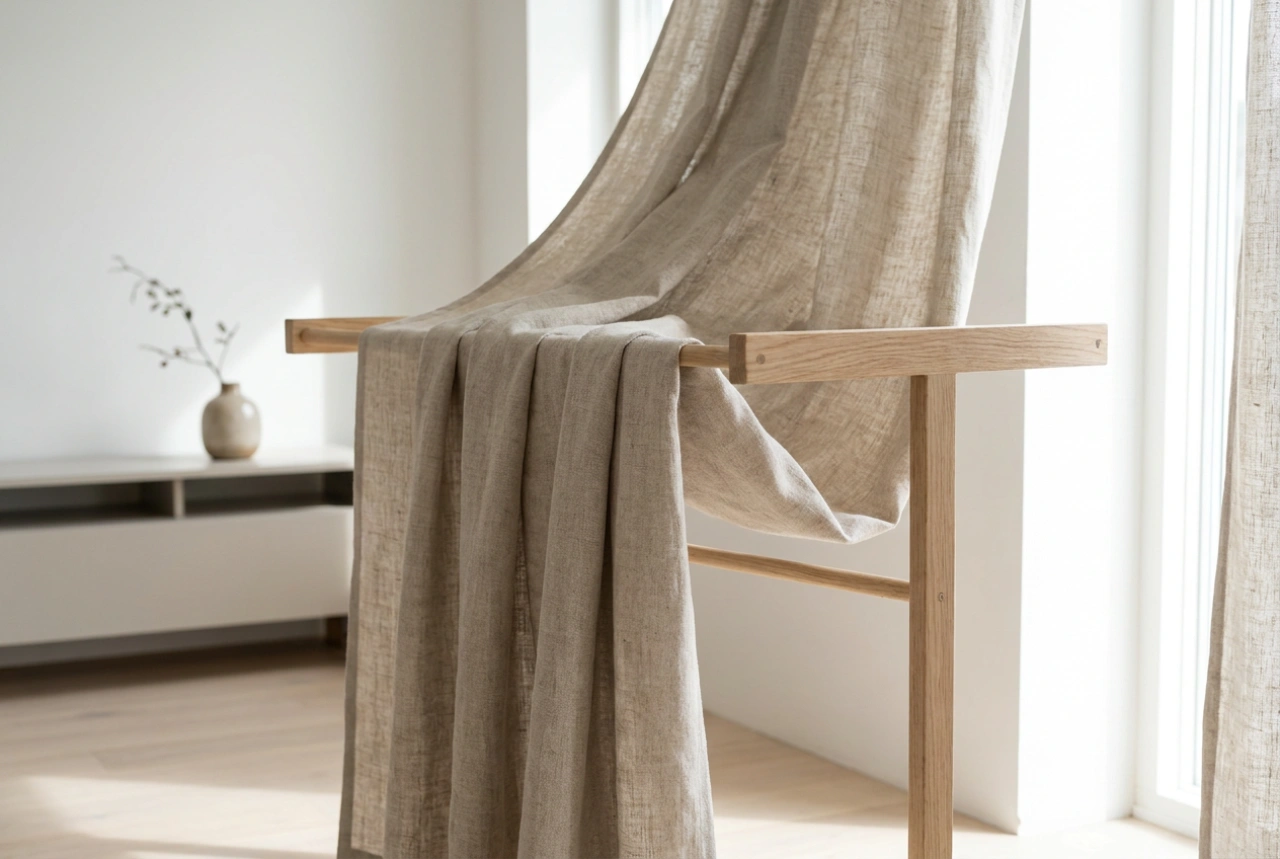
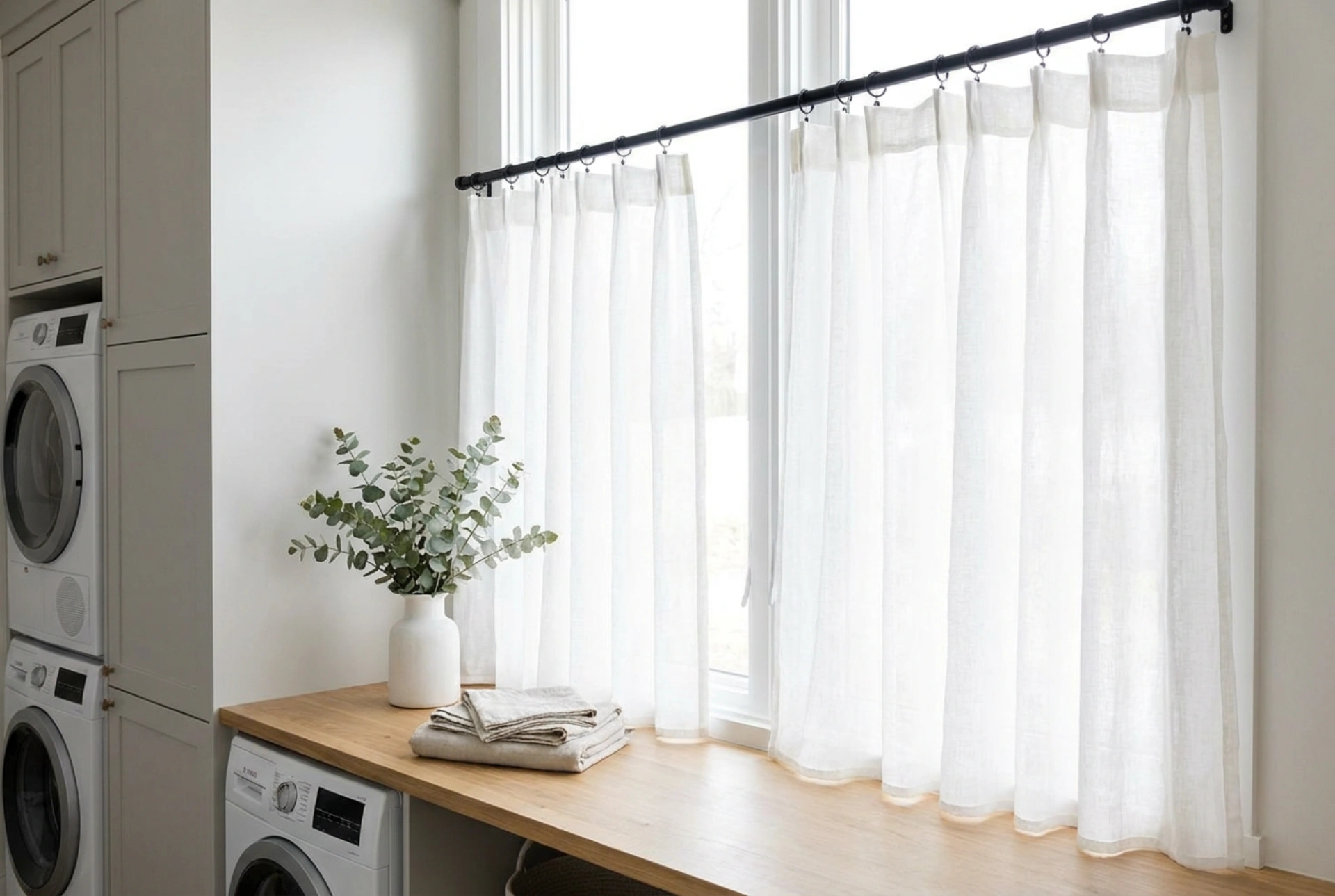
Remove the curtains from the machine immediately after the cycle finishes. Do not let them sit clumped in the drum, as wrinkles set quickly. Hang the damp curtains directly onto their curtain rods. The weight of the absorbed water acts as a natural tensioning agent, pulling the fabric down and smoothing out any minor waves or creases as it evaporates. Ensure the room is well-ventilated to allow steady, even drying, preventing musty odors from developing in the damp fabric.