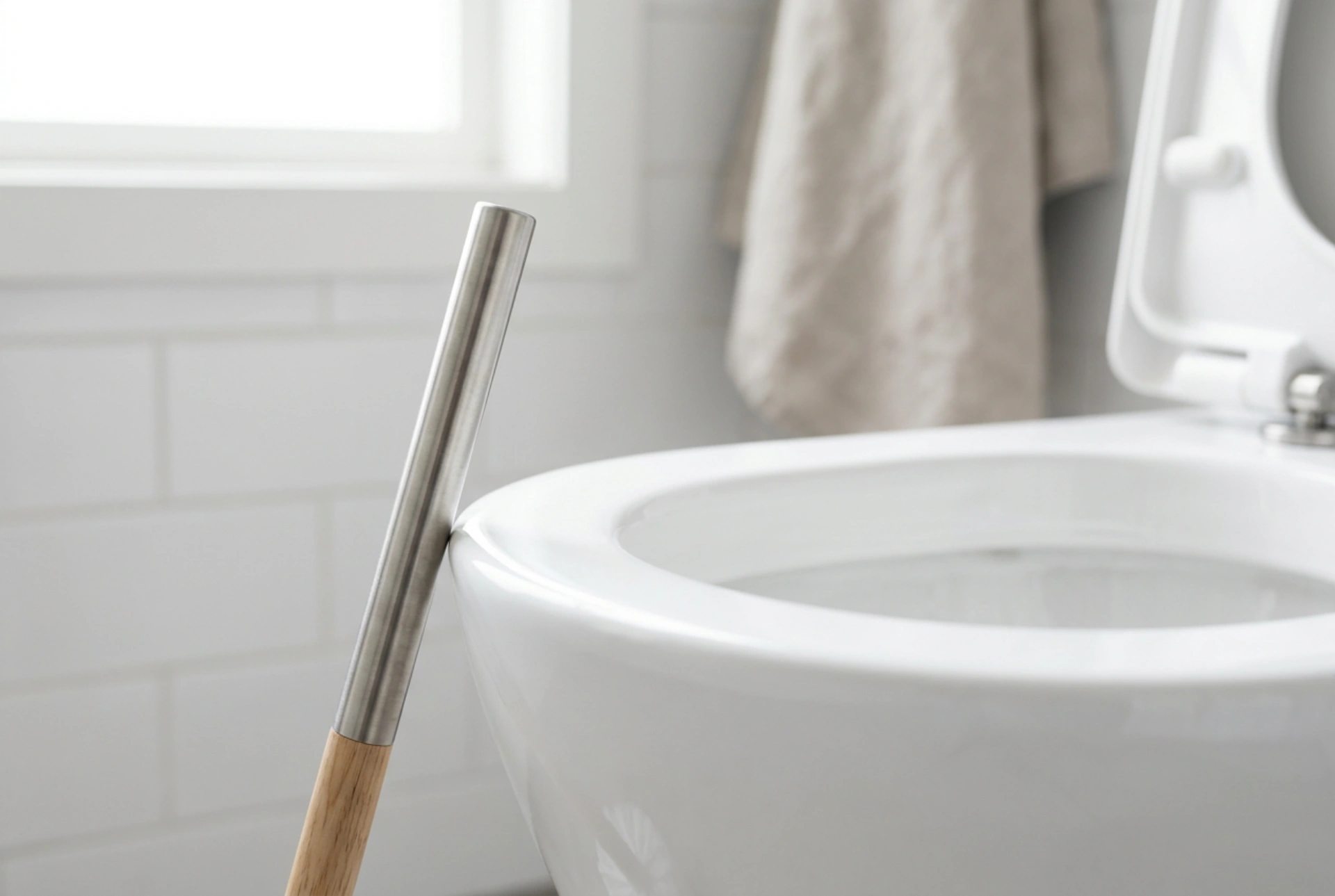


Cleaning the hidden channel beneath a toilet rim requires a systematic combination of mechanical leverage and chemical dissolution to eradicate stubborn mineral scale and organic build-up. Neglecting this hard-to-reach area not only compromises hygiene but also restricts water flow over time, reducing flushing efficiency.
The Science of Under-Rim Contamination
The area underneath the toilet bowl rim is highly susceptible to two main types of accumulation: limescale (calcium carbonate) and biofilm (organic matter and bacteria). Because this zone remains damp but does not experience the full force of the flush, dissolved minerals in municipal water precipitate out as water evaporates. This creates a rough, porous crust of calcium carbonate.
This mineral crust serves as an ideal anchor for organic pathogens, mold, and bacteria. Standard water flow is insufficient to dislodge these deposits. To break them down, you must deploy chemical agents that react specifically with these substances. Weak acids, such as citric acid or sulfamic acid, are highly effective against alkaline limescale because they break the ionic bonds of the mineral deposits, converting them into water-soluble salts. Conversely, organic biofilms require alkaline agents or oxidizing disinfectants, such as sodium hypochlorite (chlorine bleach) or hydrogen peroxide, to denature proteins and destroy bacterial cell walls.
Selecting the Right Tool and Geometry
Standard spherical toilet brushes are physically incapable of reaching into the recessed U-bend of the rim. For effective mechanical cleaning, you require a brush equipped with an integrated rim cleaner—a small, angled sprout of stiff bristles branching off the main brush head. The geometry of this tool allows the bristles to hook upward and directly contact the underside of the ceramic lip.
When selecting a brush, material science matters. Thermoplastic elastomer (TPE) silicone bristles offer high flexibility and hygienic properties, as they do not absorb moisture or trap particles. However, stiff nylon bristles provide superior abrasive force for heavy mineral scaling. For deep remediation of long-standing buildup, nylon is generally preferred for its mechanical shearing capability, while silicone is excellent for regular maintenance.
Step-by-Step Under-Rim Cleaning Protocol
To maximize the efficacy of your cleaning process, follow a structured sequence that leverages chemical dwell time and targeted mechanical action.
1. Application of the Descaling Agent
Begin by applying an acidic, viscous cleaning gel directly under the rim. High viscosity is crucial here; watery liquids will quickly run down into the bowl before they can react with the scale. Direct the nozzle of the bottle upward into the rim channel and apply a continuous bead around the entire perimeter. Allow the gel to dwell for 15 to 30 minutes. This period is essential for the acid to chemically dissolve the calcium carbonate matrix.
2. Engaging the Rim Brush
Insert the brush into the bowl and position the angled rim attachment directly inside the upper recess. Apply upward pressure. Instead of a simple back-and-forth sliding motion, use a series of short, firm, rotational scrubbing strokes. This multi-directional agitation ensures that the bristles penetrate the irregular micro-cavities of the mineral scale from multiple angles.
3. The Perimeter Sweep
Work systematically around the entire circumference of the bowl. Divide the rim mentally into four quadrants to ensure no sections are missed. Spend extra time near the water jets (flushing holes) where mineral deposits are heaviest. If you encounter stubborn resistance, apply a small amount of abrasive baking soda directly to the brush bristles; the mild abrasive action of sodium bicarbonate will assist in physical removal without scratching the vitreous china glaze.
4. Rinsing and Inspection
Once the mechanical scrubbing is complete, flush the toilet to rinse away the dissolved debris and neutralized cleaning agents. Use a small hand mirror held at a low angle underneath the rim to inspect the area. Any remaining dark spots or rough surfaces indicate that a second application of acid or manual scrubbing is required.
Disinfecting and Storing the Brush
A wet toilet brush stored in a closed canister is a breeding ground for anaerobic bacteria. After completing the cleaning cycle, rinse the brush thoroughly in the clean water stream of the flush. To dry the brush, wedge the handle firmly between the porcelain bowl and the toilet seat, allowing the brush head to drip directly into the bowl. Spray the bristles with an alcohol-based disinfectant or diluted oxygen bleach, and allow it to air-dry completely before returning it to its holder.