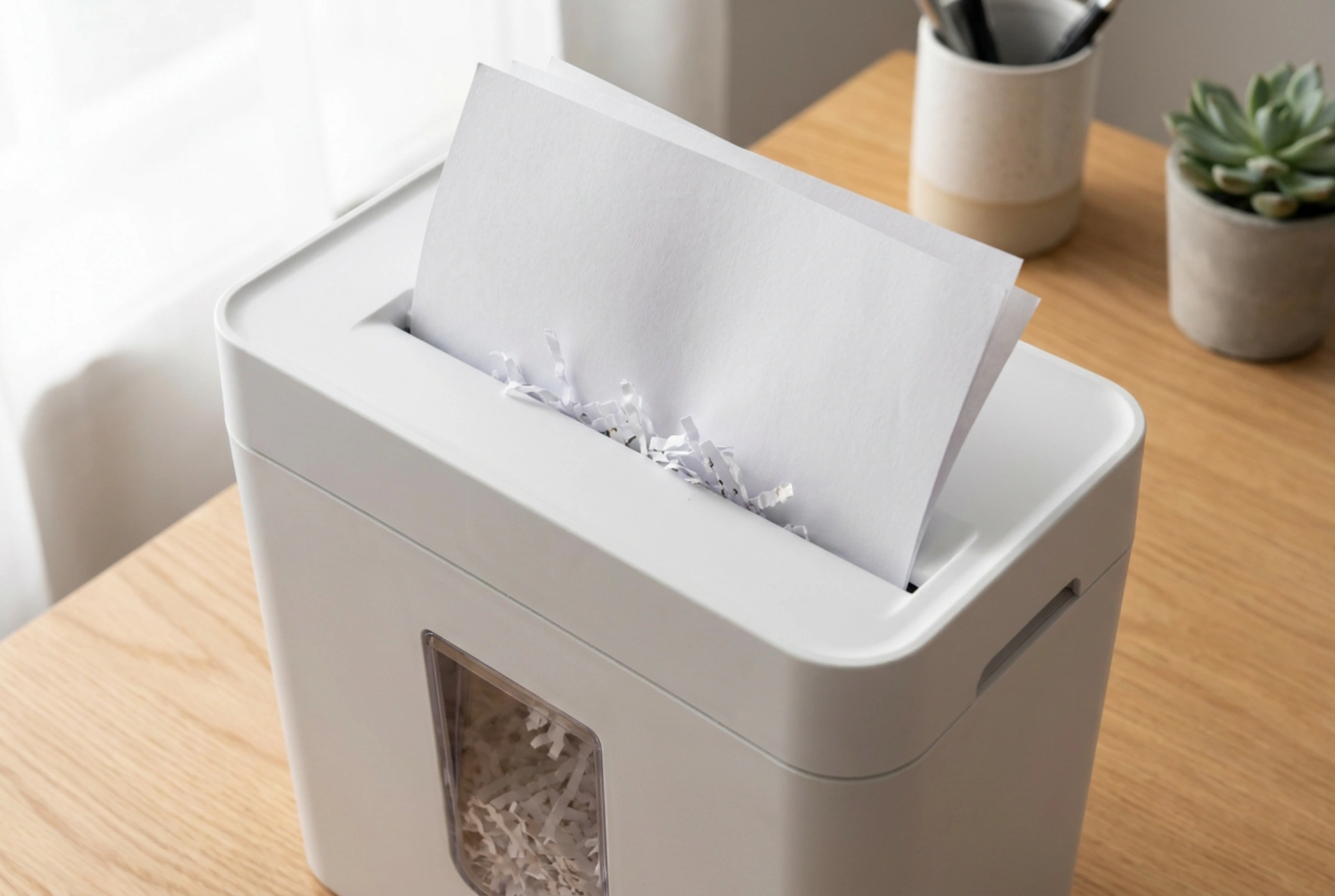


Small home shredders are highly susceptible to thermal overload due to compact motors and friction-heavy cutting mechanisms. Understanding how to manage sheet capacity, duty cycles, and blade lubrication will prevent motor burnout and keep your device functioning efficiently.
The Physics of Shredding and Motor Overload
At the core of a compact paper shredder is a universal electric motor connected to a series of nylon or metal gears that drive two counter-rotating steel cutting shafts. When paper is introduced, the motor must exert enough torque to shear the wood fibers. Small domestic units are typically equipped with light-duty motors designed for brief operational windows. If you feed too many sheets at once, the resistance increases exponentially, forcing the motor to draw more electrical current. This surge in current produces rapid thermal energy within the motor copper windings. Without sufficient cooling, the insulation on these windings can melt, leading to short circuits and permanent motor failure.
The Chemistry of Friction: Why Lubrication is Non-Negotiable
Paper is surprisingly abrasive. It consists of cellulose fibers, binders, and inorganic fillers like calcium carbonate or kaolin clay. As these materials pass through the steel cutting rollers, they generate significant friction and release microscopic dust. This paper dust absorbs the residual lubricant on the blades, leading to dry metal-on-metal contact. Increased friction requires the motor to work harder, generating excess heat even when shredding a single sheet. Regular lubrication with a specialized low-viscosity shredder oil—typically a vegetable-based or light synthetic oil—re-establishes a protective boundary layer. Applying this oil directly to the blades or via an oiling sheet reduces friction, lowers the motor's operating temperature, and ensures smooth mechanical throughput.
Optimal Feeding Techniques and Grain Direction
Preventing mechanical strain relies heavily on how paper is introduced into the feed slot. Every shredder has a maximum sheet capacity, but this rating is usually based on lightweight paper (such as 70 gsm). Standard office paper (80 gsm) or heavy letterhead increases the load. Always shred at least two sheets below the maximum rated capacity to maintain a safety margin. Furthermore, pay attention to the paper grain; feeding sheets parallel to the grain requires less shearing force than feeding them perpendicular. Never fold sheets of paper before shredding, as a single folded sheet instantly doubles the thickness, concentrating the physical resistance on a narrow section of the cutting shafts and causing localized gear strain.
Understanding Duty Cycles and Cool-Down Windows
Every compact shredder features a specific duty cycle, often expressed as a ratio of run-time to cool-down time (for example, 3 minutes active to 30 minutes rest). Inside the housing, a bimetallic thermal overload switch monitors the temperature of the motor. When the temperature exceeds a safe threshold, the switch bends and breaks the circuit to prevent fire hazards. Forcing a shredder to work continuously until the thermal switch trips degrades the motor's lifespan over time. To preserve the machinery, keep track of your active shredding time and allow the unit to cool down proactively before the thermal sensor is triggered. Keeping the air vents free of dust also aids convective heat dissipation.