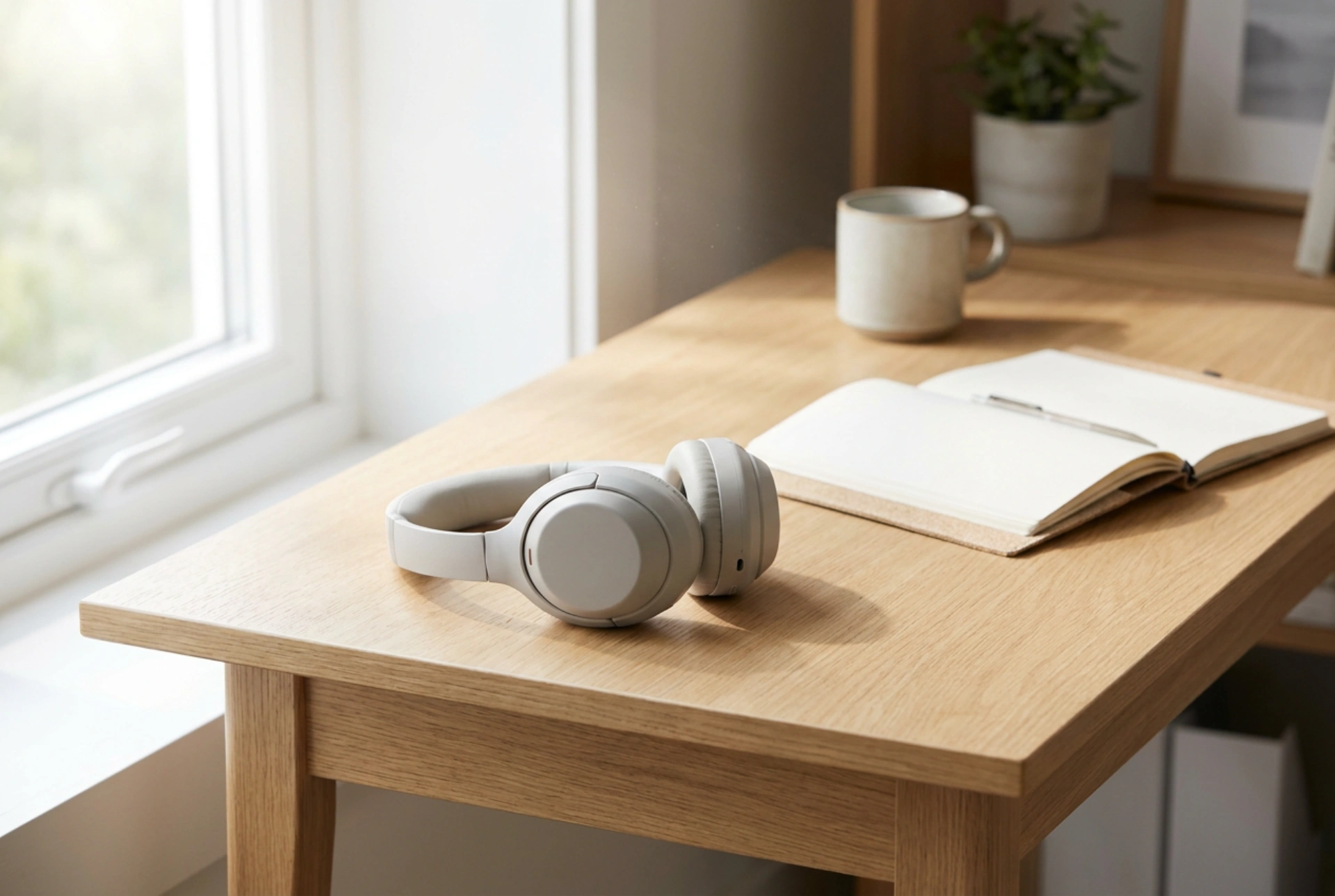


Selecting and adjusting over-ear headphones for children requires balancing developmental ergonomics with acoustic physics to protect sensitive ears and growing skulls. Daily use demands precise calibration of clamping force, weight distribution, and acoustic sealing to prevent physical discomfort and hearing fatigue.
The Mechanics of Clamping Force and Weight Distribution
Unlike adult skulls, a child's cranial structure is still developing, meaning prolonged concentrated pressure can lead to localised discomfort or tension headaches. The clamping force—the lateral pressure the headband exerts to keep the earcups in place—must be carefully evaluated. If the force is too low, the headphones slip, leading to frequent adjustments that disrupt concentration; if too high, they compress the temporal bones and the sensitive cartilage of the pinna.
To achieve the correct balance, look for adjustable headbands with a multi-pivot joint system where the earcup meets the band. When fitting the headphones, the headband must bear 90 percent of the weight, resting squarely on the apex of the skull, while the earcups should merely seal against the sides of the head with minimal lateral pressure. Ensure the headband padding is made of high-density foam that distributes the downward gravitational pull evenly across the sagittal suture of the skull.
Acoustic Sealing and Volume Limitation Mechanics
The primary hazard of headphone usage in children is noise-induced hearing loss. While many devices feature internal limiters set to 85 decibels (dB), physical acoustics play an equally critical role. Without a proper seal around the ear (circumaural fit), external ambient noise leaks in. To compensate for this background noise, children instinctively increase the volume, bypassing the safety margin of lower-output settings.
A true circumaural design bypasses the outer ear cartilage entirely, resting on the surrounding temporal bone. This creates a passive acoustic seal. The physics of passive isolation rely on the density of the cushion material. High-density memory foam conforms to the irregular contours around a child's jawline and behind the ear, blocking external high-frequency waves. By reducing ambient noise by even 10 to 15 dB, the child can listen to educational content at significantly lower, safer volumes without loss of clarity.
Material Science: Heat Dissipation and Comfort
During daily home learning or entertainment, headphones are often worn for consecutive hours, making thermal comfort a critical factor. The skin around the ears contains a high density of sweat glands. Standard polyurethane (PU) synthetic leather, while excellent for acoustic sealing, acts as a thermal insulator, trapping body heat and moisture against the skin.
For daily home use, consider the ambient temperature of the room and the duration of use. Materials like breathable mesh fabrics or specialised protein leather offer superior heat dissipation. These fabrics allow air circulation, facilitating the evaporation of perspiration and preventing localised skin irritation. Additionally, the cushion filling should ideally contain cooling gel-infused memory foam, which temporarily absorbs thermal energy from the skin, maintaining a stable temperature during extended use.
A Protocol for Daily Adjustment and Hygiene
To ensure long-term comfort and hygiene, establish a strict routine for fitting and cleaning the equipment. Over-ear cushions inevitably accumulate sebum, dead skin cells, and household dust, which can compromise the integrity of the synthetic materials and harbour bacteria.
- Daily Fitting Check: Ensure the headband is extended equally on both sides. An asymmetrical adjustment forces the head to tilt slightly to compensate, causing neck strain over time.
- The Finger Test: Once fitted, you should be able to slide one finger easily between the headband cushion and the top of the child's head, indicating that the weight is suspended correctly rather than compressing the skull.
- Sanitation: Weekly, wipe down the ear cushions and headband with a microfibre cloth slightly dampened with a mixture of water and a tiny drop of neutral, fragrance-free dish soap. Avoid isopropyl alcohol on synthetic leather as it strips the plasticisers, leading to premature cracking and stiffening of the cushions.