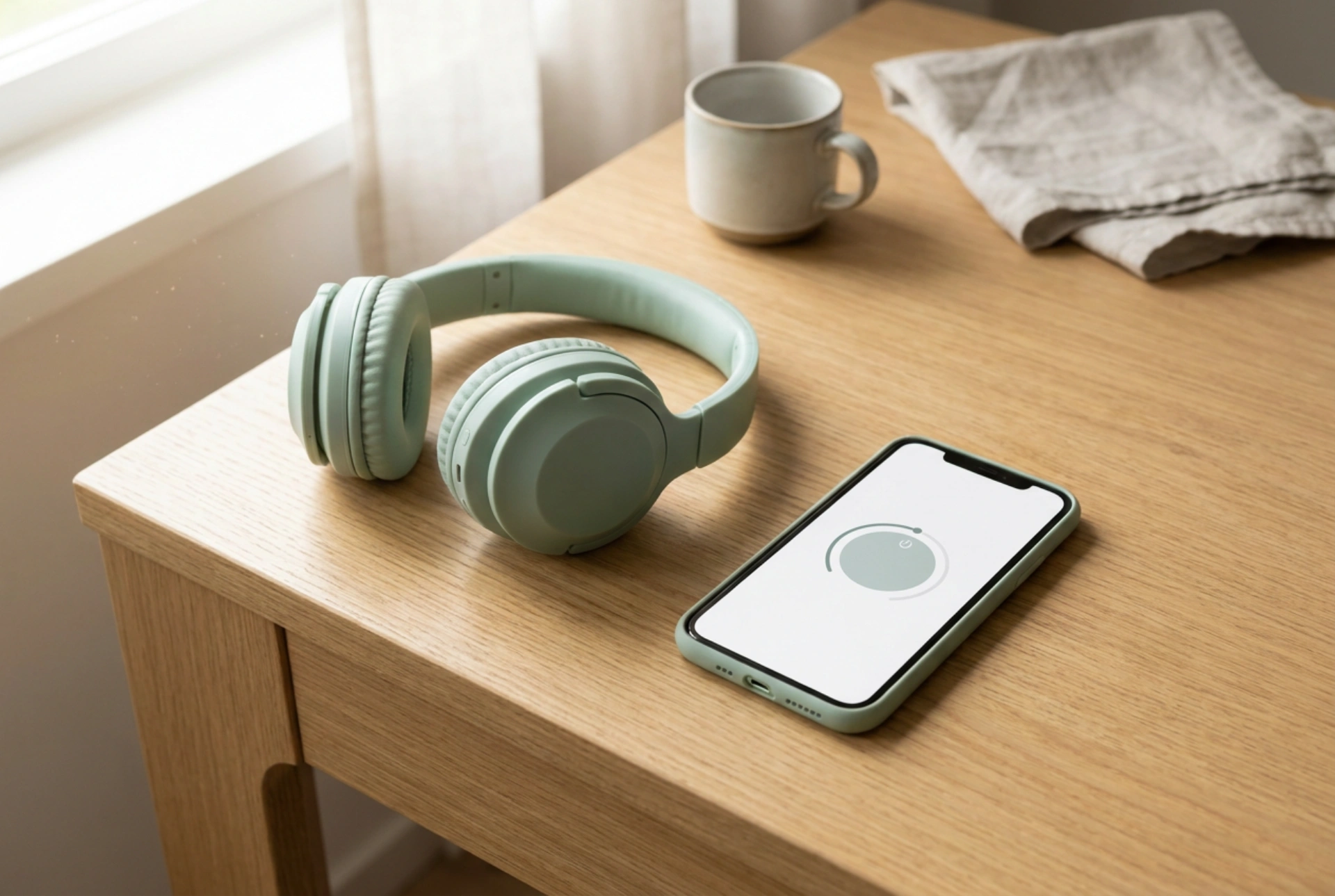


Protecting children's developing hearing from excessive sound pressure requires a combination of hardware limits, software restrictions, and an understanding of acoustic principles. This guide explains how to effectively control and monitor volume levels in over-ear headphones to prevent permanent auditory damage.
The Physics of Hearing and Sound Pressure in Children
To understand volume control, one must understand how sound travels and interacts with the human ear. Sound volume is measured in decibels (dB), a logarithmic scale representing sound pressure level (SPL). For adults, prolonged exposure to sounds above 85 dB can cause gradual hearing loss. For children, the risk is significantly higher due to their unique ear anatomy.
A child's ear canal is shorter and narrower than an adult's. This physical difference acts as a natural resonator, amplifying high-frequency sounds by up to several decibels more than in an adult ear canal. Consequently, a sound level that seems moderate to an adult can generate much higher sound pressure on a child's tympanic membrane. Keeping volume capped at a maximum of 85 dB—or ideally 75 dB for younger children—is a biological necessity to prevent irreversible damage to the delicate hair cells in the cochlea.
Hardware-Based Volume Limiting Mechanisms
The most reliable way to control volume is at the hardware level, which cannot be easily bypassed by curious users. Volume-limiting headphones typically employ passive current-limiting resistors built directly into the internal circuitry of the headphones or within the audio cable itself.
- Impedance Regulation: These internal resistors increase the electrical resistance of the headphones. Since electrical current flow is inversely proportional to resistance, higher impedance restricts the strength of the electrical signal reaching the headphone drivers (the miniature speakers). This physically caps the maximum acoustic output the drivers can produce, regardless of how high the source device's volume is turned.
- Acoustic Attenuation: Some headphones use physical dampeners within the ear cup assembly to absorb excess sound energy. When selecting hardware-limited headphones, look for models with a fixed, non-adjustable internal limit of 85 dB that operates purely through passive electrical resistance.
Software-Level Restrictions and Source Calibration
While hardware limits are robust, source devices such as tablets, smartphones, and computers offer a critical second layer of defense through digital signal processing (DSP) and operating system constraints.
Most modern operating systems include dedicated parental control menus where maximum volume limits can be locked with a passcode. In these settings, you can calibrate the maximum output voltage of the headphone jack or the digital signal sent via wireless transmitters. By lowering the system-level ceiling, you ensure that even if the physical volume buttons on the device are pressed to the maximum, the digital output remains within a safe, pre-calculated decibel range. Additionally, enabling 'volume normalization' features in media players prevents sudden, dangerous spikes in audio levels between different audio tracks or video streams.
The Role of Passive Noise Isolation
An often-overlooked factor in volume control is ambient environmental noise. In noisy environments, such as cars, trains, or busy household rooms, children instinctively raise the headphone volume to overcome background sounds. This phenomenon is known as auditory masking.
Over-ear headphones provide a distinct advantage here due to passive noise isolation. The physical barrier of the headphone cup and the cushion sealing around the ear (circumaural design) dampens external sound waves before they reach the ear canal. By choosing headphones with high-density memory foam padding and an appropriate headband tension, you reduce the intrusion of ambient noise. This natural attenuation allows children to hear their audio clearly at much lower, safer volume levels, eliminating the temptation to raise the volume to dangerous levels just to drown out background hums.