

Achieving durable, fade-resistant labels with a portable mini printer requires more than just peeling and sticking; it relies on mastering surface chemistry and adhesive mechanics. By understanding how thermal printheads interact with synthetic substrates and pressure-sensitive adhesives, you can ensure your labels remain legible and firmly attached for years.
The Science of Surface Energy and Degreasing
The primary reason labels peel prematurely is poor wet-out—the ability of an adhesive to spread evenly across a surface. For an adhesive to wet-out effectively, the surface energy of the receiving substrate (such as glass, metal, or plastic) must be higher than the surface energy of the adhesive itself. Contaminants like dust, fingerprint oils, and microscopic soap residues act as barriers, drastically lowering surface energy and causing the adhesive to bond with the dirt rather than the target object.
To prepare any surface for labelling, avoid standard household glass cleaners, which often leave behind silicone-based polishing agents that prevent proper adhesion. Instead, use a solution of 70% isopropyl alcohol and water. Isopropyl alcohol dissolves both polar and non-polar lipid compounds without degrading most plastics. Wipe the surface firmly in a single direction with a lint-free microfibre cloth to lift contaminants away rather than smearing them. Allow the solvent to evaporate completely; even micro-droplets of trapped alcohol will degrade the acrylic adhesive layer over time.
How Thermal Printing Chemistry Affects Longevity
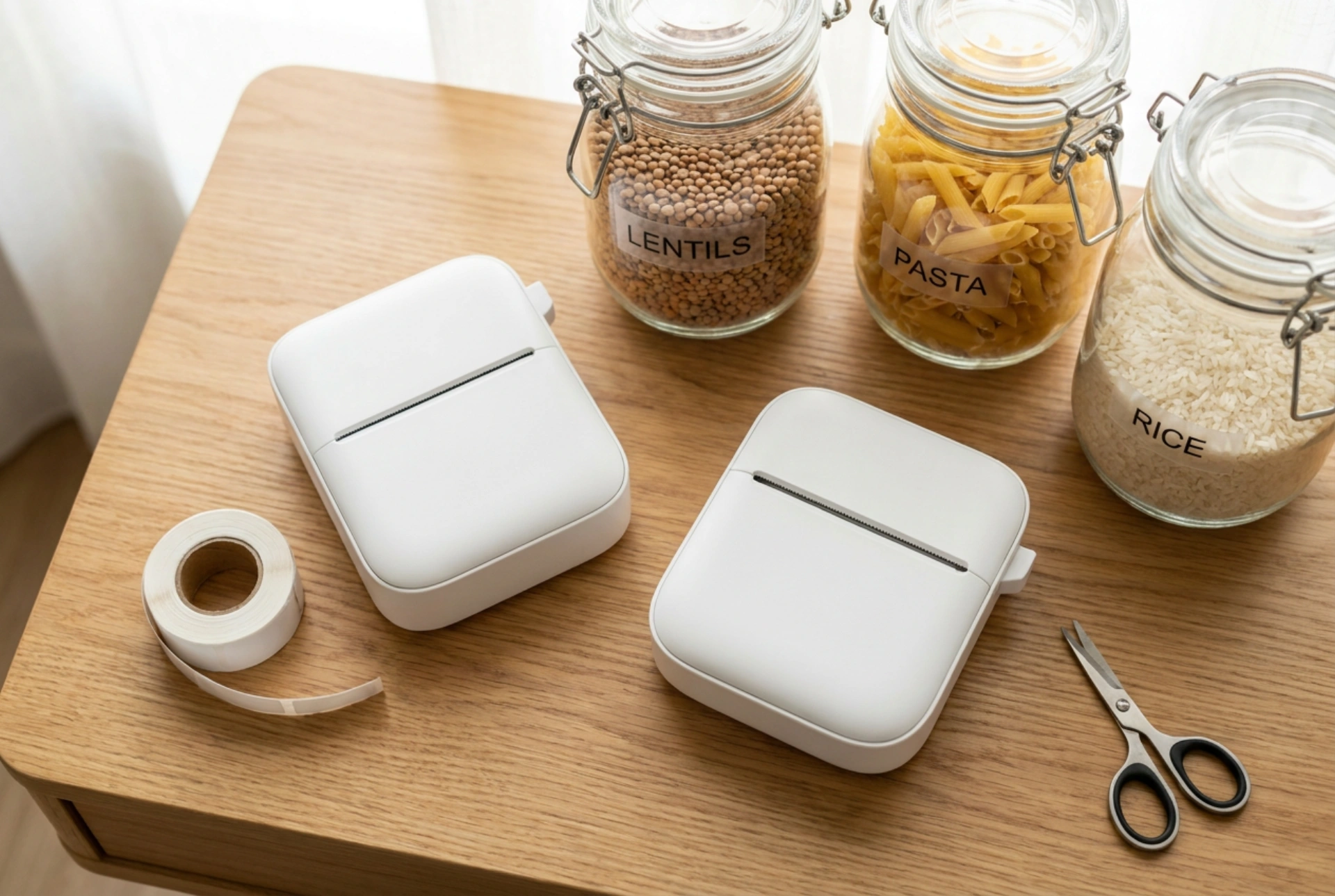
Most pocket-sized label makers utilise direct thermal printing technology. This process eliminates the need for ink or ribbons, relying instead on a thermal printhead that selectively heats specific microscopic zones on specialised paper or synthetic tape. The heat triggers a chemical reaction within the label's coating, causing an acid developer to fuse with a colourless leuco dye, turning it dark.
Because this reaction is thermally driven, direct thermal labels remain chemically active post-printing. This makes them vulnerable to external environmental factors:
- UV Exposure: Ultraviolet radiation breaks down the chemical bonds of the fused dye-developer complex, causing the print to fade back to its transparent or white state. Keep thermal labels out of direct sunlight.
- Thermal Stress: Temperatures exceeding 50 degrees Celsius can reactivate the entire surface, turning the background grey or black and destroying legibility. Avoid applying these labels to items that undergo high-temperature cycles, such as dishwashers or microwave ovens.
- Plasticiser Migration: Many flexible plastic storage containers contain phthalates and other plasticisers to make them pliable. Over time, these chemicals can migrate out of the container and dissolve the thermal dye on the label, erasing the text entirely. For flexible plastics, use synthetic polypropylene (PP) or polyester (PET) labels designed with a protective barrier coat.
The Physics of Pressure-Sensitive Adhesives
Mini printer labels use pressure-sensitive adhesives (PSAs). Unlike water-activated glues or hot-melt adhesives, PSAs do not undergo a chemical curing or drying phase. Instead, they behave like viscoelastic materials—meaning they exhibit properties of both liquids and solids. When you press the label down, the adhesive acts as a highly viscous fluid, slowly flowing into the microscopic peaks and valleys of the surface.
This flow process, known as "wetting," requires both physical force and time. To maximise the bond:
- Apply Firm Pressure: Do not just smooth the label with your thumb. Use a hard, flat edge, such as a squeegee or the edge of a plastic card wrapped in a soft cloth. Apply firm, outward strokes from the centre to the edges to expel micro-bubbles of trapped air and force the adhesive into the surface texture.
- Respect the Dwell Time: A PSA typically requires 24 to 72 hours to reach its maximum bond strength. Avoid exposing the labelled item to moisture, extreme temperature changes, or physical handling during this critical curing window.
Selecting the Optimal Label Substrate
Choosing the correct tape material is vital for durability. Standard paper tapes are highly susceptible to moisture absorption, which swells the wood fibres, breaks down the internal paper structure, and causes tearing. For humid environments like kitchens, bathrooms, or refrigeration units, select biaxially-oriented polypropylene (BOPP) or polyester tapes. These synthetic polymers are completely hydrophobic, resistant to oils, and possess high tensile strength, ensuring the label remains intact even under frequent handling.