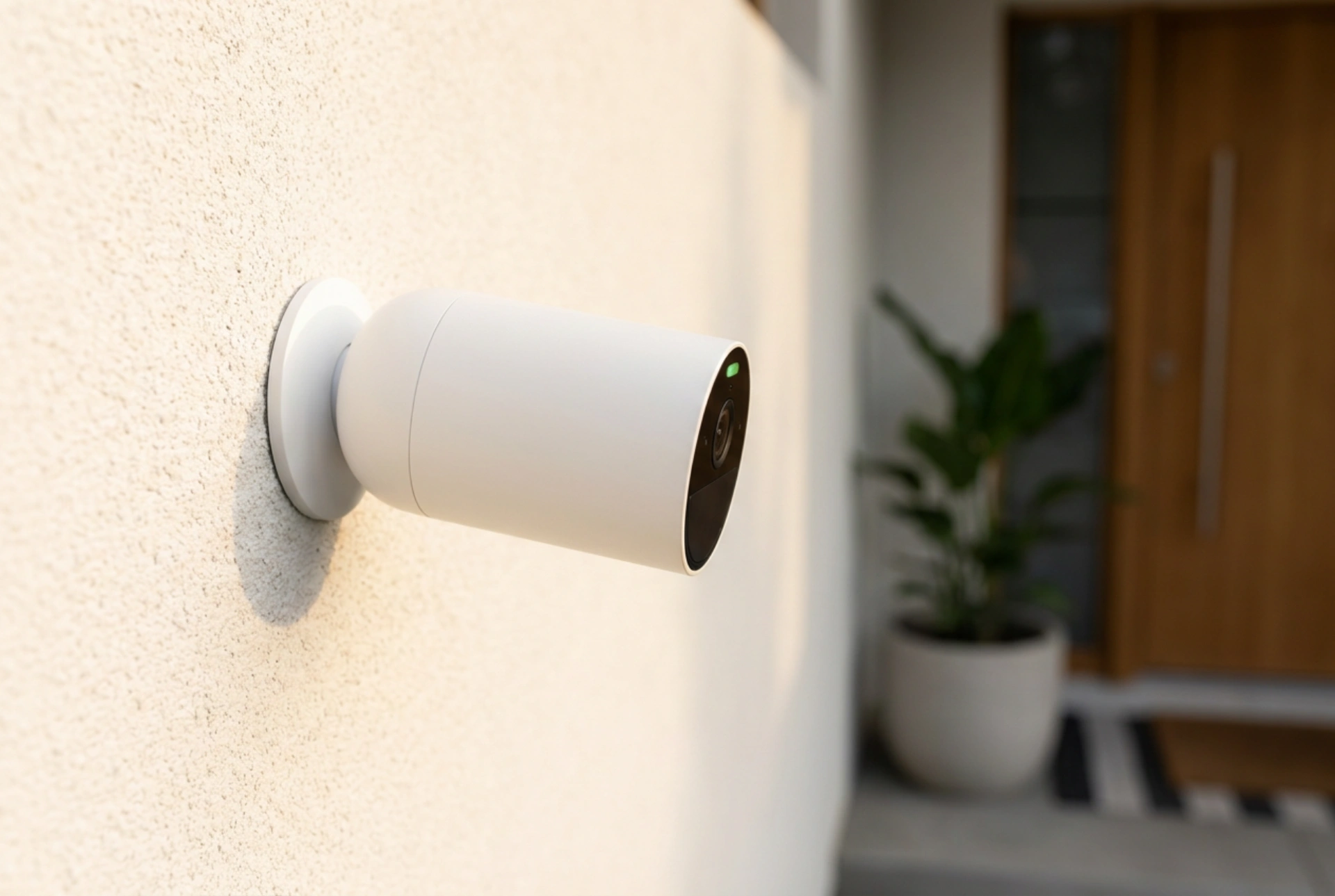


Selecting an outdoor solar-powered Wi-Fi camera requires understanding how solar energy conversion, battery storage capacity, and wireless signal propagation interact under varying environmental conditions. This guide explains the technical principles behind these devices, ensuring you choose a system that delivers reliable, uninterrupted surveillance.
Photovoltaic Efficiency and Solar Panel Dynamics
The heart of a solar-powered camera is its photovoltaic panel, which converts sunlight into electrical energy. When choosing a camera, the type of solar cell determines how effectively it converts light, especially during overcast days. Monocrystalline silicon panels offer the highest efficiency (typically between 15% and 22%) because they are made from a single pure silicon crystal, allowing electrons more room to move. In contrast, polycrystalline panels are less efficient (around 13% to 16%) due to crystal boundaries that obstruct the flow of electrons.
The physical placement and angle of the panel are governed by the angle of solar incidence. For optimal energy capture, the panel should face directly toward the equator (south in the Northern Hemisphere) and be tilted at an angle equal to your local latitude, adjusted slightly for seasonal shifts. Dirt, dust, and pollen can block sunlight, triggering a significant drop in current generation. Selecting a panel with a hydrophobic coating prevents water droplets and grime from adhering to the glass, maintaining optical clarity.
Battery Chemistry and Thermal Resilience
Solar cameras rely on rechargeable internal batteries to store power for nighttime operation and prolonged cloudy periods. The underlying battery chemistry determines how the device performs in extreme temperatures. Most standard devices utilize lithium-ion batteries, which offer high energy density but suffer from degraded performance in sub-zero temperatures. At low temperatures, the internal resistance of lithium-ion cells increases, slowing down the chemical reactions and temporarily reducing the available capacity.
For regions with harsh winters, look for systems utilizing lithium iron phosphate (LiFePO4) chemistry or those equipped with low-temperature charging protection. Charging a lithium battery below freezing can cause lithium plating—a phenomenon where metallic lithium forms on the anode, potentially causing internal short circuits and permanent capacity loss. High-quality systems feature integrated thermal sensors that temporarily halt charging when temperatures drop below freezing, drawing power only from the existing charge until the temperature rises.
Wi-Fi Wave Propagation and Bandwidth Optimization
Wireless cameras must transmit video data through structural materials, which absorb and reflect radio waves. Understanding frequency bands is critical. The 2.4 GHz frequency band offers longer wavelengths, which are highly effective at diffracting around obstacles and penetrating dense materials like brick, concrete, and timber. While the 5 GHz band offers higher data transfer speeds, its shorter wavelengths suffer from high attenuation (signal loss) when passing through exterior walls.
To ensure a stable connection, assess the distance between your wireless router and the camera installation site. Standard building materials attenuate signals differently: dry drywall causes minimal loss, while solid brick, concrete, or foil-backed insulation can cut signal strength by more than half. Choosing a camera with an external, high-gain antenna improves signal reception by focusing the radio frequency energy in a specific direction, compensating for physical barriers.
Sensors and Motion Detection Physics
Continuous video recording consumes significant energy, which is unsustainable for solar-powered systems. Therefore, these cameras rely on motion-activated triggers. Passive Infrared (PIR) sensors are highly efficient because they do not emit energy; instead, they detect blackbody radiation emitted by warm objects. PIR sensors utilize a segmented Fresnel lens to focus infrared light onto a pyroelectric material, generating an electrical signal when a thermal differential moves across the segments.
Unlike software-based pixel comparison, which triggers false alarms from swaying trees or shadows, PIR sensors only react to actual heat sources, preserving battery life. Ensure the camera allows you to adjust the sensitivity threshold to match the local environment, preventing unnecessary wake cycles during hot afternoons when ambient ground temperatures approach human body temperature.
Ingress Protection and Housing Material Science
Exterior electronics must withstand sustained ultraviolet (UV) radiation, temperature fluctuations, and moisture. The Ingress Protection (IP) rating indicates the enclosure's sealing effectiveness. An IP65 rating is the baseline standard for outdoor cameras, meaning the housing is completely dust-tight and protected against water jets from any direction. UV-stabilised polycarbonate housings prevent the plastic from becoming brittle and cracking under constant solar exposure, ensuring the internal seal remains watertight over years of service.