

Cleaning gaming headphones with decorative cat ears and integrated LED elements requires a careful balance between dissolving stubborn body oils and protecting sensitive electronic circuits and plastic finishes.
Understanding the Surface Chemistry: Sebum, Sweat, and Polymers
The primary contaminants on headphones are sebum (natural skin oils), sweat, dead skin cells, and cosmetic residues. These organic substances are slightly acidic and, over time, can chemically interact with the plastic polymers (such as ABS or polycarbonate) and synthetic leathers used in headphone construction. This interaction leads to plastic degradation, making surfaces sticky or brittle. To remove these oils without damaging the plastic or stripping decorative coatings, you must select the right solvent. High-purity isopropyl alcohol (70% concentration) is highly effective at dissolving lipids, but it must be used sparingly on glossy plastics and transparent acrylics, as high concentrations can cause micro-cracking (crazing) through solvent-induced stress. Water-based solutions with a tiny drop of neutral surfactant (like a mild dishwashing liquid) are safer for general wiping of non-porous surfaces.
Preserving LED Backlighting and Acrylic Diffusers
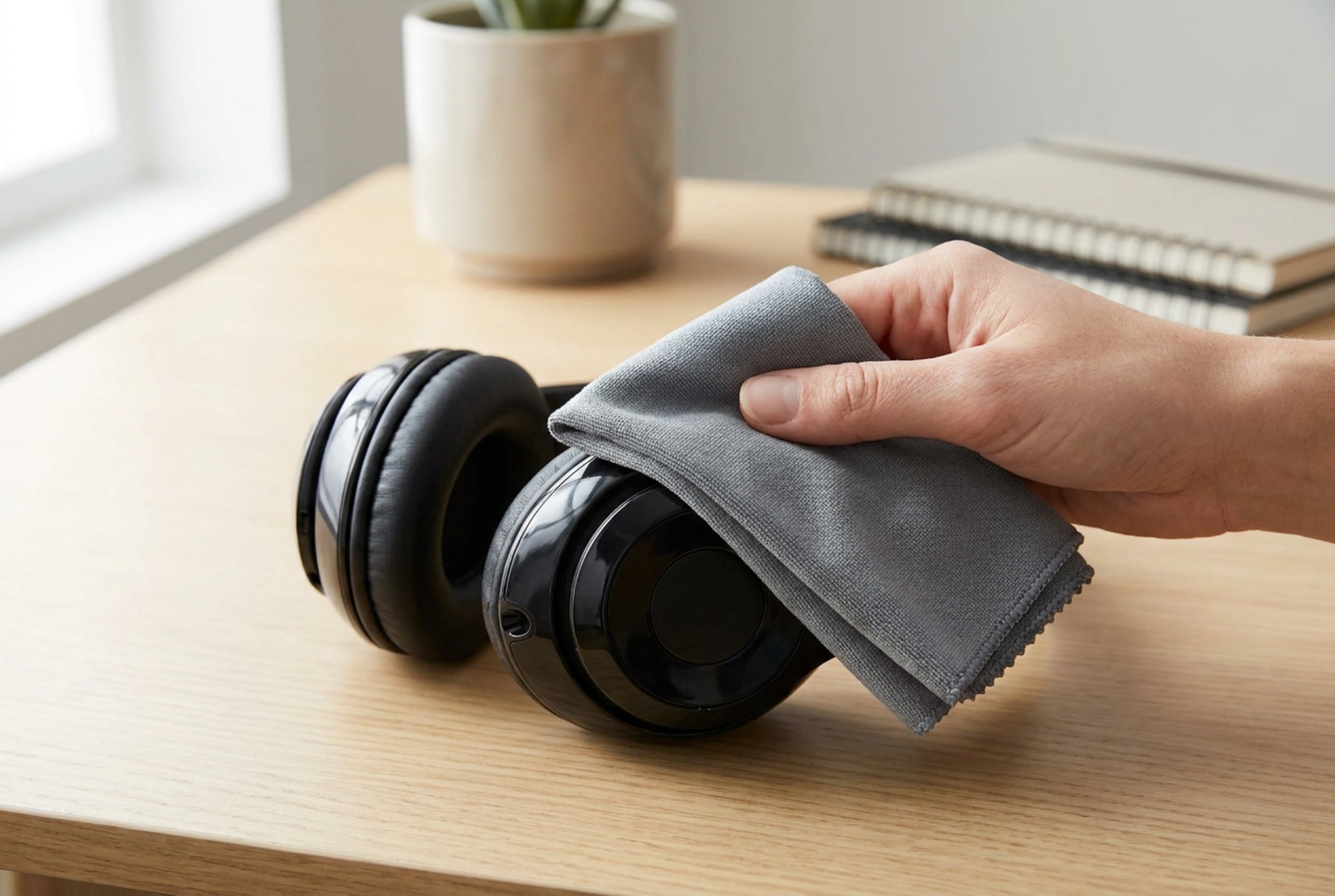
The integrated LED components, often housed inside translucent or glossy cat-ear attachments, are highly sensitive to moisture and physical abrasion. Liquid ingress is the greatest threat to the internal printed circuit boards (PCBs) and light-emitting diodes. When cleaning near these sections, never spray any liquid directly onto the headset. Instead, employ the principle of capillary action in reverse: use a slightly damp, tightly woven microfiber cloth where the fibres trap dust and oils through electrostatic forces and van der Waals bonds. For the clear or frosted acrylic diffusers that disperse the LED light, avoid abrasive materials. Acrylic has a low scratch resistance; dry wiping with a dusty cloth can create microscopic scratches that permanently cloud the light output. Always use a clean, dust-free microfiber cloth, applying light, linear pressure rather than circular motions to minimise localized stress marks.
Caring for the Silicone Cat Ears and Decorative Accents
Many cat-ear headphones feature soft silicone or thermoplastic elastomer (TPE) ear attachments. Silicone is highly hydrophobic and prone to attracting dust through static electricity. To clean these parts, detaching them is ideal if the design allows. If they are permanently fixed, use a dry, soft-bristled brush (such as a clean makeup brush or a soft toothbrush) to dislodge dust from the crevices where the ears meet the headband. For sticky residues on silicone, a microfiber cloth dampened with a highly diluted soapy solution is optimal. Avoid using acetone or strong organic solvents on silicone or TPE, as these chemicals can cause the elastomers to swell, lose their shape, or degrade structurally.
Restoring Ear Cushions: Synthetic Leather vs. Mesh Fabric
The ear cushions bear the brunt of direct skin contact. Synthetic leather (usually polyurethane or protein leather) relies on a thin plastic membrane over a foam core. Sweat and sebum degrade this membrane, causing it to crack and peel. To prevent this, wipe the cushions after every long session with a dry cloth. For deep cleaning, use a cloth barely damp with water and a neutral detergent, then immediately dry them with a separate dry cloth. If your headphones feature breathable mesh fabric cushions, they act like a filter, trapping skin flakes and oils inside the weave. If they are detachable, gently hand-wash them in lukewarm water with a drop of gentle laundry detergent, rinse thoroughly to remove all surfactant residues, and allow them to air-dry completely for at least 24 hours before reattaching. Never use heat sources like hair dryers, as high temperatures can deform the synthetic fibres and shrink the internal foam.
The Preventive Maintenance Protocol
Maintaining these specialized headsets is about consistency and dry-cleaning methods. Establish a routine where you use a soft, dry brush to clear dust from around the LED seams and joints weekly. Store the headphones on a dedicated stand in a dry environment to prevent moisture buildup within the ear cups. By understanding how different materials react to moisture, friction, and mild solvents, you can preserve both the aesthetic appeal of the RGB lighting and the physical comfort of the headset for years to come.