

Laptops generate significant thermal energy within a highly confined chassis, making effective heat dissipation and stable physical positioning critical for both hardware longevity and user comfort.
The Thermal Dynamics of Laptop Cooling
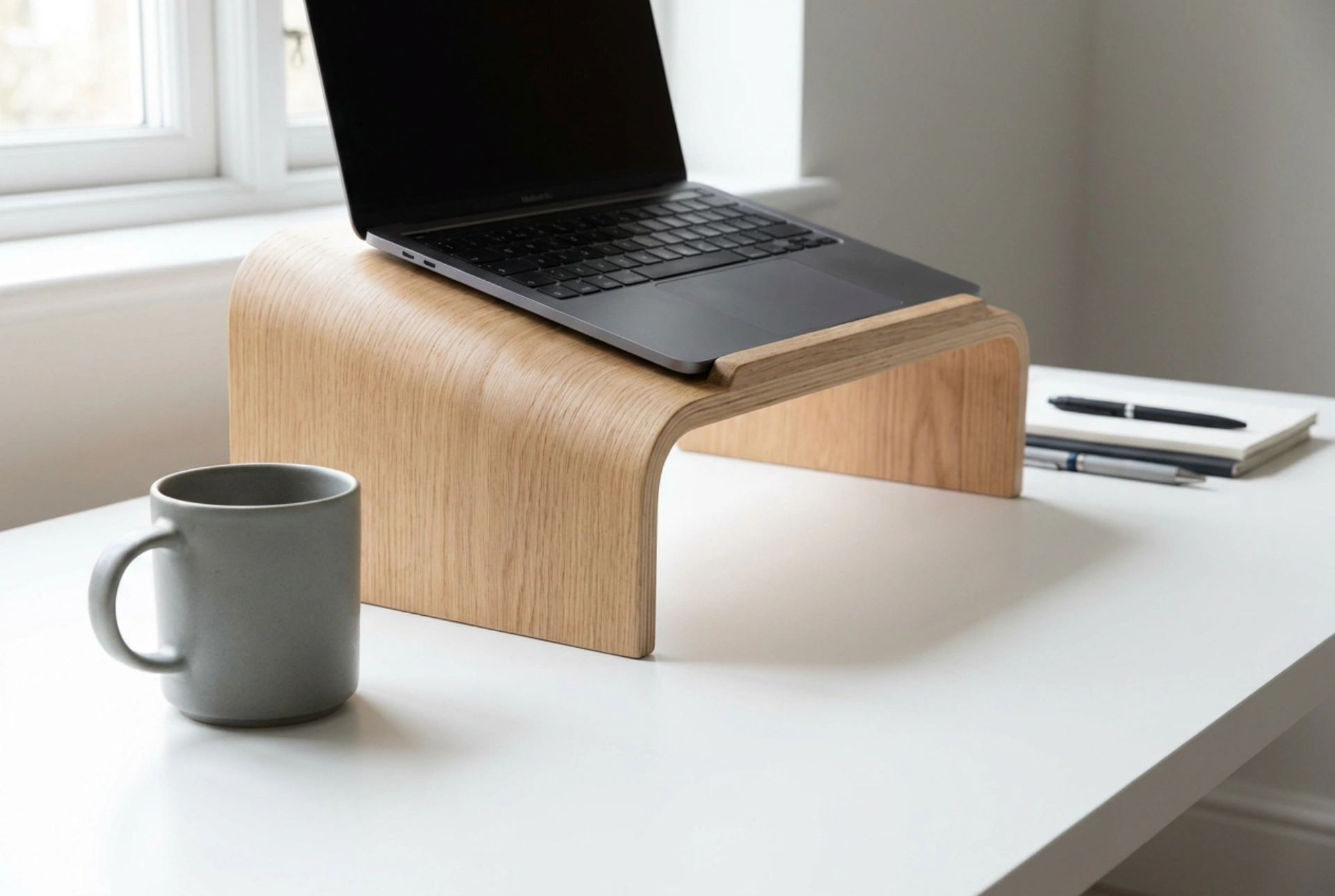
Modern laptops rely on active or passive cooling systems to dissipate heat generated by the central processing unit (CPU) and graphics processing unit (GPU). When a laptop sits flat on a desk, the clearance beneath the intake vents is minimal, typically restricted by small rubber feet. This narrow gap restricts airflow, leading to boundary layer effects where stagnant, hot air becomes trapped under the chassis. A wooden laptop stand elevates the device, significantly increasing the volume of air available beneath the intake vents. By raising the chassis, you facilitate natural convection, allowing warmer, less dense air to rise away from the device while cooler ambient air is drawn in more efficiently. Additionally, stands with cut-outs or open-slat designs prevent heat accumulation by eliminating solid barriers directly beneath the primary heat zones.
Material Properties of Wood: Insulation vs. Airflow
Wood is naturally a thermal insulator rather than a thermal conductor. Unlike aluminum, which can act as a secondary heatsink by absorbing and dissipating heat through direct contact, wood does not readily conduct thermal energy. However, this insulating property is of minimal consequence if the stand is engineered with proper airflow in mind. The primary mechanism of laptop cooling is convective heat transfer via air movement, not conductive transfer to the supporting surface. A well-designed wooden stand leverages open geometry to maximize air circulation. The natural grain of hardwood also offers structural damping, which absorbs micro-vibrations from internal cooling fans. This damping effect reduces acoustic resonance, making the workspace quieter while maintaining stable operating temperatures.
Structural Stability and Ergonomics
A stable laptop platform is essential to prevent micro-movements that can cause strain on internal components, particularly physical storage drives and fan bearings. Wooden stands, constructed from dense hardwoods like oak, beech, or walnut, provide a high strength-to-weight ratio and a low center of gravity. This physical mass dampens the kinetic energy transferred from typing, ensuring the display remains steady. Ergonomically, elevating the screen alters the user's viewing angle, aligning the top of the monitor with eye level. This adjustment reduces flexion in the cervical spine, mitigating muscular strain in the neck and upper back. To ensure stability, the stand must feature non-slip contact points, typically made of high-friction silicone or natural cork, which prevent the laptop from sliding on the inclined wooden surface.
Key Design Features for Optimal Airflow
When selecting or utilizing a wooden laptop support, specific structural features directly influence thermal efficiency:
- Elevated Rear Clearance: Angling the laptop forward increases the rear clearance, where most exhaust vents are located, facilitating rapid hot air escape.
- Perforated or Open Backing: Solid wood panels block airflow; look for designs with hollow pathways, central cut-outs, or minimalist dual-bar structures.
- Friction Barriers: Elevated stands require a secure lip or front stopper lined with non-abrasive material to prevent the laptop from sliding forward under gravity.
Maintenance and Material Care
To preserve the structural integrity and aesthetic of a wooden laptop stand, regular maintenance is required. Wood is hygroscopic, meaning it absorbs and releases moisture from the surrounding environment, which can lead to warping if exposed to extreme humidity fluctuations. Periodically cleaning the surface with a dry or slightly damp microfibre cloth prevents dust accumulation in the grain. For long-term preservation, applying a thin layer of natural mineral oil or beeswax every six months seals the wood pores, protecting it from moisture and preventing dry cracks. Avoid placing the stand in direct sunlight or adjacent to high-heat sources like radiators, as localized thermal stress can unevenly dry the timber, compromising its flat profile and stability.