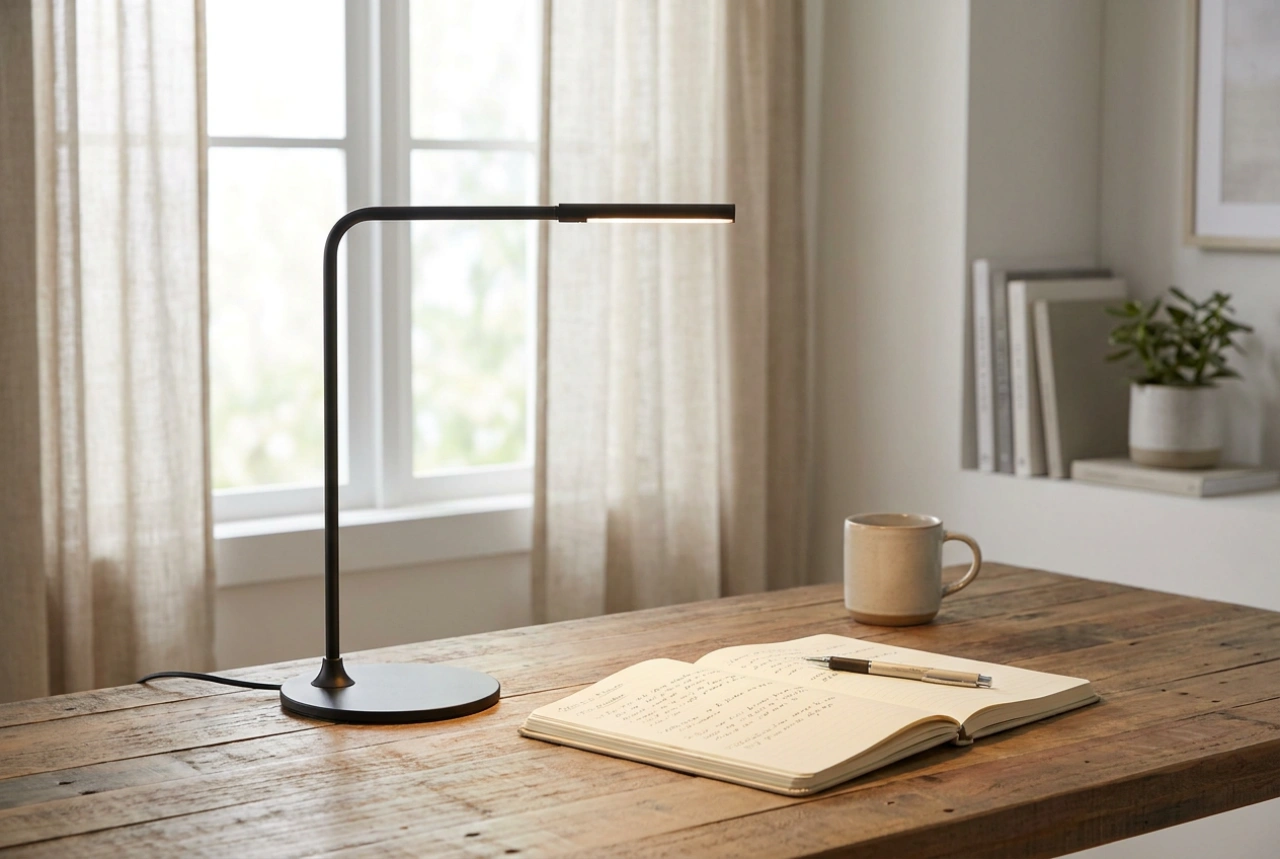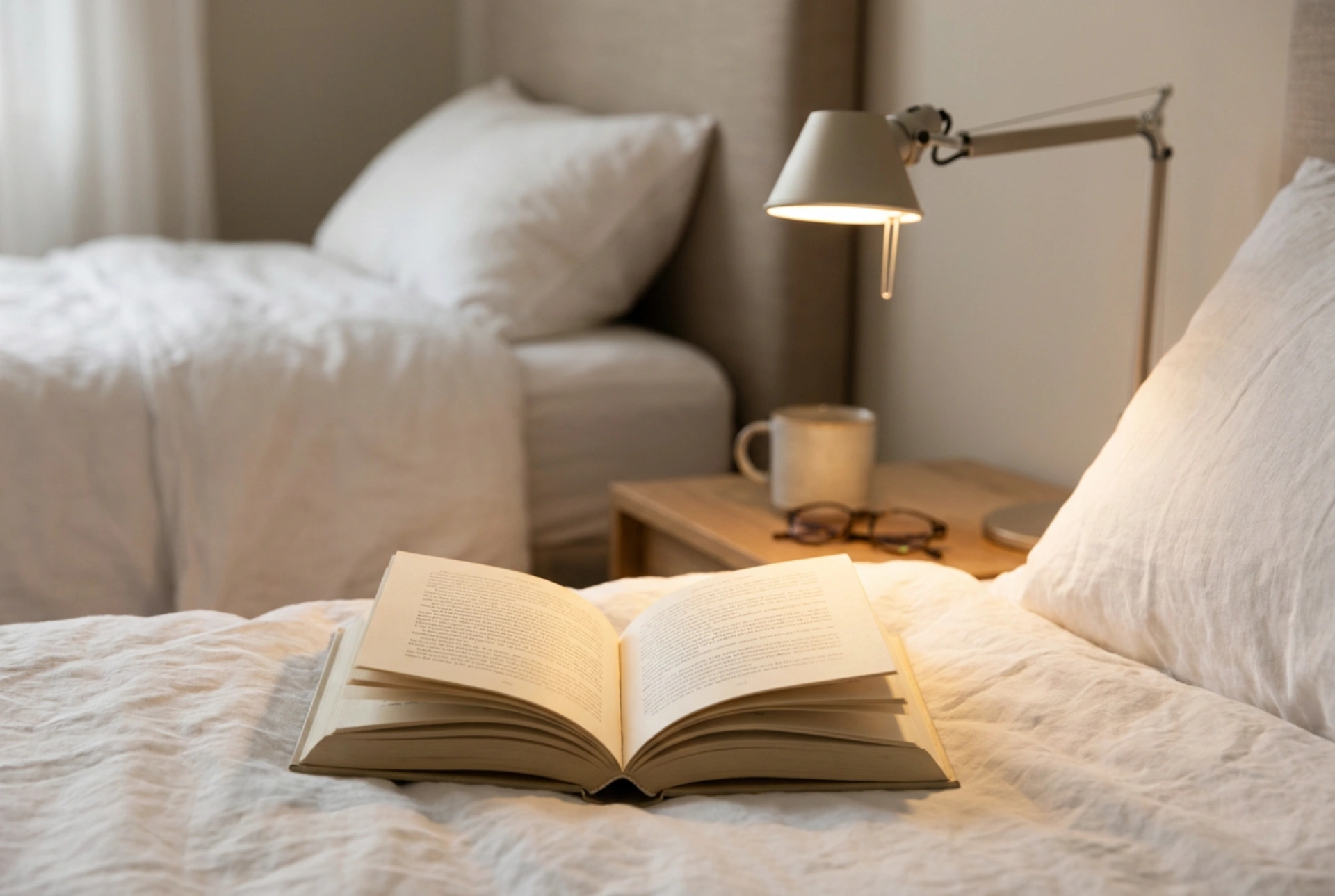


Achieving a shadow-free reading environment in bed is a matter of understanding simple light physics, specifically the relationship between the light source, your physical posture, and the book page. By adjusting the angle of incidence and utilizing proper diffusion, you can eliminate distracting high-contrast shadows that lead to eye strain and headaches during late-night reading.
The Physics of Shadows: Point Sources vs. Diffused Light
To understand why shadows disrupt your reading, it helps to look at how light behaves. A bare bulb or a highly focused spotlight acts as a point light source. Because the light rays emerge from a single, concentrated point, any object in their path—such as your hand, a turned page, or even the frame of your glasses—casts a sharp, dark shadow known as an umbra. This high contrast forces your pupils to dilate and constrict repeatedly as your eyes scan between the bright paper and the dark shadows.
To mitigate this, you must introduce diffusion. Diffused light scatters light waves in multiple directions. Instead of a single point source, the light emerges from a larger surface area, such as a frosted bulb, a fabric shade, or a matte diffuser. This creates a soft transition zone called a penumbra, where shadows are faint and blurred, making them far less noticeable and significantly easier on the eyes.
The Golden Rule of Alignment: Side-Angle Positioning
The most common mistake is placing the reading lamp directly overhead or directly behind your head. When a light source is positioned directly behind you, your head and shoulders inevitably block the light path, casting a massive shadow over the entire book. Conversely, if the light is directly in front of you, it creates a harsh glare reflecting off the page surface, known as specular reflection.
The optimal position for a bedside reading lamp is slightly behind your shoulder and to one side, at an angle of approximately 30 to 45 degrees relative to your book. If you usually hold the book with your right hand or tilt your body to one side, position the lamp on the opposite side. This ensures that your hands and the edges of the book pages do not obstruct the path of the light rays as they hit the paper.
Height and Distance Calibration
The height of the lamp relative to your reading posture is crucial. As a rule of physical measurement, the bottom of the lamp shade or the light head should be aligned roughly with your eye level when you are sitting in your preferred reading position in bed. This height restriction prevents two common issues:
- If the lamp is too high: The light source will shine directly into your eyes, causing discomfort and distracting glare, while also casting downward shadows from your hands onto the bottom half of the pages.
- If the lamp is too low: The light pool becomes too narrow. This forces you to hold the book in a very specific, restricted zone, and the steep angle of the light will project long, exaggerated shadows across the text from even the slightest crease in the paper.
Managing Reflection: Angle of Incidence
According to the laws of reflection, the angle at which light hits a surface (the angle of incidence) equals the angle at which it bounces off (the angle of reflection). If you hold your book perpendicular to the incoming light beam, the light will bounce directly back into your eyes, creating a blinding glare, especially on semi-glossy or high-quality paper. To prevent this, tilt the book slightly—about 10 to 15 degrees away from the direct line of the light source. This directs the reflected light away from your face while keeping the page fully illuminated.
Choosing the Right Bulb and Shade for Bed Reading
To achieve the ideal balance of illumination without harsh shadows, your choice of bulb and shade material is critical. Avoid clear glass bulbs entirely. Instead, opt for frosted LED bulbs with a color rendering index (CRI) of 90 or higher, which ensures text contrast is sharp and colors are true to life. For reading, a warm color temperature between 2700K and 3000K is recommended, as it minimizes exposure to blue light before sleep.
The lamp shade should be opaque or semi-opaque. An opaque shade, such as metal or thick fabric, channels the light strictly downwards and upwards, allowing you to direct the beam precisely onto your book without illuminating the rest of the bedroom. Ensure the interior of the shade has a white or reflective matte finish to maximize light output without creating hot spots.