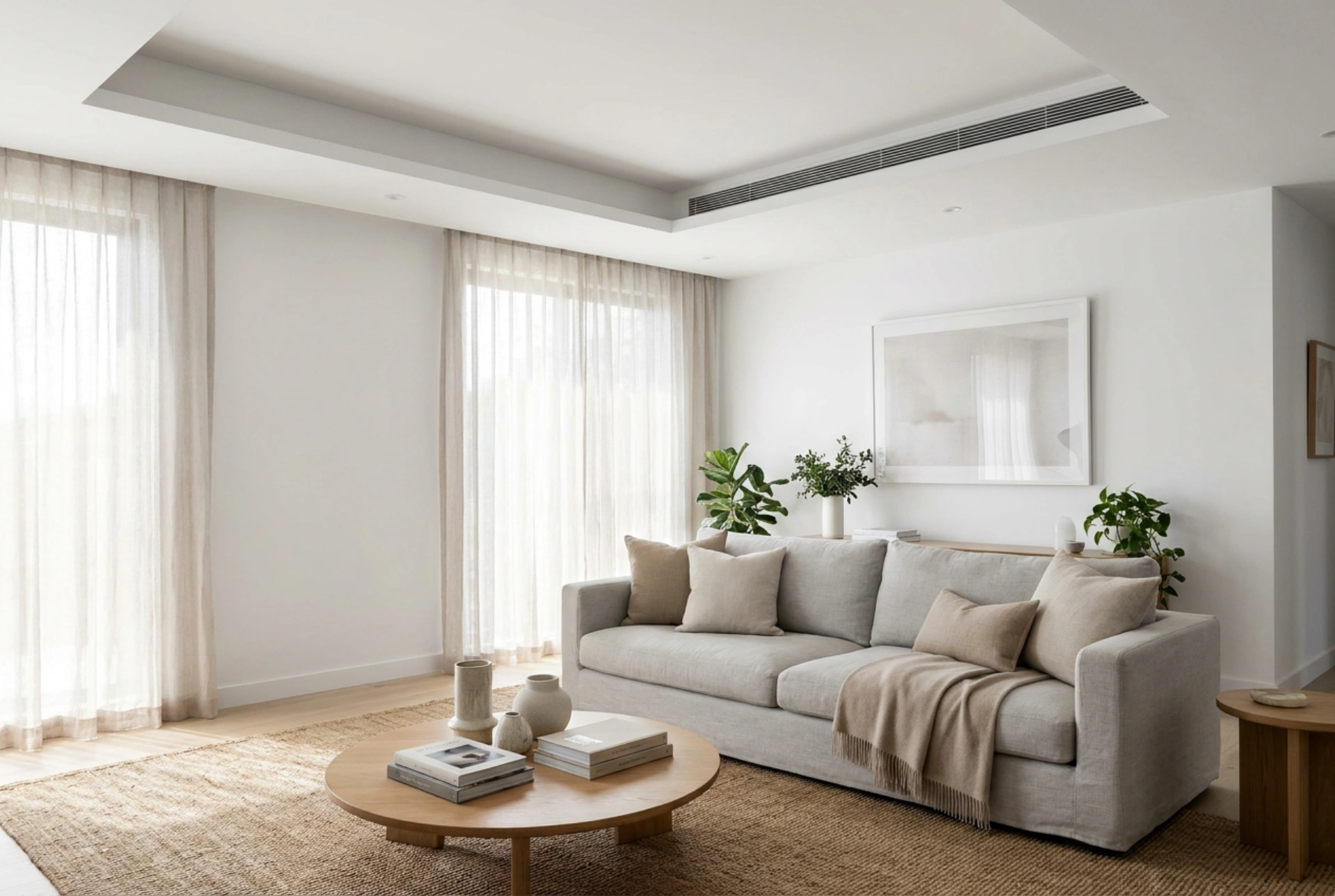


Selecting the ideal pull-down projection screen requires a solid understanding of optical physics and spatial geometry to transform a standard living room into a high-performance viewing environment. By analyzing screen gain, fabric tension, and light-rejection capabilities, you can ensure a crisp, high-contrast image without permanently disrupting your room’s aesthetic design.
Understanding Screen Gain and Optical Physics
The performance of a projection screen is largely dictated by its gain, which is a measurement of the screen's reflectivity compared to a standard barium sulfate reference board. A screen with a gain of 1.0 reflects light evenly in all directions (diffuse reflection). In a typical living room with light-colored walls and potential ambient light, a standard matte white screen can scatter light back into the room, which then bounces off walls and degrades the dark areas of your image, ruining contrast.
For spaces with uncontrolled light, low-gain gray screens (around 0.8 gain) or dedicated Ambient Light Rejecting (ALR) screens are highly effective. Gray screens absorb more ambient light and lower the black levels, which drastically improves perceived contrast. ALR screens utilize microstructures—such as triangular optical filters or lenticular surfaces—that selectively reflect light coming from the projector's angle (usually from below or directly in front) toward the viewer, while absorbing or diverting off-axis light originating from windows or ceiling fixtures.
The Necessity of Tab-Tensioning Systems
One of the most common issues with non-tensioned pull-down screens is the tendency of the fabric to curl at the edges or develop waves over time. This warping is caused by changes in temperature and humidity acting on the flexible PVC vinyl layers. When a flat projection plane is compromised, panning shots in movies will look distorted, as the geometric lines of the projected image bend over the uneven surface.
To combat this, tensioned projection screens employ a system of high-strength cords running along the lateral borders of the screen. These cords pull the edges outward, working in tandem with a heavy bottom dowel that pulls the screen downward. This dual-axis tensioning ensures that the material remains perfectly flat, mimicking the performance of a fixed-frame screen. For long-term optical consistency, investing in a tab-tensioned system is critical if you choose a roll-up format.
Calculating Screen Size and Ergonomic Placement
Determining the correct screen size and placement is a matter of basic geometry and human anatomy. The optimal viewing angle, as recommended by cinematic standards, occupies between 30 and 40 degrees of your field of view. To achieve this, the distance from your seating area to the screen should be approximately 1.2 to 1.5 times the diagonal of a 16:9 aspect ratio screen.
Vertical placement is equally critical to prevent neck strain. When seated comfortably, your primary line of sight should naturally align with the boundary between the bottom third and the middle third of the screen. For pull-down screens mounted near high ceilings, this requires selecting a screen with a sufficient black drop—an extra black border at the top of the viewing area that allows the active screen to descend to a comfortable eye-level height.
Integration and Housing Mechanisms
Pull-down screens are housed in protective casings that can be mounted directly to walls, bolted to ceiling joists, or recessed into false ceilings for a completely flush finish. If opting for a manual spring-roller mechanism, look for controlled screen return systems that use centrifugal brakes to prevent the screen from retracting too quickly, which can damage the mounting brackets and the fabric. Motorized options utilize tubular motors hidden inside the roller tube; when integrating these, consider the physical drop path to ensure the screen descends clear of wall-mounted art, televisions, or furniture.