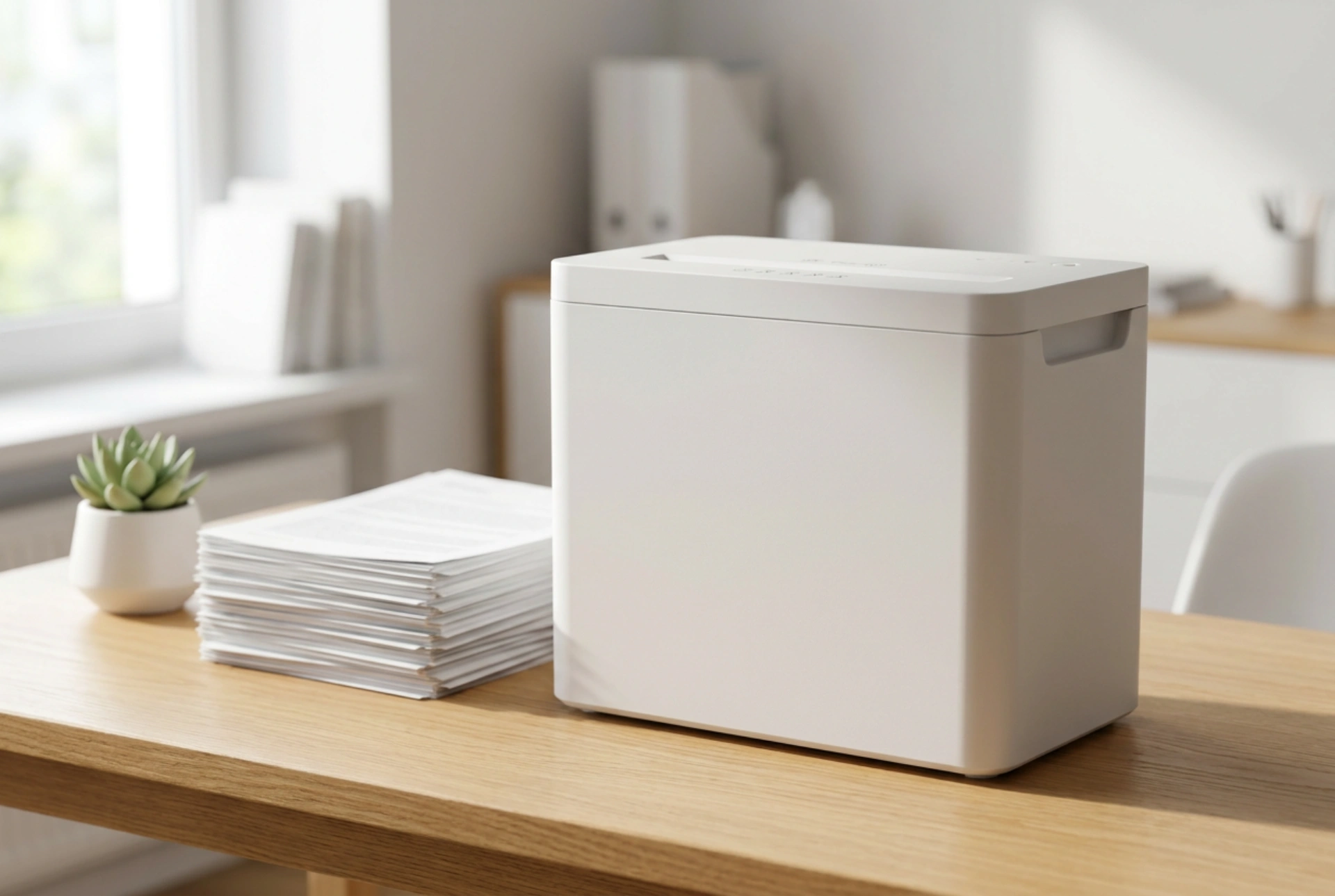


Maintaining document security with a high-capacity paper shredder requires a thorough understanding of the mechanical limits of the device and strict adherence to operational safety protocols. Proper handling prevents paper jams, reduces mechanical wear, and extends the lifespan of the cutting cylinders.
Understanding Shredder Cutting Mechanics
At the core of any professional shredder is a set of dual counter-rotating steel cutting cylinders. These cylinders feature interlocking teeth that pull the paper through a narrow throat, applying concentrated shear stress that exceeds the tensile strength of the cellulose fibres. Strip-cut machines slice paper into continuous parallel strips, while cross-cut and micro-cut models use staggered, notched teeth to cut both longitudinally and transversely. Micro-cut shredders reduce a single A4 sheet into over three thousand tiny particles, significantly decreasing the physical volume of the waste and rendering reconstruction virtually impossible. However, the finer the cut, the higher the mechanical resistance and friction, requiring more motor torque and careful load management.
The Physics of Thermal Limits and Duty Cycles
All electric shredders operate under specific duty cycles, which dictate the continuous run time before the motor requires a cooling period. During operation, electrical resistance in the motor windings and physical friction between the cutting blades generate thermal energy. If a shredder is run beyond its rated duty cycle, the internal temperature rises, triggering the thermal overload switch to prevent the copper windings from melting. To optimize efficiency, operators must respect these duty cycles, typically ranging from ten minutes to continuous operation in industrial-grade models. Overloading the feed throat with more sheets than the specified maximum capacity increases the load on the motor, accelerating heat buildup and leading to premature thermal shutdown.
Lubrication Chemistry: Mitigating Friction
Paper is highly abrasive, consisting of pressed cellulose fibres compacted with mineral fillers like calcium carbonate. As paper passes through the steel cutting assembly, microscopic particles of dust are sheared off. This dust absorbs ambient moisture and forms a gritty paste. This accumulation increases friction, slows down the blades, and forces the motor to draw more electrical current. Regular lubrication with a low-viscosity, non-aerosol, vegetable-based shredder oil is essential. The oil forms a thin barrier on the steel cutting edges, reducing friction and allowing paper dust to pass freely into the waste bin. To apply, squeeze the lubricant in a zigzag pattern across a standard sheet of paper and feed it through the machine, followed by a brief reverse cycle.
Resolving Mechanical Jams Safely
When too many sheets are fed simultaneously, the torque required to shear the paper exceeds the motor's capacity, causing a mechanical stall. Modern professional shredders feature automatic jam detection, reversing the rotation of the cutting cylinders to back out the blockage. If manual intervention is required, the device must be disconnected from the mains power supply first to prevent accidental activation. Never use metal tools, such as tweezers or scissors, to pry stuck paper out of the cutting assembly; metal-on-metal contact will irreparably chip the precision-milled teeth of the steel cylinders. Instead, gently pull the exposed paper upward while manually rotating the gears if a manual override is available.
Contaminant Management and Feed Protocols
To preserve the integrity of the cutting blades, it is vital to control what enters the feed throat. Synthetic polymers present in adhesive labels, window envelopes, and plastic laminates pose a significant hazard to the mechanism. The heat generated by blade friction can soften these adhesives and plastics, causing them to melt and coat the cutting cylinders. This sticky residue attracts paper dust, creating a dense buildup that binds the cylinders and causes the motor to seize. Always remove plastic sleeves and self-adhesive labels before processing documents.