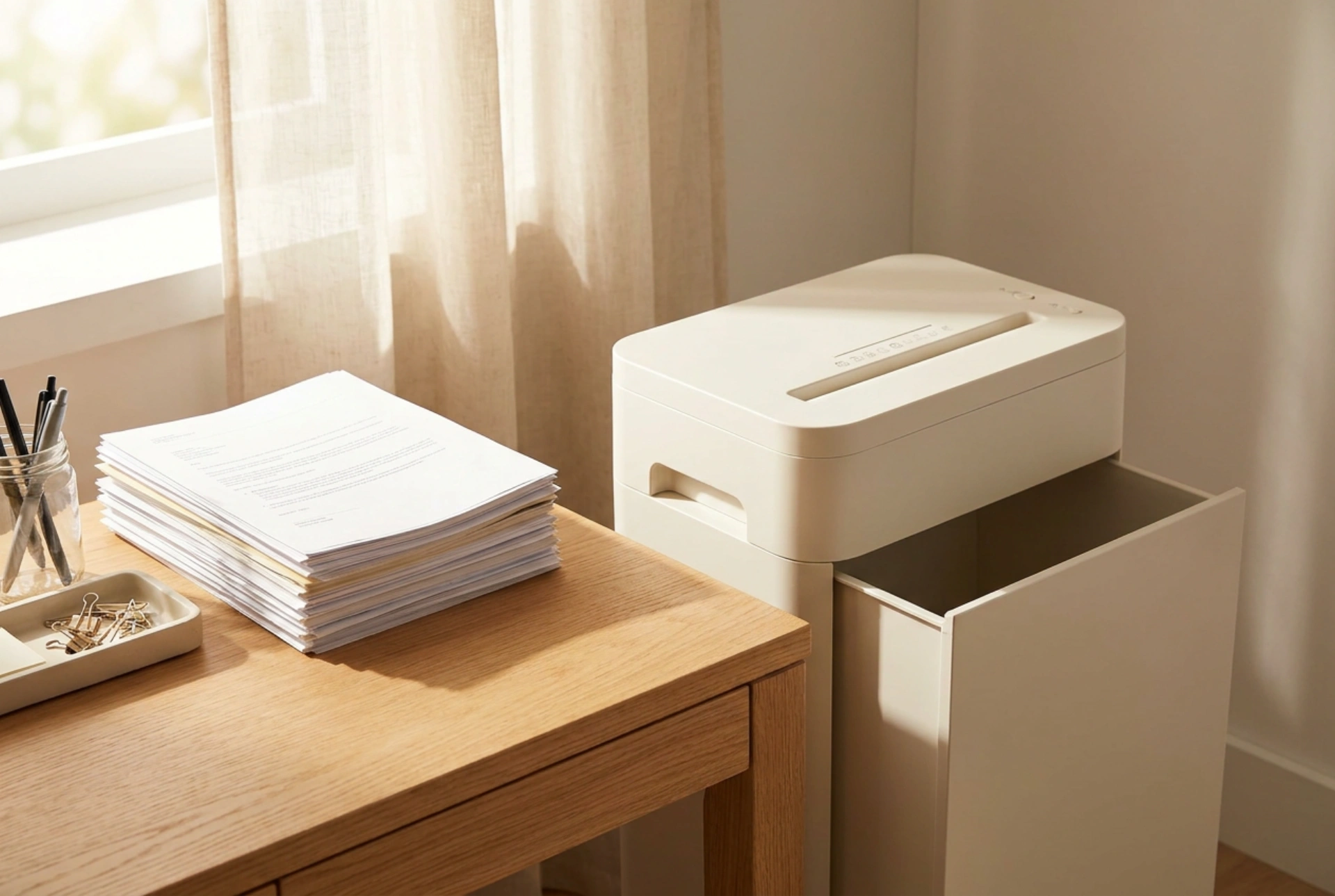


Shredding sensitive home documents is essential for data privacy, but poor technique often leads to frustrating motor jams, dulled blades, and a cloud of static-charged paper dust. Understanding the mechanical limits of your shredder and the physical properties of paper ensures smooth, efficient operation without the mess.
The Mechanics of Paper Shear and Why Jams Occur
To prevent paper jams, it is vital to understand how shredders work. Paper is composed of interlaced cellulose fibers that provide tensile strength. A paper shredder does not actually cut like scissors; instead, it uses rotating interlocking steel shafts to apply high shear stress, tearing the paper fibers apart along a precise line. When you feed too many sheets at once, the cumulative thickness of the cellulose layer exceeds the clearance between the cutting blades. This creates excessive resistance, stalling the electric motor and trapping the compressed fibers between the teeth.
Folding a single piece of paper doubles its thickness and alters the grain alignment. Feeding folded sheets forces the blades to cut across the grain at twice the resistance, which is why even a low sheet count can cause a sudden jam if the paper is crumpled or folded. Always feed sheets flat, aligned with the natural grain of the paper.
Removing Hidden Obstacles: Envelopes, Staples, and Plastics
Before inserting any document, a meticulous preparation routine is required to protect the cutting head. While many modern shredders claim to handle staples and paperclips, these hardened steel components dull the softer steel blades of the shredder over time, leading to tearing rather than clean shearing. Clean cuts produce less paper dust, which is key to preventing mechanical clogging.
- Adhesive residues: Avoid shredding self-adhesive envelopes, labels, or sticky notes. The friction of the blades generates heat, which softens the synthetic adhesives. This sticky residue coats the cutters, attracting paper dust and creating a gummy build-up that slows down the mechanism.
- Plastic windows and films: Envelope windows made of polystyrene or glassine should be torn out before shredding. Like adhesives, thin plastics can melt under the high localized heat of the cutting blades, forming a permanent glaze that reduces cutting efficiency.
Optimal Feeding Techniques for Clean Performance
How you introduce paper into the feed slot determines the strain placed on the motor. Never exceed 80% of the manufacturer’s stated sheet capacity; this buffer accounts for differences in paper weight (such as heavier 90g/m² letterheads versus standard 75g/m² copy paper). Feed the sheets steadily and let the machine pull the paper at its own pace—forcing the paper down can cause uneven feeding and skewing, which bunches the paper up on one side of the cutting head.
The Chemistry of Maintenance: Oiling and Static Control
Continuous metal-on-metal friction generates heat and micro-shavings that degrade the cutting cylinders. Regular lubrication is critical. Use a specialized, low-viscosity shredder lubricant (often a high-flashpoint vegetable-based oil) rather than standard household oils or aerosol lubricants, which can contain flammable propellants.
To oil the blades safely, apply a thin zigzag pattern of oil across a sheet of paper, let it absorb for a few seconds, and run it through the machine. Afterward, run the shredder in reverse for ten seconds to distribute the oil evenly across the cutting cylinders. This reduces friction, lowers operating volume, and helps paper dust slide off the blades instead of packing into the gaps.
To manage the static electricity that causes shredded paper to cling to the bin and scatter across the floor, wipe the plastic collection bin with a damp cloth or a generic anti-static dryer sheet. The thin anti-static coating neutralizes the negative charge built up on the plastic during the high-speed shearing process.
Step-by-Step Recovery from a Paper Jam
If a jam does occur, avoid the temptation to yank the paper out forcefully, as this can strip the plastic gears inside the motor housing. Follow this systematic approach:
- Switch to reverse: Most jams can be cleared by reversing the rotation of the shafts to back the paper out of the feed slot.
- Disconnect the power: Before touching the blades or attempting to pull paper from the top or bottom, physically unplug the machine from the wall outlet to eliminate any risk of accidental activation.
- Use manual extraction tools: Use a pair of long-nose pliers to gently pull trapped pieces of paper upward. If the paper is tightly wedged, apply a few drops of shredder oil directly to the jam and wait ten minutes to soften the paper fibers before attempting to clear it.