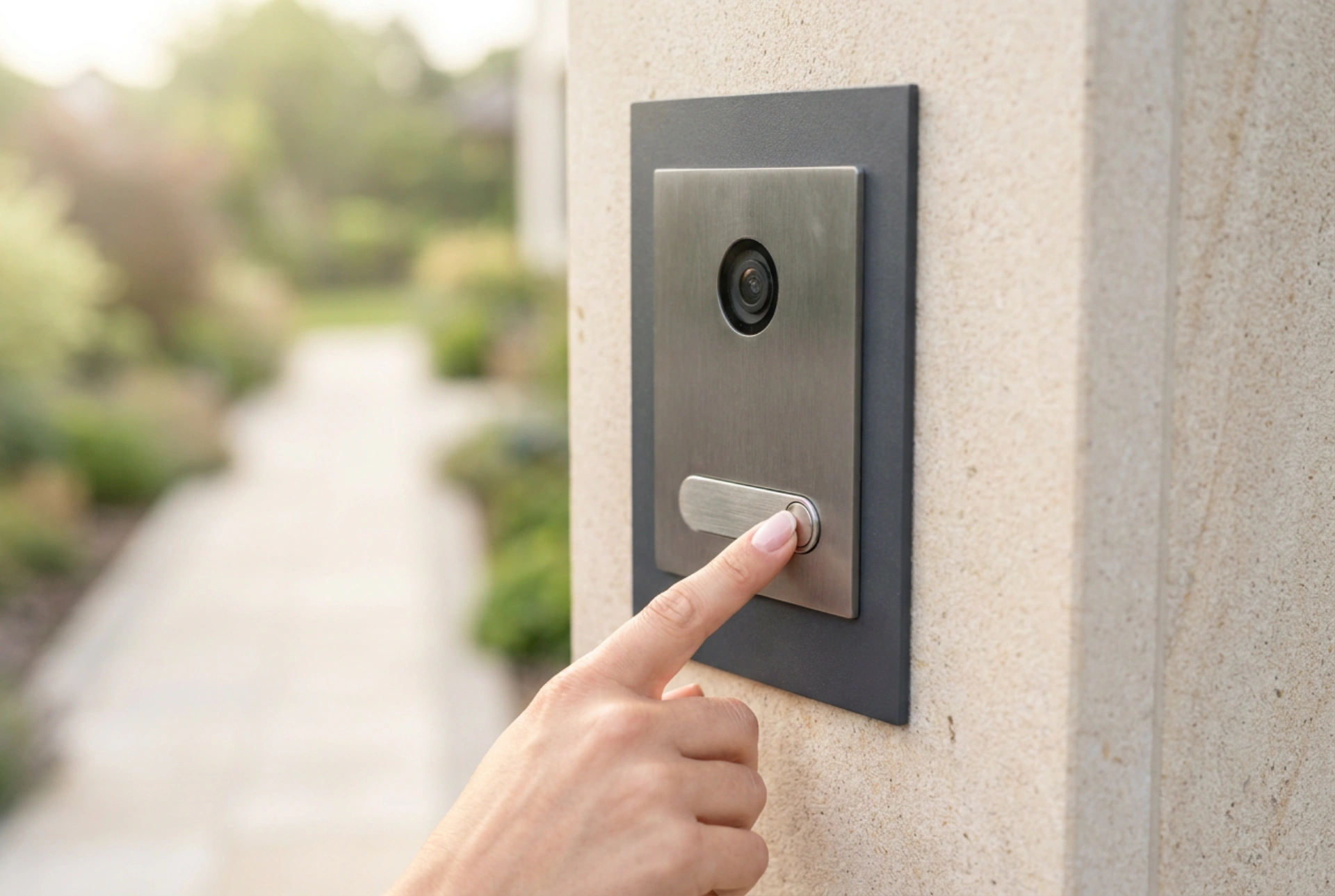


A wireless intercom paired with an electric gate strike offers modern access control without the need for extensive trenching, but achieving reliable operation requires a solid understanding of radio frequency behavior and mechanical physics. Proper daily use, optimal signal management, and mechanical alignment are key to ensuring your gate opens instantly at the press of a button.
Optimizing Wireless Signal Propagation and Range
Wireless intercoms transmit audio, video, and control signals using radio waves, typically operating on frequencies like 1.88 GHz (DECT), 2.4 GHz, or 5 GHz. The physical environment heavily influences these signals. Solid stone pillars, concrete walls, and particularly metal fences can act as electromagnetic shields or Faraday cages, severely attenuating the radio frequency (RF) energy.
To ensure a stable connection between the outdoor gate station and the indoor receiver, minimize physical obstructions. Keep in mind that wet foliage and high humidity can absorb RF energy, reducing range during rainy weather. If you experience signal drops, ensure the outdoor transmitter is mounted away from large metal sheets and that the internal antenna is oriented vertically to align the polarization of the radio waves with the indoor receiver.
The Mechanics of the Electric Strike
An electric strike is an electromagnetic locking device that replaces the standard fixed strike plate of a gate. When you trigger the release from your wireless intercom, an electrical signal activates a solenoid inside the strike. This solenoid either retracts a locking pin (fail-secure) or releases it (fail-safe), allowing the gate latch to push past the keeper without manual key usage.
A common operational failure occurs when the gate latch exerts physical pressure against the electric strike's keeper. This lateral tension, often caused by wind, warping, or thermal expansion of the gate, increases friction. The solenoid's electromagnetic force may not be strong enough to overcome this friction, preventing the gate from releasing. When operating the system, ensure the gate hinges are adjusted so that the latch sits centered in the strike plate with minimal resting pressure.
Power Supply Management and Battery Care
Wireless outdoor units are frequently powered by rechargeable lithium-ion batteries or low-voltage wiring. To maximize battery lifespan, adjust the intercom's standby settings. High-resolution video feeds and continuous motion detection drain power rapidly. Reducing the motion sensor sensitivity and limiting the video transmission duration to essential periods will prevent deep battery discharge, which degrades lithium cells over time.
For systems where the electric strike itself is battery-powered, a capacitor bank is often used to deliver the high-current pulse needed to actuate the solenoid. Ensure the system is given a few seconds between consecutive release attempts to allow these capacitors to fully recharge.
Preventative Maintenance and Environmental Protection
Outdoor gate components are exposed to temperature swings, dust, and moisture. Regular maintenance prevents electrical and mechanical failures:
- Mechanical Lubrication: Do not use heavy greases or wet lubricants on the electric strike, as they attract dust and bind the small internal springs. Instead, apply a dry graphite lubricant to the moving keeper and the gate latch.
- Moisture Control: Inspect the rubber gaskets of the outdoor intercom casing annually. Over time, UV radiation degrades silicone seals, allowing water ingress which causes short circuits or corrosion on the PCB.
- Contact Cleaning: If the gate features physical metal contacts for power transfer, clean them periodically with an isopropyl alcohol-based contact cleaner to remove oxide layers that increase electrical resistance.