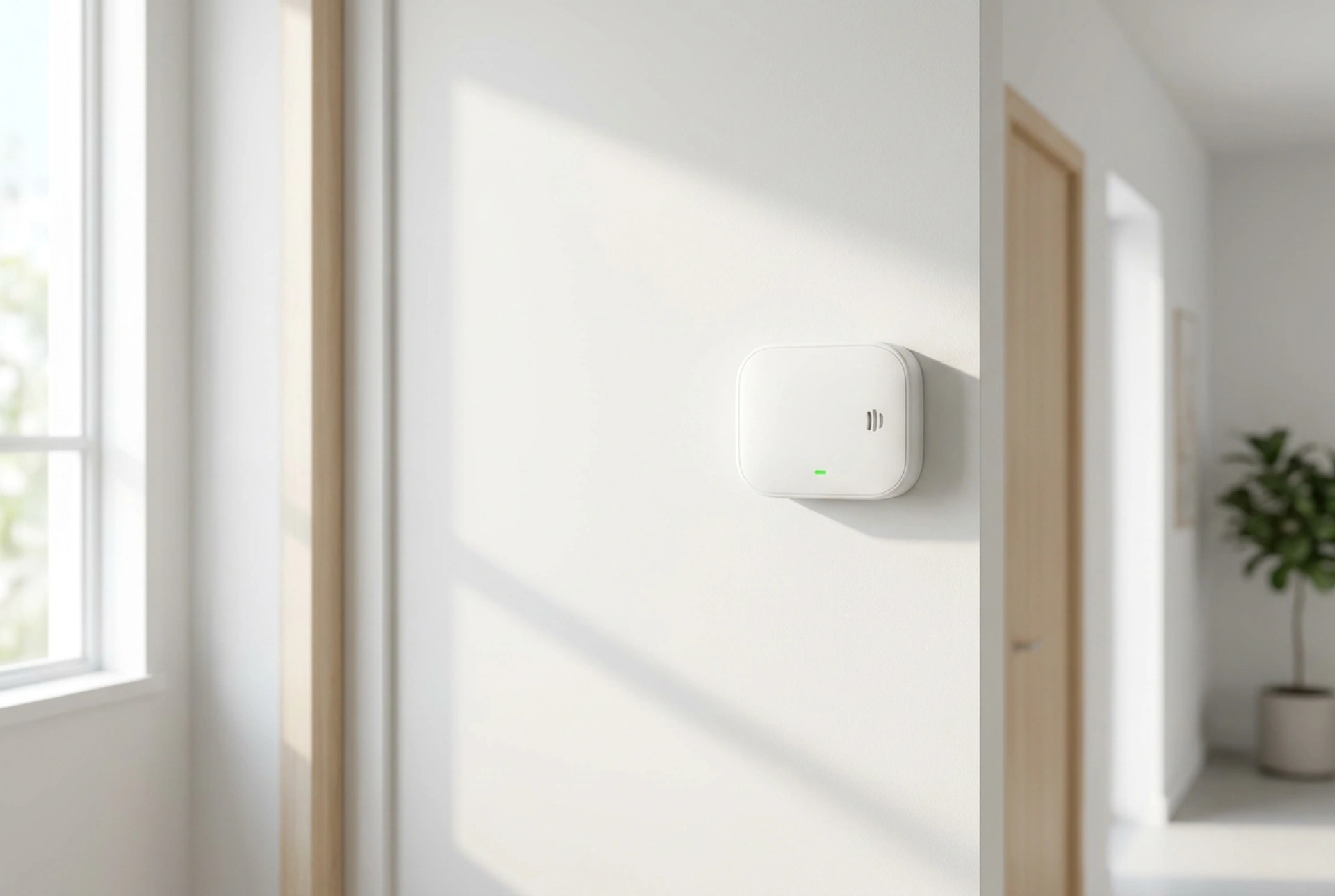


Understanding the physical properties of carbon monoxide and combustible gases is the first step toward establishing a robust safety system in your home. While installing detectors is essential, their life-saving efficacy relies entirely on correct positioning, an understanding of gas behavior, and disciplined maintenance routines.
The Physics of Gases: Why Density Dictates Detector Placement
To position your detectors effectively, you must understand how different gases behave in domestic spaces. Carbon monoxide (CO) is a colorless, odorless gas produced by incomplete combustion. With a molar mass of approximately 28 g/mol, CO is slightly lighter than air (average 29 g/mol). This minimal difference means that carbon monoxide mixes uniformly with the surrounding air, drifting easily with ambient convection currents rather than sinking or rising rapidly. Consequently, CO detectors should be installed at breathing height—typically 1.5 meters from the floor—or on the ceiling, avoiding stagnant air pockets in corners.
Combustible gases follow different physical rules. Natural gas, which consists primarily of methane, is significantly lighter than air. Upon escaping a pipe or appliance, it rises rapidly toward the ceiling. Therefore, a natural gas detector must be mounted high on the wall, within 30 centimeters of the ceiling. Conversely, Liquefied Petroleum Gas (LPG), consisting of propane and butane, is heavier than air. If a leak occurs, LPG flows downward, pooling along floors, floorboards, and in basement areas. For LPG protection, detectors must be mounted low to the ground, no higher than 30 centimeters above the floor.
Sensor Mechanics: How Hazards are Detected
Different hazards require distinct sensor technologies, each operating on unique chemical and physical principles. Carbon monoxide detectors typically utilize electrochemical sensors. Inside the sensor, CO molecules penetrate a porous membrane and undergo a chemical oxidation reaction on a catalyst electrode, converting CO to carbon dioxide. This chemical reaction generates an electrical current directly proportional to the concentration of the gas in the room, measured in parts per million (ppm). When this current crosses a calibrated safety threshold, the alarm triggers.
Combustible gas detectors, on the other hand, frequently employ catalytic bead or metal oxide semiconductor sensors. These sensors feature a heated wire or ceramic bead coated with a catalyst. When a flammable gas contacts the surface, it oxidizes, causing a physical temperature increase or a change in electrical resistance. Because these sensors rely on thermal and electrical shifts, they require a stable power supply and are highly sensitive to contamination from household chemical vapors, such as silicone sprays, volatile organic compounds (VOCs), and heavy cleaning solvents.
Strategic Installation and Dead Air Zones
Correct spatial positioning ensures that sensors detect anomalies before they reach dangerous concentrations. First, prioritize the vicinity of sleeping areas; an audible alarm must be loud enough to wake occupants through closed doors. Second, position detectors at a physical distance of at least 1.5 to 3 meters from fuel-burning appliances, such as boilers, gas stoves, or fireplaces. This distance prevents transient, harmless bursts of combustion products during appliance startup from triggering annoying false alarms.
Furthermore, you must avoid installing detectors in stagnant air zones, often referred to as dead air spaces. These are pockets of still air where ambient drafts cannot carry gas molecules to the sensor. Dead air zones typically exist in the corners where walls meet ceilings, within 10 to 15 centimeters of any junction. Avoid placing sensors directly adjacent to windows, external doors, or mechanical ventilation ducts, as the localized draft will dilute the surrounding air and delay detection of an actual hazard inside the room.
Maintenance, Testing, and Sensor Longevity
Passive safety systems require active maintenance to remain reliable over time. Sensor components naturally degrade over their lifespan due to chemical oxidation and environmental exposure. A structured maintenance checklist ensures continuous protection:
- Monthly Testing: Press the integrated test button to verify the electrical circuits, internal software, and audible horn are fully functional. This tests the system electronics, not the chemical sensor itself.
- Acoustic and Vent Cleaning: Gently vacuum the exterior vents of the detector with a soft brush attachment on a low setting. This removes accumulated dust and pet hair that can physically block gas molecules from reaching the internal chamber.
- Chemical Protection: Never spray aerosols, paint, or household cleaners directly onto or near the detector housing. The chemical propellants and solvents can permanently poison the active catalytic or electrochemical elements, rendering them useless.
- Monitoring the Expiry Date: Carbon monoxide sensors degrade steadily, generally lasting between five and ten years. Most modern units feature an internal timer that emits a specific end-of-life chirp when the chemical sensor is no longer reliable. Always record the installation date on the side of the housing.