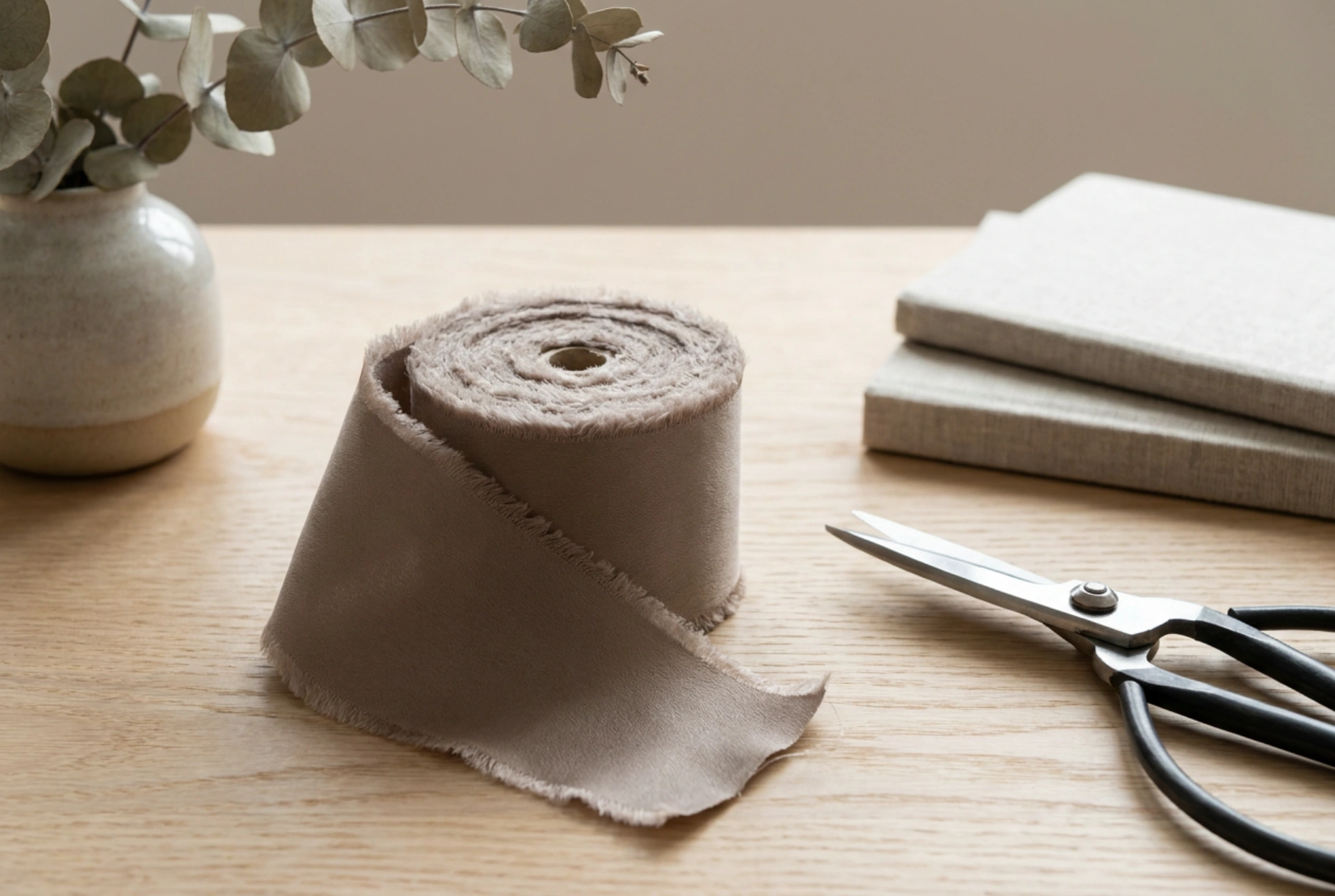


Achieving crisp, enduring lettering on funeral ribbons requires understanding the thermodynamic relationship between ink foils and synthetic ribbon fibres. This practical guide details how to calibrate print settings, select compatible materials, and execute precise layouts to ensure text remains perfectly legible under all weather conditions.
Material Science: Selecting the Right Ribbon Base
Ribbon substrates significantly impact ink adhesion. Most funeral ribbons are composed of polyester or satin fabrics. Satin offers a smooth, glossy surface, but its tight weave can sometimes resist ink penetration if not treated. Polyester ribbons, particularly those with a matte finish, provide excellent surface tension, allowing the printing medium to bond securely. When selecting ribbons, avoid heavily textured or ribbed fabrics (such as grosgrain) for thermal transfer printing, as the peaks and valleys prevent uniform heat distribution, resulting in patchy, incomplete lettering. Furthermore, ensure the edges are sealed or hot-cut to prevent fraying during handling and outdoor exposure.
The Chemistry of Thermal Transfer: Wax vs. Resin Foils
The durability of the printed message relies on the chemistry of the thermal transfer ribbon (the ink source). There are three primary formulations:
- Wax Foils: These melt at low temperatures and are highly susceptible to smudging, water damage, and UV degradation. They are entirely unsuitable for outdoor funeral arrangements.
- Wax-Resin Hybrids: These strike a balance, offering moderate scratch resistance and sharp print quality on semi-glossy fabrics.
- Resin Foils: This is the gold standard for durability. Pure resin requires a higher printing temperature to melt, but once transferred, it forms a highly durable, chemical-resistant, and scratch-resistant bond with synthetic fibres. The resin cross-links with the polyester under heat, making the print highly resistant to rain, frost, and direct sunlight.
Optimising Printer Mechanics: Temperature and Speed
To achieve high-contrast lettering without melting the substrate, you must finely tune your thermal transfer printer's settings:
- Heat Settings (Darkness): If the print head temperature is too low, the resin will not melt fully, leading to faint, peeling letters. If the temperature is too high, the ribbon substrate may warp, and the ink will bleed, causing fuzzy edges. Begin with a medium heat setting and perform test runs, incrementally increasing the temperature until the edges of the characters are perfectly defined and gloss-finished.
- Print Speed: Slower print speeds allow for a more uniform dwell time—the duration the heating element is in contact with the ribbon. For complex fonts or resin foils, a speed of 50 mm to 100 mm per second is recommended to ensure complete chemical transfer.
Typography and Layout Principles for High Legibility
The physical layout of the text determines its readability from a distance. Follow these rules to prevent visual merging of letters:
- Font Choice: Sans-serif fonts with uniform stroke widths (such as Arial or Helvetica) print more reliably than delicate, high-contrast serif fonts. Fine serifs often fail to transfer properly or bleed into adjacent fibres.
- Kerning and Spacing: Increase the letter-spacing (tracking) slightly. When thermal ink transfers, a microscopic amount of horizontal bleeding occurs. Adequate spacing prevents letters like 'e', 'a', and 'o' from filling in.
- Contrast: Always print high-contrast combinations, such as metallic gold, silver, or black ink on contrasting dark or light ribbons. Avoid low-contrast pairs like yellow on white or dark grey on black, which become illegible under overcast skies.
Practical Assembly and Weatherproofing
After printing, allow the ribbon to cure for a few minutes to ensure the resin has fully solidified. To secure the ribbons to wreaths or stands without damaging the print, use clean, sharp shears to make a diagonal or swallowtail cut at the ends, preventing water capillary action from fraying the tips. Avoid folding or creasing the printed sections during transport; store them flat or gently rolled with tissue paper between layers to prevent ink transfer or cracking.