

Integrating a wooden wall clock into a space dominated by warm, tactile materials requires a deliberate understanding of surface physics, light absorption, and material chemistry. When done correctly, the natural grain of the wood harmonizes with fibers like wool, linen, and brushed metals to create a cohesive, visually soothing environment.
The Optical Science of Warm Materials
The perception of warmth in interior design is closely tied to how surfaces interact with light. Highly polished, non-porous materials like glass or chrome reflect light in a specular, mirror-like manner, which the human eye instinctively associates with coolness and sterility. In contrast, organic materials such as unfinished wood, wool, and linen possess microscopic surface irregularities. These textures scatter light in multiple directions, a physical phenomenon known as diffuse reflection.
To match a wooden wall clock with warm materials, you must align these light-scattering properties. A clock with a matte or satin finish preserves the wood's open pores, allowing it to diffuse light at the same rate as surrounding textiles like boucle or woven wall hangings. This consistency in light diffusion is what makes different materials feel unified and naturally connected in a living space.
Analyzing Wood Species and Color Undertones
Wood is not a single aesthetic entity; its visual temperature is determined by the species, the cut, and the natural tannins within the fibers. To match warm materials successfully, you must identify the underlying pigments of both the clock frame and the adjacent surfaces:
- Warm Undertones (Yellow, Orange, Red): Woods such as oak, cherry, and alder naturally contain warm pigments. These pair exceptionally well with linen, terracotta, brass, and warm-toned wools.
- Neutral to Cool Undertones: Species like walnut or ash can lean toward cool gray or yellow-green undertones. If you pair a cool-toned walnut clock with warm beige wool, the contrast can feel discordant unless bridged by a transitional element like brushed brass hands.
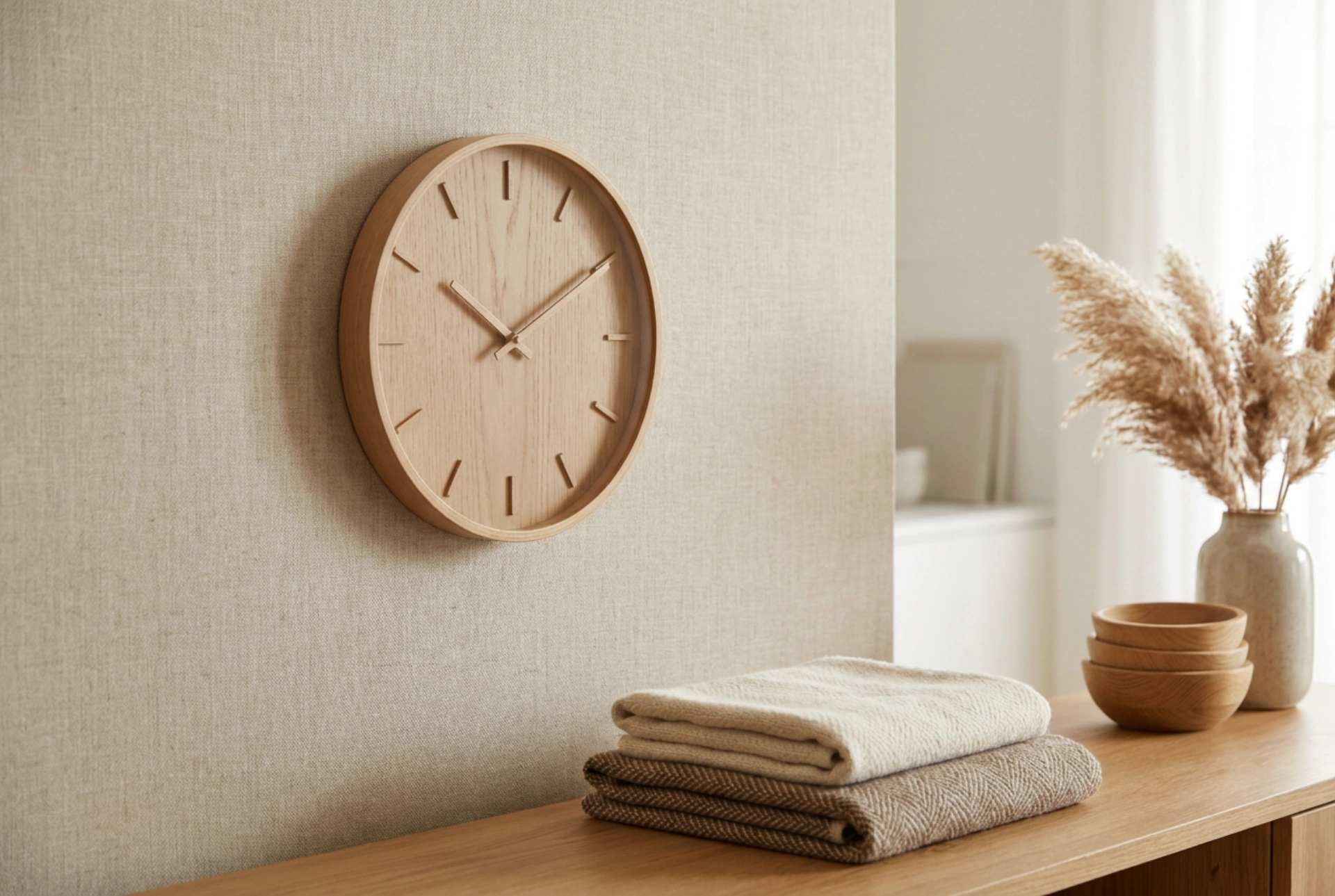
When selecting a clock, match the dominant undertone of your room's larger wooden elements, such as flooring or structural beams. A light oak clock on a textured beige linen background creates a low-contrast, high-texture transition that is highly pleasing to the eye.
The Rule of Texture Juxtaposition
Creating depth without relying on high-contrast colors requires a strategic arrangement of tactile textures. Wood provides a solid, structured texture, which needs to be balanced by softer, more flexible materials. This is achieved through the physical relationship between three main components: the clock's surface, the wall texture, and nearby textiles.
If the wall behind the clock is smooth plaster, introduce texture through nearby accessories, such as a coarse-woven wool throw or dried botanical elements. Conversely, if you mount a minimalist wooden clock directly onto a textured wallpaper or a linen-wrapped panel, the clock should feature a clean, smooth grain. This contrast between the structured smoothness of the wood and the organic irregularity of the fabric prevents the arrangement from looking flat.
Mounting and Structural Considerations
The physical installation of a heavy wooden clock must respect both the wall material and the wood itself. Wood is a hygroscopic material, meaning it absorbs and releases moisture from the air, causing microscopic expansion and contraction. To prevent damage to both the clock and delicate wall coverings like linen wallpaper, follow these structural guidelines:
- Ensure Air Circulation: Avoid mounting the clock flush against a damp or poorly insulated exterior wall. Use small felt pads on the back of the clock frame to create a tiny gap of two to three millimeters. This allows air to circulate freely, preventing moisture build-up and wood warping.
- Anchor Securely: Solid wood clocks can be heavy. Use appropriate wall anchors, such as toggle bolts for drywall or expansion plugs for masonry, rather than simple nails to prevent tension tears in textured wall coverings.
The surface treatment of the wood also plays a crucial role. Applying natural linseed oil or beeswax to a wooden clock deepens its natural color and highlights the grain without sealing it under a thick, synthetic polyurethane layer. Synthetic varnishes can create a plastic-like sheen that disrupts the organic, warm aesthetic. For a harmonious look, choose clocks finished with penetrating oils that maintain the tactile quality of the wood fiber.