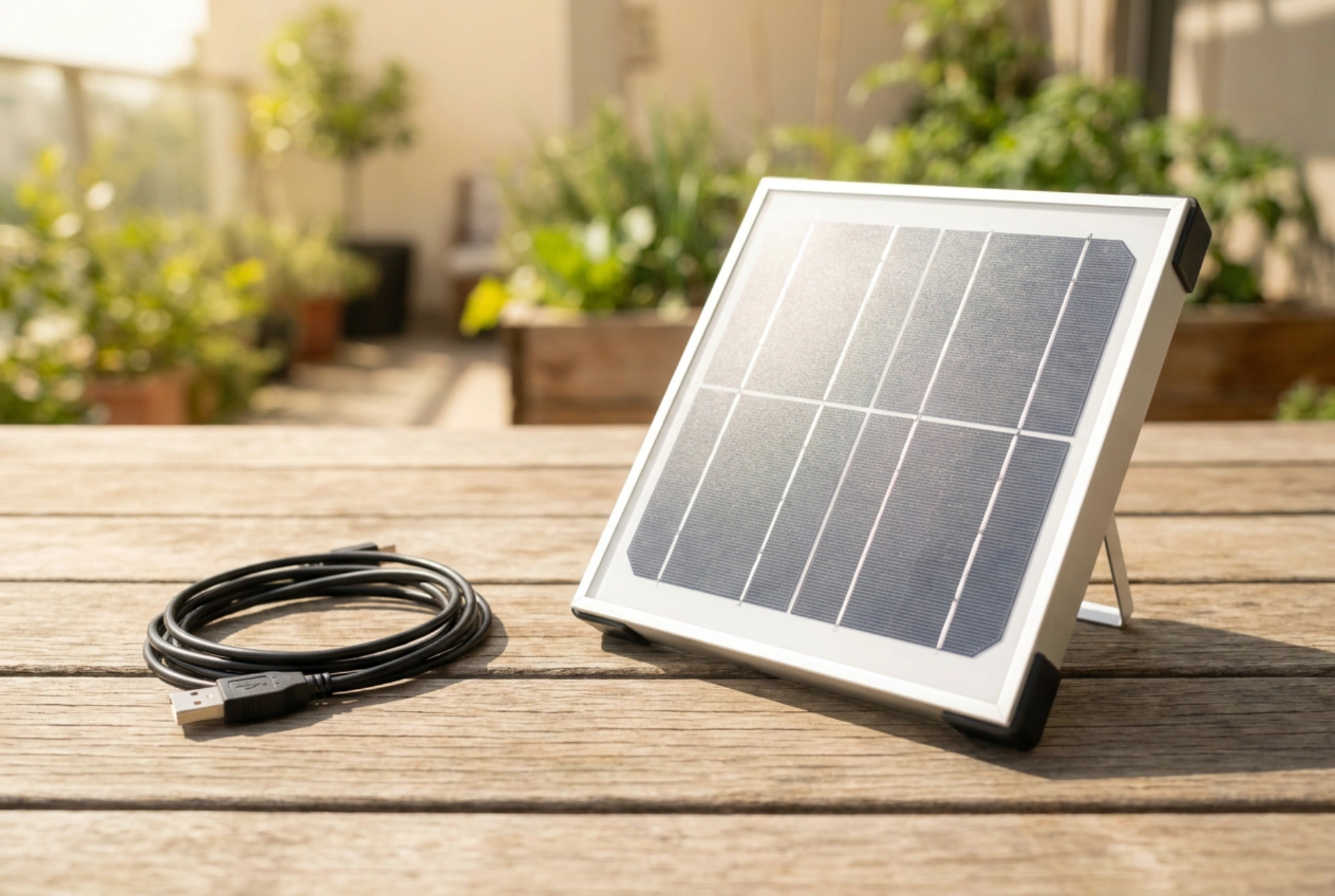


Maximising the efficiency of a portable solar power bank requires a solid understanding of photovoltaic physics and the thermal limits of lithium-ion batteries. Managing light angles and temperature ensures you get the fastest possible charge while protecting the internal battery cells from heat degradation.
The Physics of Solar Energy Conversion
Solar power banks utilise small photovoltaic panels, typically made of monocrystalline or polycrystalline silicon. When photons from sunlight strike the silicon wafer, they transfer energy to electrons, creating an electrical current. To maximise this energy transfer, the angle at which sunlight hits the panel is critical. The optimal angle of incidence is 90 degrees; any deviation reflects a portion of the incoming light, reducing efficiency.
It is also essential to charge the device outdoors rather than behind a window. Standard window glass is treated to block or reflect ultraviolet and infrared light, and can absorb or scatter a significant portion of the visible spectrum. This filtering effect can reduce the charging efficiency of a solar panel by 30% to 50%. Direct, unobstructed sunlight is necessary for the semiconductor material to function at its rated capacity.
The Heat Dilemma: Protecting the Lithium-Ion Battery
While the solar panel needs direct sunlight to operate, the lithium-ion battery stored inside the power bank is highly sensitive to heat. High temperatures accelerate chemical degradation within the battery cells. When the temperature of a lithium-ion battery exceeds 45°C, the internal resistance increases, slowing down the charging process and permanently reducing the overall capacity of the cell.
To balance these conflicting requirements, apply simple thermodynamic principles:
- Create a thermal barrier: Position the solar panel in direct sunlight, but keep the battery body or the storage compartment shaded. If the solar panel is detachable, use an extension cable to place the battery unit in a cool, shaded area.
- Ensure ventilation: Do not place the power bank directly on hot surfaces like concrete, asphalt, or car dashboards, which act as heat sinks. Elevate the device slightly on a wooden deck or mesh surface to allow air to circulate underneath, facilitating convective cooling.
Understanding Charging Speeds and Capacity
A common misconception is that a solar power bank can be fully charged from empty using only its integrated solar panel in a few hours. In reality, the small surface area of a built-in solar panel typically generates between 1 and 2 watts of power under optimal conditions. For a standard 10,000 mAh (37 watt-hour) power bank, a 1.5-watt panel would require approximately 25 hours of continuous, peak sunlight to achieve a full charge.
Therefore, the correct order of operations is to pre-charge the power bank to 100% using a standard wall outlet before leaving home. The solar panel should be treated as an auxiliary charging method, ideal for maintaining the battery level, topping up energy during hikes, or serving as an emergency power source when grid access is unavailable.
Surface Maintenance for Light Transmission
The protective top layer of the solar panel—usually made of polyethylene terephthalate (PET) or ethylene tetrafluoroethylene (ETFE)—must remain perfectly clean to allow maximum light transmission. Dust, pollen, salt spray, and fingerprints scatter incoming light, preventing photons from reaching the silicon layer underneath.
Clean the panel regularly using a dry microfibre cloth to remove loose dust. For stubborn grime, dampen the cloth slightly with distilled water to prevent mineral spots from forming. Avoid using harsh chemical solvents, glass cleaners, or abrasive pads, as these can scratch or cloud the plastic coating, permanently reducing the panel's optical clarity and efficiency.