

Thin-gauge extension cords are highly convenient for managing power delivery to small devices, but understanding their physical limitations is essential to prevent household electrical hazards.
The Physics of Thin Conductors: Why Gauge Matters
Every electrical conductor has an inherent resistance to current flow, which is determined by its material composition, length, and cross-sectional area. In thin-gauge extension cords—typically containing conductors with a cross-sectional area of 0.75 mm² or less—the physical space available for electron flow is restricted. According to the laws of physics, electrical resistance is inversely proportional to the cross-sectional area of the conductor. When electric current passes through a conductor with higher resistance, it encounters friction, converting electrical energy into thermal energy. This phenomenon is known as Joule heating. If the current exceeds the safe capacity of the thin wire, the heat generated cannot dissipate quickly enough, raising the internal temperature of the cable. Over time, this thermal buildup degrades the surrounding polyvinyl chloride (PVC) or rubber insulation, which can lead to short circuits, exposed live wires, and potential fire hazards.
Identifying Safe, Low-Power Devices for Light-Duty Cords
To safely utilize a thin-gauge extension cord, you must calculate the total electrical load of the connected devices. This requires a basic application of Ohm’s Law and the power formula, where power (measured in Watts) equals voltage (Volts) multiplied by current (Amps). In standard European and British domestic grids operating at 230 volts, a thin-gauge cord rated for 3 to 6 Amps can safely handle a continuous load of approximately 690 to 1380 Watts. However, to ensure a safe operating margin, it is best to restrict these cords to low-draw appliances. Ideal devices include LED desk lamps, smartphone and laptop chargers, Wi-Fi routers, and small alarm clocks. Conversely, high-wattage household appliances must never be connected to thin cords. Devices with heating elements or powerful electric motors—such as kettles, hair dryers, vacuum cleaners, and space heaters—frequently draw between 1500 and 3000 Watts, which will rapidly overload and overheat a thin-gauge cable.
Thermal Management and Physical Safety Practices
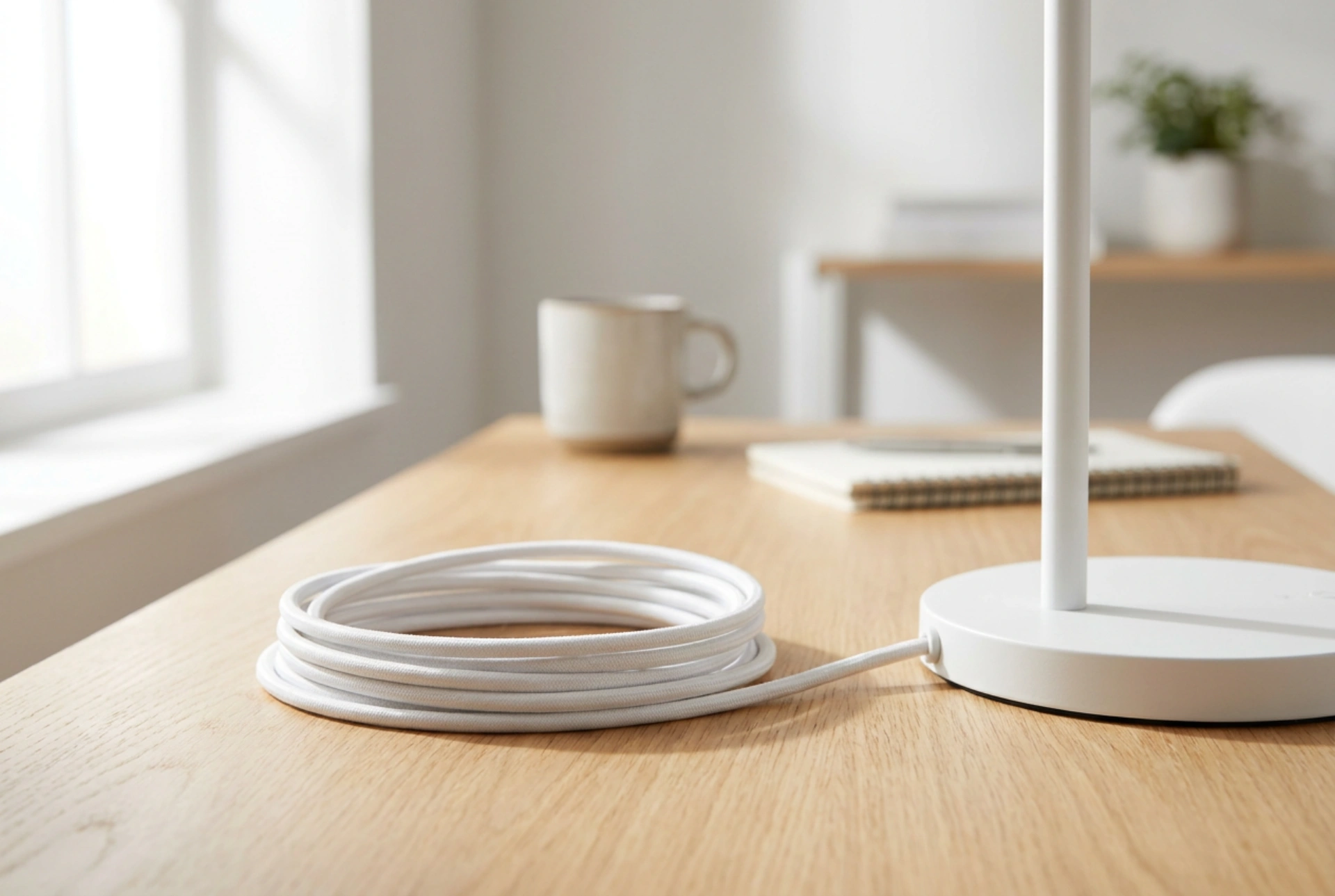
Beyond electrical load limits, the physical arrangement of an extension cord directly influences its safety and longevity. When a cable is coiled or bundled while in use, it acts as an inductive coil and restricts natural air circulation. This lack of ventilation traps heat within the layers of wire, compounding the temperature rise even under moderate electrical loads. Therefore, always fully uncoil thin extension cords during operation. Additionally, avoid running cords under carpets, rugs, or heavy furniture. Carpet acts as a thermal insulator, preventing the heat generated by the copper strands from dissipating into the surrounding air. Furthermore, placing heavy furniture over a cable subjects the internal copper strands to mechanical compression and pinch points. This physical deformation reduces the effective cross-sectional area at the point of pressure, drastically increasing localized resistance and creating dangerous hot spots.
A Checklist for Safe Household Integration
- Always verify the wattage rating of your appliance against the maximum load capacity printed on the extension cord label.
- Fully unravel the cable before plugging in any device to allow proper heat dissipation through natural convection.
- Position the cord along baseboards and away from high-traffic pathways to prevent mechanical wear and tripping hazards.
- Regularly inspect the outer sheath of the cord for signs of cracking, discolouration, or localized warmth during operation.