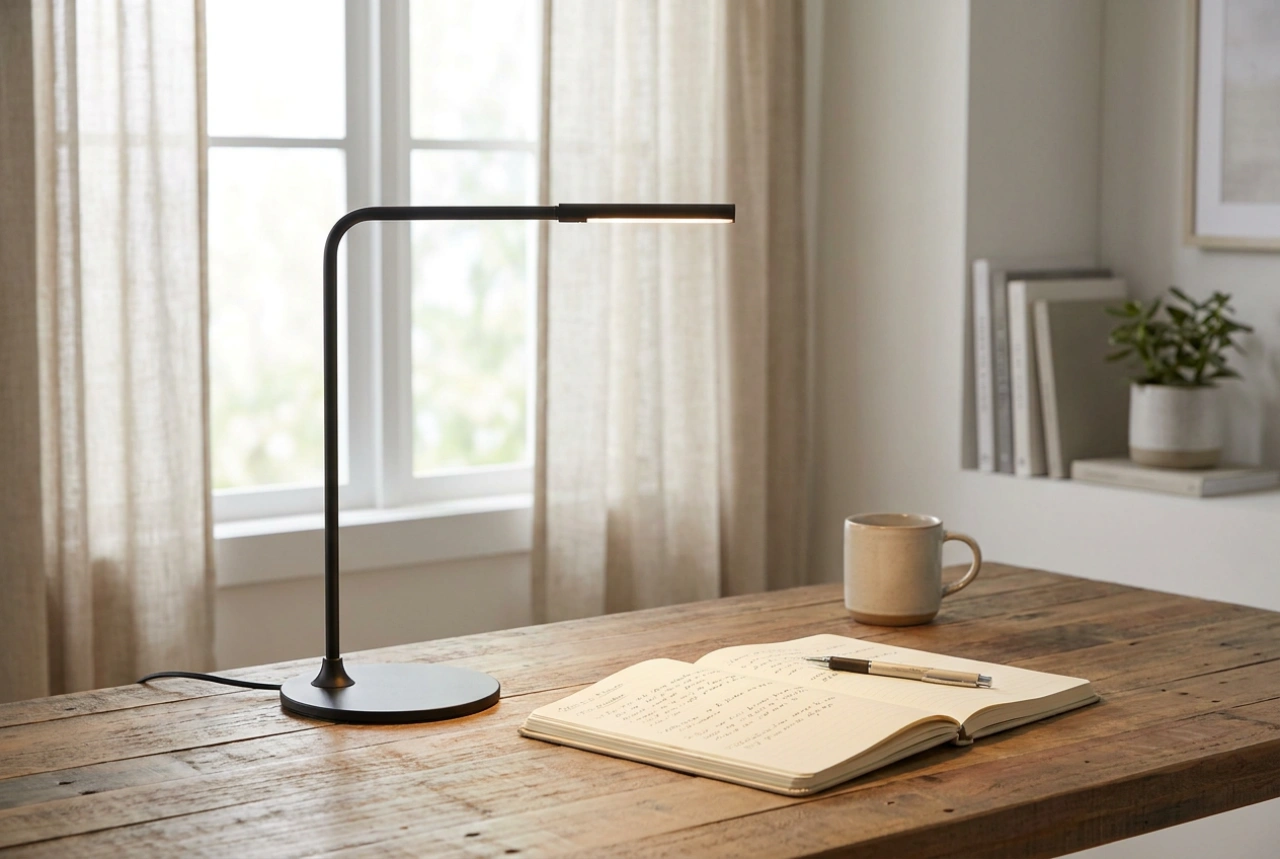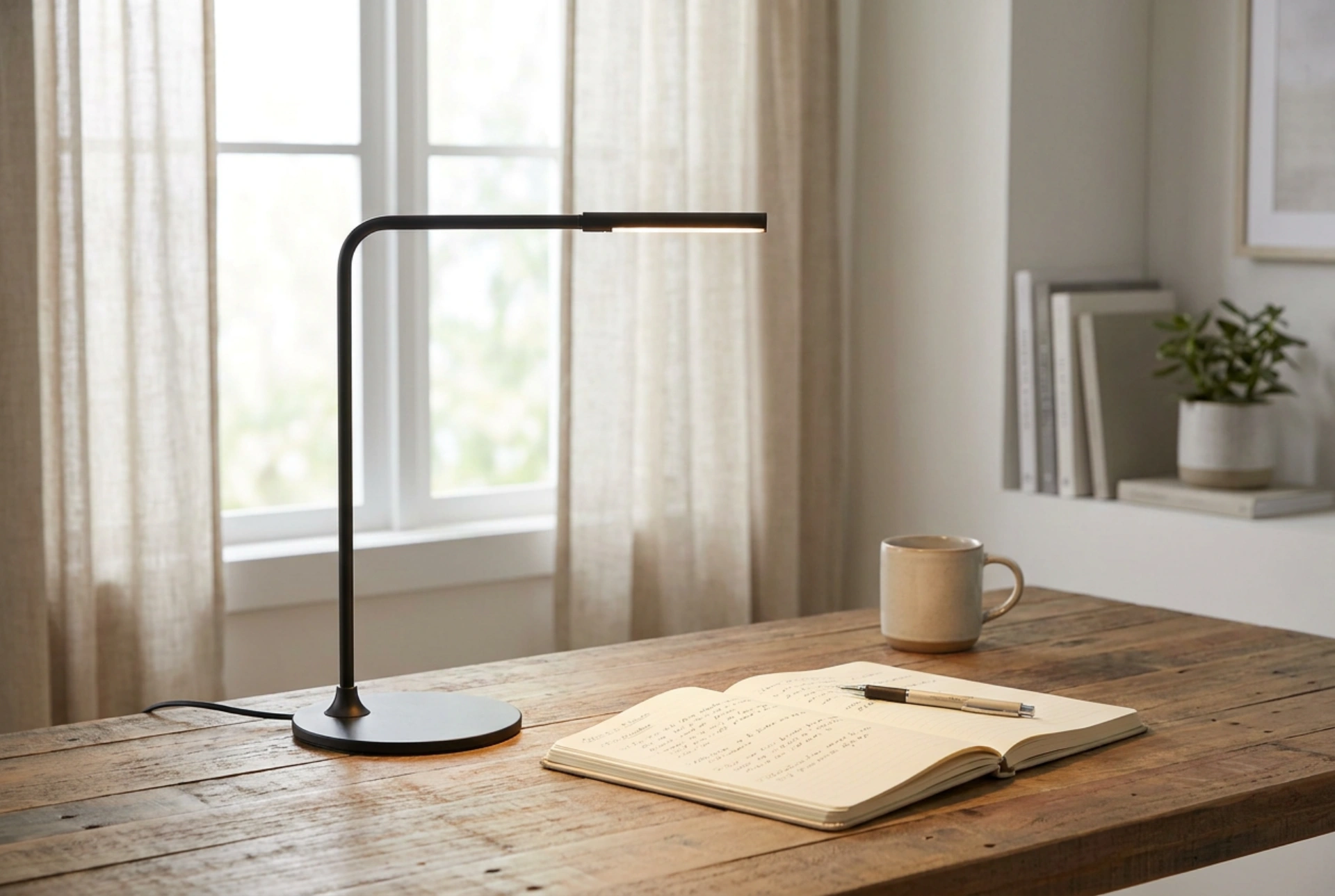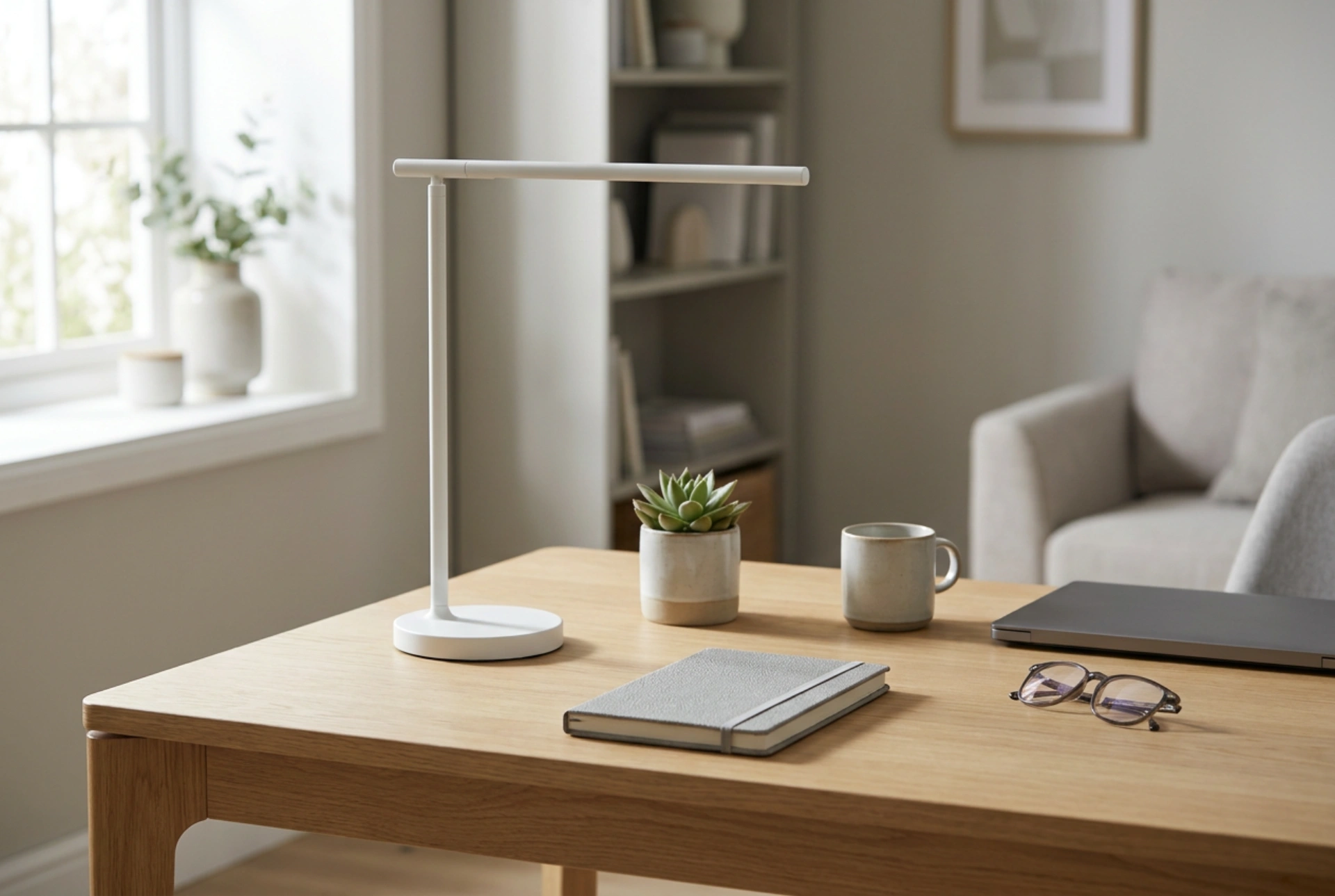


Eliminating cords from a workspace is not just about visual minimalism; it fundamentally changes how light can be positioned to minimize glare and adapt to cognitive demands. Cordless battery-operated desk lamps offer unprecedented spatial flexibility, allowing you to control illumination geometry precisely where it is needed most without the constraints of power outlets.
The Physics of Light Positioning and Eye Strain
In ergonomics, the angle at which light strikes a surface dictates visual comfort. Fixed, corded lamps often force a compromise between desk layout and optimal illumination. This results in either direct glare (light reflecting off screens or glossy paper directly into the eyes) or heavy, high-contrast shadows cast by hands, laptops, or books. A cordless light source allows you to manipulate the angle of incidence freely.
According to the inverse-square law of physics, illuminance is inversely proportional to the square of the distance from the light source. By placing a compact, battery-powered lamp closer to your active document or keyboard, you can dramatically increase local brightness (measured in lux) without increasing the total luminous flux (measured in lumens) emitted by the lamp. This localized high-intensity zone prevents the need for overly bright ambient lighting, reducing overall energy consumption and creating a focused visual field that enhances concentration.
Battery Chemistry and LED Efficiency
The viability of wireless task lighting relies on the synergy between light-emitting diode (LED) technology and lithium-ion (Li-ion) battery chemistry. Traditional incandescent bulbs convert only about 5% of electrical energy into visible light, with the remaining 95% lost as heat. LEDs, operating on the principle of electroluminescence, convert up to 50% of energy into light. This high efficiency is what allows small, lightweight batteries to power desk lamps for extended periods.
Inside the lamp, rechargeable lithium-ion cells store energy through the movement of lithium ions between the anode and cathode. These cells are selected for their high energy density and low self-discharge rates. To maximize the lifespan of these batteries, it is crucial to understand their thermal limits. Heat is the primary enemy of lithium-ion longevity. Because LEDs generate heat at their junction points, quality cordless lamps utilize passive heat sinks (often made of aluminium) to dissipate thermal energy away from the internal battery compartment. Keeping the lamp in cool environments and avoiding complete discharge cycles will preserve the battery's chemical structure over hundreds of charge-discharge cycles.
Optimising Ergonomics through Color Temperature
The human circadian rhythm is highly sensitive to the spectrum of light. Cordless lamps often feature adjustable color temperatures, measured in Kelvin (K). Understanding when to use specific spectrums can enhance cognitive function and ease the transition to rest.
- Cool White Light (4000K - 5000K): This spectrum mimics daylight and suppresses the production of melatonin, the hormone responsible for sleep. It is ideal for high-focus tasks, proofreading, and detailed manual work, as it increases alertness and visual acuity.
- Warm White Light (2700K - 3000K): This lower-frequency light contains fewer blue wavelengths. It is gentler on the eyes during evening hours, preventing digital eye strain and supporting the body's natural wind-down process before sleep.
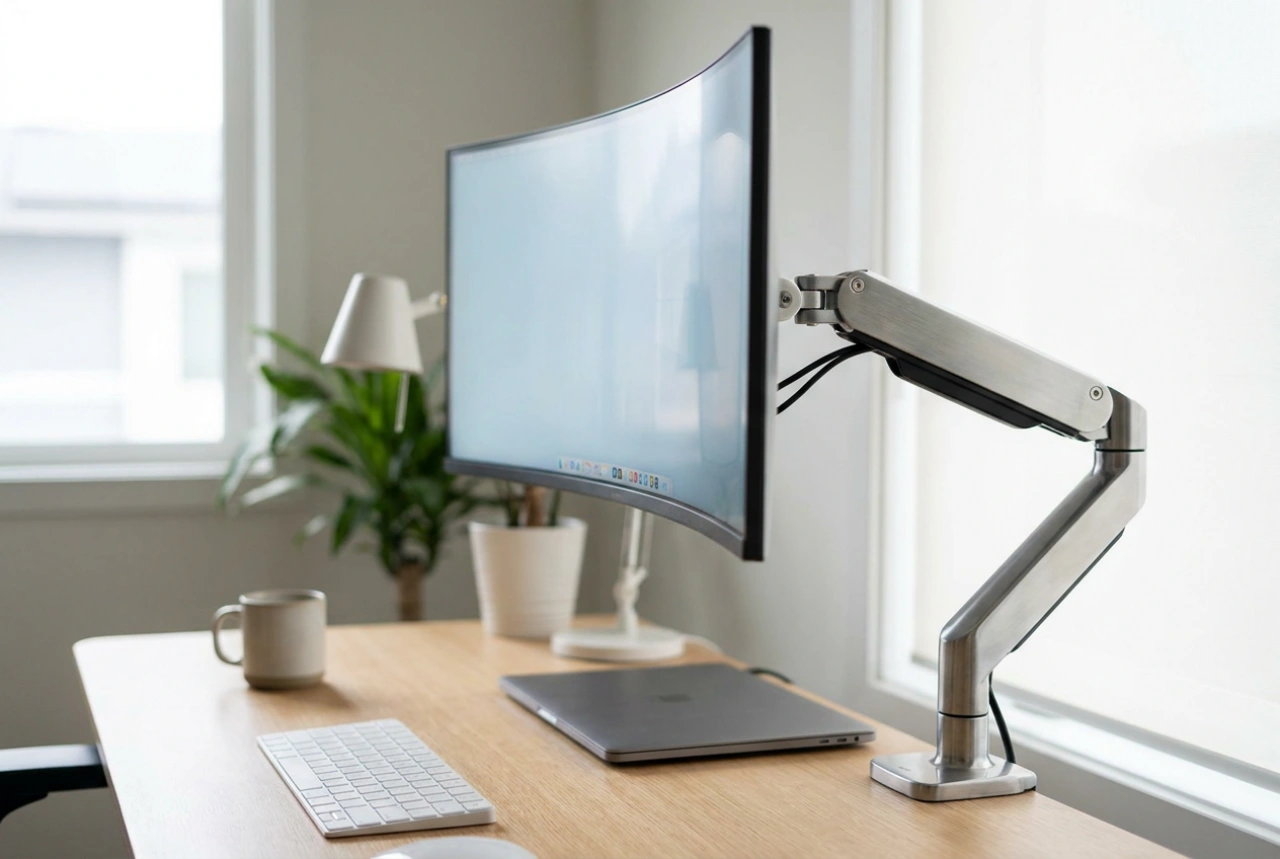
Positioning is equally critical. For writing or sketching, the lamp should be placed on the side opposite your dominant hand. This ensures that the physical movement of your hand does not cast a shadow across your field of view. For computer-based tasks, the light should illuminate the desk surface below the screen, avoiding direct reflection off the monitor glass.
Maintenance and Care for Prolonged Performance
To maintain peak optical performance, the diffuser—the translucent cover that scatters the LED light to prevent harsh glare—must be kept clean. Microscopic dust particles accumulate on the diffuser over time, absorbing and scattering light inefficiently. Weekly dusting with a dry, anti-static microfibre cloth is sufficient. Avoid harsh chemical solvents that can degrade acrylic or polycarbonate diffusers, making them yellow or opaque over time. For deep cleaning, a slightly damp cloth with a highly diluted, neutral surfactant is ideal.