

Selecting the right entry intercom system requires matching the technical capabilities of your cabling with the physical demands of your gate and wicket locks. This guide explains how to select the optimal system configuration to ensure reliable long-term operation, stable signal transmission, and seamless access control.
Signal Transmission and Cable Physics
The foundation of any reliable intercom system is the physical medium used for signal and power transmission. When planning an installation, the distance between the indoor monitor and the outdoor gate panel determines the required cable cross-section. Voltage drop over long distances is a common cause of system instability, resulting in flickering video feeds, buzzing audio, or failures in releasing the electric strike.
For distances under 50 meters, standard category cables (such as Cat5e or Cat6) can often be used, but for longer runs, heavier gauge telecommunication cables (like YTKSY) are necessary. Two-wire digital bus systems are highly efficient because they modulate data and power over a single pair of wires, reducing the risk of wiring errors. However, if you are retrofitting an older property with existing multi-wire cabling, an analog-to-digital converter or a multi-wire intercom system may be required. Wireless systems (Wi-Fi or DECT) should be approached with caution; metal gates, stone pillars, and dense foliage cause signal attenuation, making a physical wired connection always the superior choice for consistent operation.
Electric Strikes and Mechanical Compatibility
To control a pedestrian wicket gate, the intercom must interact with an electric strike or an electromagnetic lock. The choice of hardware depends on the gate's construction and security requirements. Standard electric strikes require continuous power to unlock (fail-secure), meaning they remain locked during power outages. Fail-safe strikes, which require power to stay locked, are typically used for emergency exits but are less secure for external boundaries.
For convenience, choose an electric strike with a "memory" function. Once triggered by a short electrical pulse from the intercom, the strike remains unlocked until the gate is physically opened and closed again, preventing the visitor from having to push the gate open at the exact millisecond the button is pressed. If your gate frame has tight tolerances, a radial electric strike—where the latch rotates inward rather than outward—prevents the need to cut deep recesses into the stone or metal post, preserving the structural integrity of the frame.
Integrating Driveway Gate Automation
Controlling both a pedestrian wicket and a motorized driveway gate requires an intercom system with dual-control capabilities. This is achieved through separate relay channels. The pedestrian gate typically uses a powered output from the outdoor station to activate the low-voltage electric strike. In contrast, the driveway gate controller requires a "dry contact" (a potential-free relay).
When you press the gate-open button on your indoor monitor, the intercom closes a dry contact relay, sending a simple momentary signal to the gate opener's control board. It is crucial never to send external voltage into the gate automation control board, as this can destroy the sensitive electronics. Ensure your chosen indoor unit has at least two distinct control buttons: one for the electric strike (wicket) and one for the auxiliary relay (driveway gate).
Environmental Resistance and Material Selection
Outdoor panels are subjected to extreme temperature fluctuations, UV radiation, and moisture. The ingress protection (IP) rating is the standard for measuring dust and water resistance. For gate pillars, an IP65 rating is the bare minimum, while IP66 or higher offers superior protection against heavy rain and dust storms.
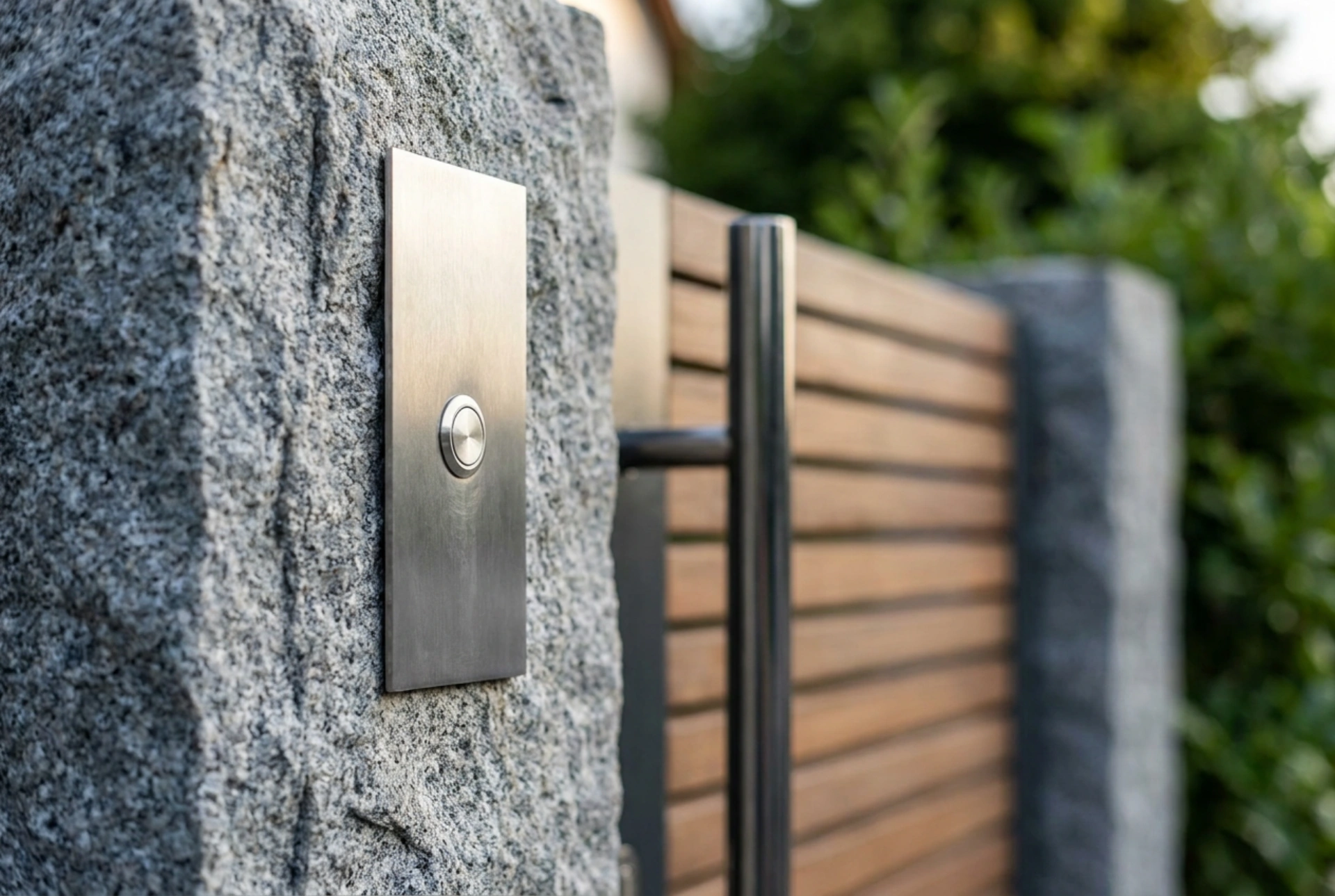
Material science plays a critical role in the longevity of the outdoor unit. Brushed stainless steel (specifically grade 304 or marine-grade 316) and anodized aluminum offer excellent corrosion resistance. Avoid painted steel or low-grade plastics, which degrade rapidly under UV exposure, leading to brittle housings and water leakage. Additionally, look for vandal-resistant ratings (IK ratings); an IK08 or IK09 rating ensures the panel can withstand physical impacts without fracturing, protecting the delicate internal camera and microphone sensors.