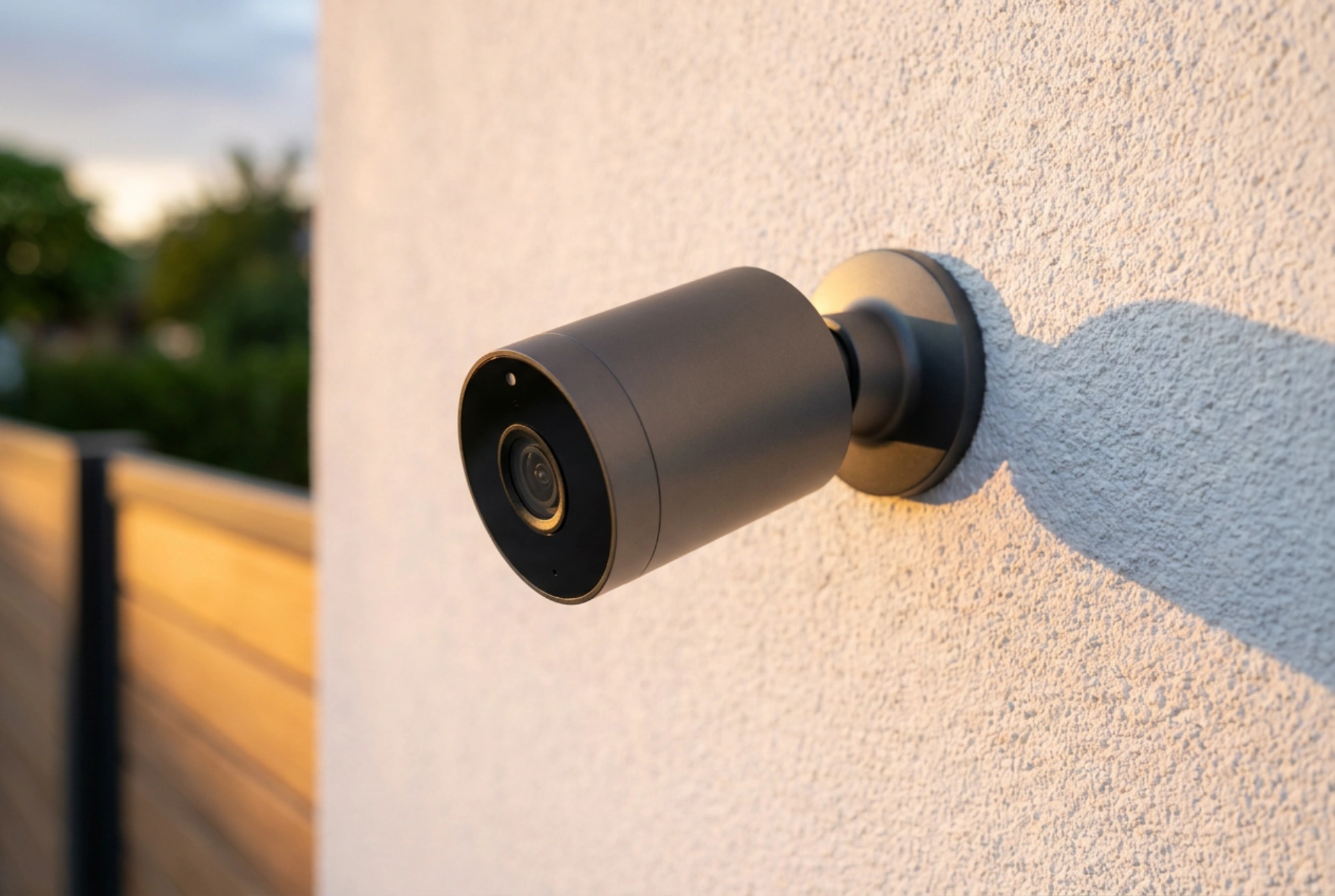


Monitoring remote properties, construction sites, or rural perimeters often presents a significant challenge due to the lack of local Wi-Fi networks and landline internet. A PTZ (Pan-Tilt-Zoom) security camera equipped with a SIM card resolves this by utilizing cellular networks to transmit high-definition video feeds while offering mechanical rotation for comprehensive spatial coverage.
The Mechanics of Cellular Video Transmission
Unlike standard security cameras that rely on local wireless routers (Wi-Fi) or Ethernet cables, a SIM-enabled camera features an integrated cellular modem. When the camera captures video footage, the data is compressed using advanced video codecs, typically H.264 or H.265. This compression reduces the file size significantly without sacrificing vital visual details, allowing the footage to be streamed over cellular bandwidth.
The compressed data is then converted into radio frequency signals and transmitted via the built-in antenna to the nearest cellular base station (cell tower). This process relies on standard cellular protocols such as 4G LTE or 5G. Because high-resolution video streams require stable upload speeds, the camera dynamically adjusts its bitrate based on the signal strength, ensuring a continuous stream even when the network coverage fluctuates.
The Anatomy of PTZ Rotation and Tracking
The PTZ designation stands for Pan, Tilt, and Zoom, describing the physical movements the camera can execute to cover a wide field of view. This mechanical agility relies on a sophisticated internal physical assembly:
- Stepper Motors: High-precision stepper motors drive the horizontal (panning) and vertical (tilting) gears. Unlike continuous DC motors, stepper motors move in precise, fractional increments, allowing the camera to point at exact coordinates.
- Slip Rings: To prevent internal power and data cables from twisting and snapping during continuous 360-degree panning, these cameras utilize physical slip rings. These are rotating electrical connectors that maintain a continuous electrical connection between the stationary base and the rotating head.
- Optical and Digital Zoom: Zooming is achieved either mechanically by moving glass lenses closer or further apart (optical zoom) to change the focal length, or digitally by cropping and enlarging the pixels of the image sensor.
Power Management and Sensor Integration
Because SIM card cameras are frequently installed in off-grid locations, power conservation is a critical engineering requirement. Many of these units operate on rechargeable lithium-ion batteries paired with small solar panels. To prevent the battery from draining within hours due to continuous cellular transmission, the camera utilizes a dual-state power model.
Under normal conditions, the high-power cellular modem and video processor remain in a deep sleep state. A low-power Passive Infrared (PIR) sensor remains active, scanning the environment for thermal changes caused by moving objects. When the PIR sensor detects a heat signature matching a human or vehicle, it triggers an electrical signal that wakes the main processor and cellular modem within milliseconds. The camera then records the event, sends an alert, and returns to sleep once the motion ceases.
Step-by-Step Optimization for Installation
To ensure maximum reliability and network throughput, follow this methodical setup sequence:
- Assess Cellular Signal Strength: Prior to mounting, use a mobile device to test the signal strength of the selected cellular carrier at the exact mounting spot. A weak upload speed will cause lag, dropped frames, or connection failures.
- Mounting Position and Angle: Install the camera at a height of 2.5 to 3 meters. This height protects the physical unit from tampering while allowing the PIR sensor to project its detection zone downwards at an optimal 15-to-20-degree angle.
- Antenna Orientation: Position the external antennas vertically. Cellular signals are vertically polarized, and aligning the antennas parallel to the signal waves maximizes reception quality.
- Solar Panel Placement: If solar-powered, orient the panel toward the equator (south in the Northern Hemisphere) at an angle matching your latitude to maximize year-round solar radiation.