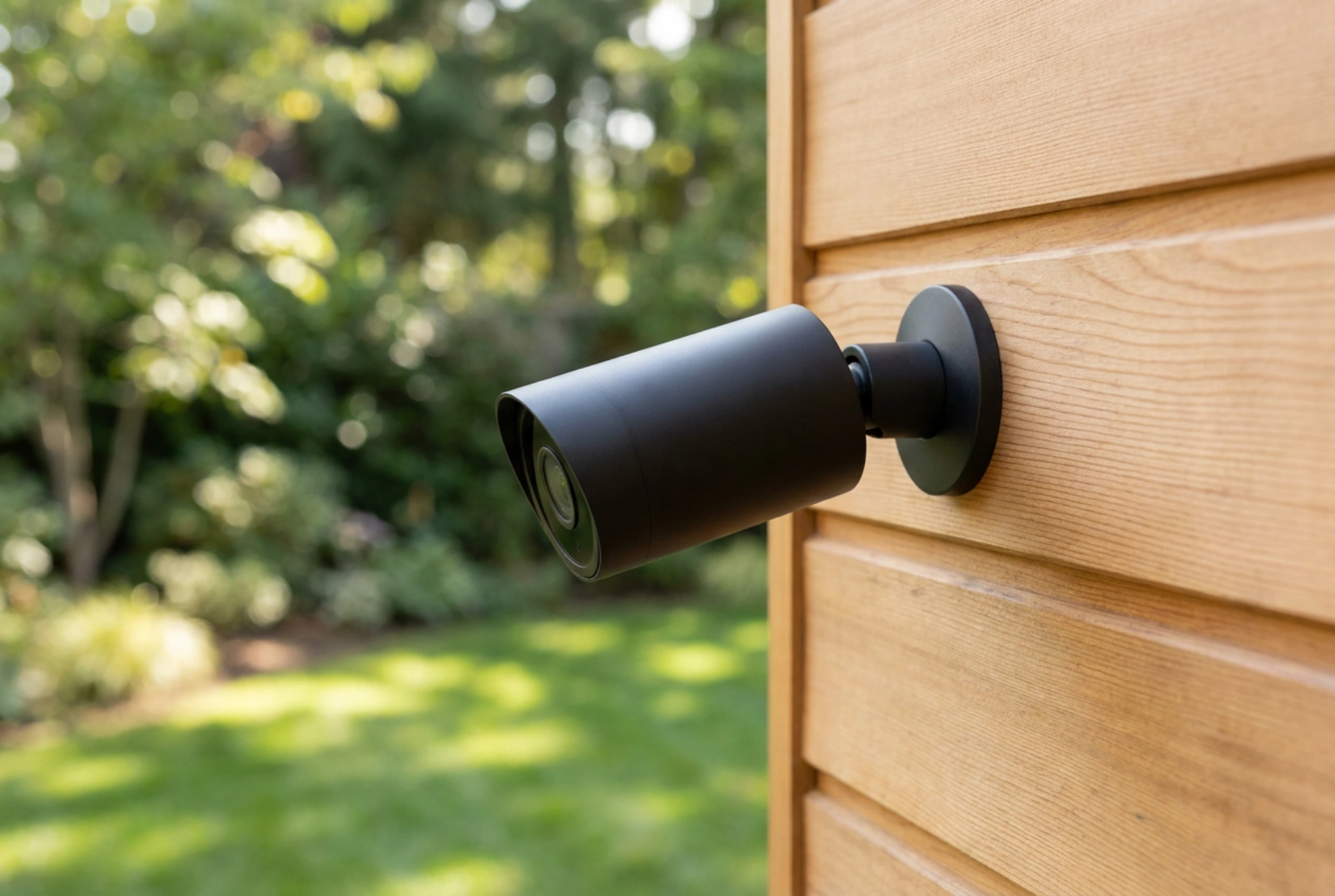


Maximize the efficiency of your outdoor battery-powered security camera by understanding the physical and environmental factors that accelerate power depletion. By managing temperature effects, sensor physics, and signal resistance, you can significantly extend the operational cycle between charges.
The Physics of Lithium-Ion Batteries in Outdoor Climates
Battery-powered outdoor cameras rely almost exclusively on lithium-ion or lithium polymer cells. These batteries generate electricity through chemical reactions, where lithium ions migrate between the anode and the cathode. In cold weather, especially below freezing, the electrolyte fluid inside the battery becomes more viscous. This slows down ionic movement, increases internal resistance, and reduces the battery's overall voltage under load. The camera's power management system interprets this drop in voltage as a depleted battery, even if energy remains inside.
To combat this chemical slowdown, mount cameras in sheltered areas—such as under eaves or soffits—to shield them from wind-chill and direct snow contact. Insulating the camera body slightly or placing it in a sheltered enclosure can also mitigate rapid temperature drops.
Optimizing Passive Infrared (PIR) Sensor Placement
Most battery-powered cameras use Passive Infrared (PIR) sensors to detect motion. PIR sensors detect changes in infrared radiation (heat) relative to the surrounding ambient temperature. When a warm object moves across the sensor's field of view, it triggers the camera to wake from its low-power sleep state and begin recording. This transition from deep sleep to full active recording is the most energy-intensive process in the camera's operation cycle.
To prevent constant, draining wake-up cycles, follow these physical positioning rules:
- Avoid pointing the camera directly at heat-reflecting surfaces like concrete driveways, metallic structures, or open bodies of water that shift temperature rapidly.
- Angle the camera away from roads or public pathways with heavy vehicular traffic, as warm engines trigger PIR sensors instantly.
- Trim nearby vegetation. Branches heated by the sun that sway in the wind create a dynamic thermal pattern that tricks the PIR sensor into constant activation.
Reducing RF Transmitter Power Draw
A significant portion of a camera's energy budget is spent on wireless data transmission. Radiofrequency (RF) signals attenuate as they pass through solid materials. Dense building materials like brick, concrete, stucco with metal lathing, and double-glazed windows act as severe barriers to RF propagation.
When the signal to the receiver is weak, the camera's internal transceiver must increase its transmission power to maintain a stable connection. This increased power draw continuously saps battery life during idle status checks and video uploads. Ensure the line of sight between the camera and the router or base station has the fewest physical obstacles. Relocating your indoor router or adding a dedicated wireless bridge closer to the camera's wall can decrease transmitter power consumption dramatically.
Configuring Firmware Settings for Power Efficiency
Software configurations dictate how often and how long the camera draws peak current. Adjusting these parameters balances security with energy preservation:
- Recording Duration: Limit clip recording lengths to 10 or 15 seconds. Longer continuous recordings keep the image sensor, processor, and transmitter active, draining the battery.
- Retrigger Cooldowns: Implement a cooldown period of 30 to 60 seconds between motion events. This prevents the camera from entering rapid back-to-back boot cycles during high-traffic periods.
- Activity Zones: Define specific pixel grids within the software to ignore background motion. Combined with physical PIR adjustments, this yields the best energy savings.