

Mounting a television securely to a wall is not merely a matter of drilling holes; it is an exercise in structural mechanics and material science. To prevent costly damage and ensure a perfectly level display, one must understand how different wall materials respond to static loads and rotational torque.
The Physics of Wall Mounting: Shear Force vs Tension
When a television is mounted on a wall, two primary physical forces act upon the bracket and the fasteners: shear force and tension. Shear force acts parallel to the wall, pulling the bracket downwards due to gravity. Tension, or pull-out force, acts perpendicular to the wall, pulling the fasteners outward. This tension increases significantly when using articulating or full-motion cantilever brackets, where the TV can be extended away from the wall, creating a lever arm that multiplies the force exerted on the top fasteners.
To counteract these forces, you must select fasteners based on the wall's substrate. Solid brick, concrete, and drywall with timber studs handle these stresses differently. Understanding this material distinction is the foundation of a secure installation.
Analyzing and Preparing the Wall Substrate
Before drilling, identify the exact composition of your wall. Tap the surface or use a density-based sensor to determine if you are dealing with solid masonry or a hollow cavity wall.
- Solid Masonry/Concrete: These materials offer high compressive strength. Nylon expansion plugs work by expanding against the borehole walls when the screw is driven in, relying on friction to resist pull-out forces.
- Timber Stud Walls: Plasterboard alone has virtually no structural integrity for load-bearing brackets. The bracket must be anchored directly into the vertical timber studs using heavy-duty wood screws (lag bolts). Finding the exact center of the stud is critical, as screwing into the edge can split the wood, compromising the hold.
Precision Drilling and Alignment Techniques
An unleveled bracket is not just aesthetically displeasing; it creates uneven weight distribution, putting disproportionate stress on one side of the mounting hardware. Always use a high-quality spirit level placed directly on the bracket frame, rather than relying on the ceiling or floor lines, which are rarely perfectly level.
When drilling into masonry, use a rotary hammer drill with a carbide-tipped masonry bit. Keep the drill perfectly perpendicular to the wall. Any angling will create an oval-shaped hole, reducing the surface contact area of the expansion plug and weakening its grip. For timber studs, drill a pilot hole slightly smaller than the root diameter of the screw. This prevents the wood from splitting while ensuring the screw threads bite deeply into the timber fibres.
The Order of Assembly and Torque Application
When securing the bracket to the wall, the sequence of tightening the bolts determines the final stability. Position the bracket, insert the top-middle bolt first to hold the weight, and check the level. Once verified, insert the remaining fasteners.
Tighten the bolts in a diagonal pattern rather than in a simple circular sequence. This distributes the clamping pressure evenly across the bracket plate. Avoid using high-torque impact drivers for the final tightening phase, as they can easily strip the threads in timber or crush the nylon structure of wall plugs. Use a manual socket wrench to feel the resistance, stopping as soon as the bolt head is flush and firmly seated against the bracket.
Attaching the TV and Cable Management Physics
Before lifting the television onto the wall bracket, attach the vertical mounting arms to the back of the screen using the correct VESA bolt size. Ensure you use the plastic spacers if the back of your television is curved; this prevents the bolts from bottoming out inside the TV's internal threads, which can damage the delicate internal circuitry.
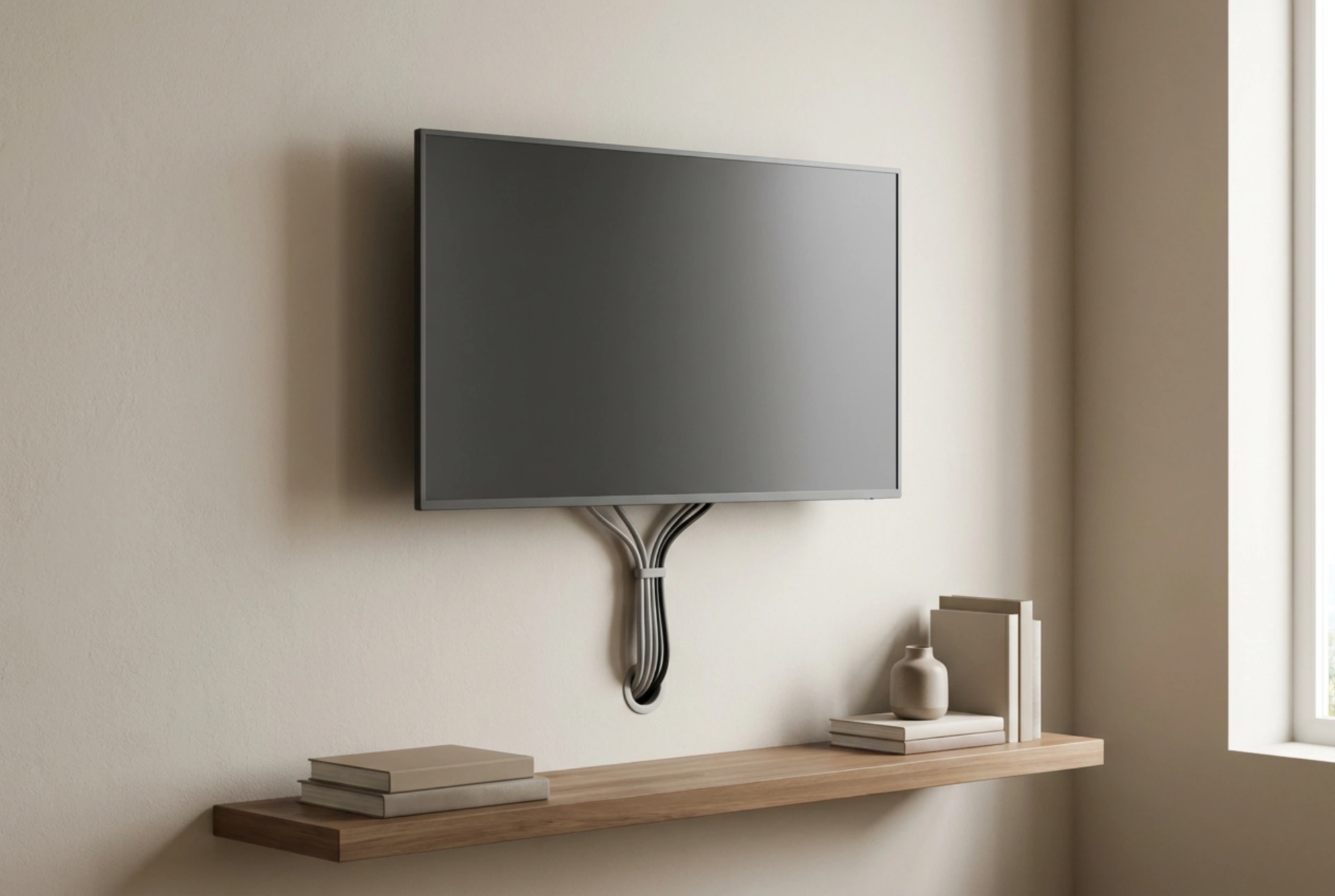
Once the television is securely hung and the safety locks are engaged, route the cables. Avoid tight bends in power and signal cables; copper and optical fibers have a minimum bend radius. Forcing tight angles can degrade signal quality or create electrical resistance, leading to heat buildup.