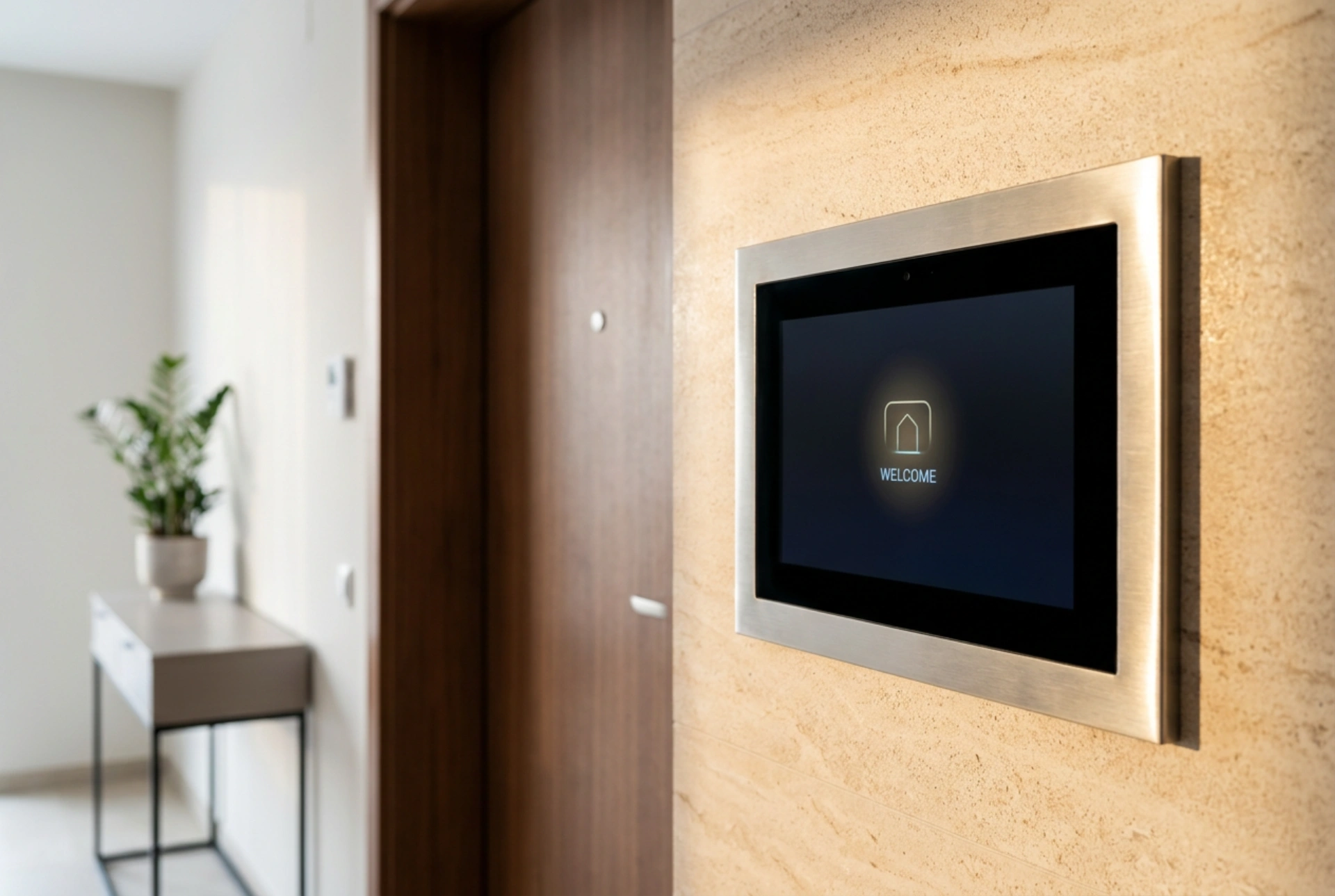


Video intercom systems in multi-family residential buildings bridge the gap between physical security and digital convenience by combining audio transmission with real-time video feeds. Understanding the underlying technology and the cooperative decisions required for installation is key to ensuring a reliable, long-term security solution.
The Science of Video and Audio Signal Transmission
At its core, a video intercom system converts acoustic and optical data into electrical signals that travel from the entrance panel to individual apartment monitors. In modern apartment blocks, this is primarily achieved through digital bus systems or IP (Internet Protocol) networks. Unlike older analog systems that required separate, heavy copper wires for every single function, digital systems multiplex signals—meaning audio, video, and control data (such as the signal to release the door strike) are packetised and sent over a shared bus, typically a twisted-pair cable or a dedicated multi-wire bus.
For IP-based video intercoms, the data is transmitted as digital packets over Ethernet cables. This allows for high-definition video signals with minimal loss over longer distances, which is common in large apartment complexes. The optical component relies on a solid-state image sensor, usually a CMOS (Complementary Metal-Oxide-Semiconductor) or CCD (Charge-Coupled Device) chip behind a wide-angle lens. The sensor detects incoming photons, converting them into electronic charges that are then processed into a digital video stream. Because these systems operate in variable outdoor conditions, the lens must have a wide focal length to capture a broad field of view, minimizing blind spots near the entrance.
Essential Technical Specifications for Apartment Units
When selecting or upgrading a video intercom system for an apartment building, several technical parameters dictate the system's overall efficacy and durability. The first is camera resolution and field of view. A horizontal viewing angle of at least 110 to 130 degrees is essential to capture visitors of varying heights or those standing slightly to the side of the panel. Higher angles, however, introduce barrel distortion (the "fisheye" effect), which must be digitally corrected by the system's processor to ensure clear facial recognition.
Another critical element is low-light performance. Since entryways require round-the-clock monitoring, the outdoor unit must feature integrated infrared (IR) LEDs or white light illuminators. Infrared illumination is invisible to the human eye, preventing light pollution at the entrance while allowing the CMOS sensor to capture clear greyscale images in complete darkness. Furthermore, the outdoor panel must have a high Ingress Protection (IP) rating, typically IP54 or IP65, to withstand dust, heavy rain, and extreme temperature fluctuations without condensation forming inside the lens cavity.
Administrative and Legal Aspects in Multi-Family Housing
Installing or upgrading a video intercom in a shared building requires navigating joint ownership rules and privacy regulations. Because the external panel is mounted on a common wall and the cabling runs through shared utility risers, the installation must be coordinated with the building management, housing association, or co-operative. Compatibility is the first hurdle; a new apartment monitor must be technically compatible with the existing master unit at the main gate. Standardising the protocol across the building ensures that signal attenuation does not occur when multiple indoor stations are active.
Privacy laws also dictate how the video feed can be used. In most jurisdictions, continuous recording of public pavement or communal corridors is restricted. Therefore, video intercom systems in apartment blocks are typically configured to activate the camera only when a visitor presses a specific apartment button or when a resident manually initiates a live view from their indoor monitor. The system should not record continuous footage unless explicit legal frameworks and signage are established by the building administration.
Integration with Building Automation and Electronic Locks
The ultimate function of the intercom is access control. When a resident presses the unlock button, a low-voltage electrical signal (usually 12V DC or AC) is sent to an electromagnetic lock or an electric strike plate installed in the door frame. The physical mechanism utilizes electromagnetism: when powered, the coil creates a magnetic field that either holds the armature plate secure (fail-safe) or releases the latch mechanism (fail-secure). Understanding these mechanical principles ensures that in the event of a power outage, the building remains secure yet complies with emergency evacuation standards by allowing free exit from the inside.