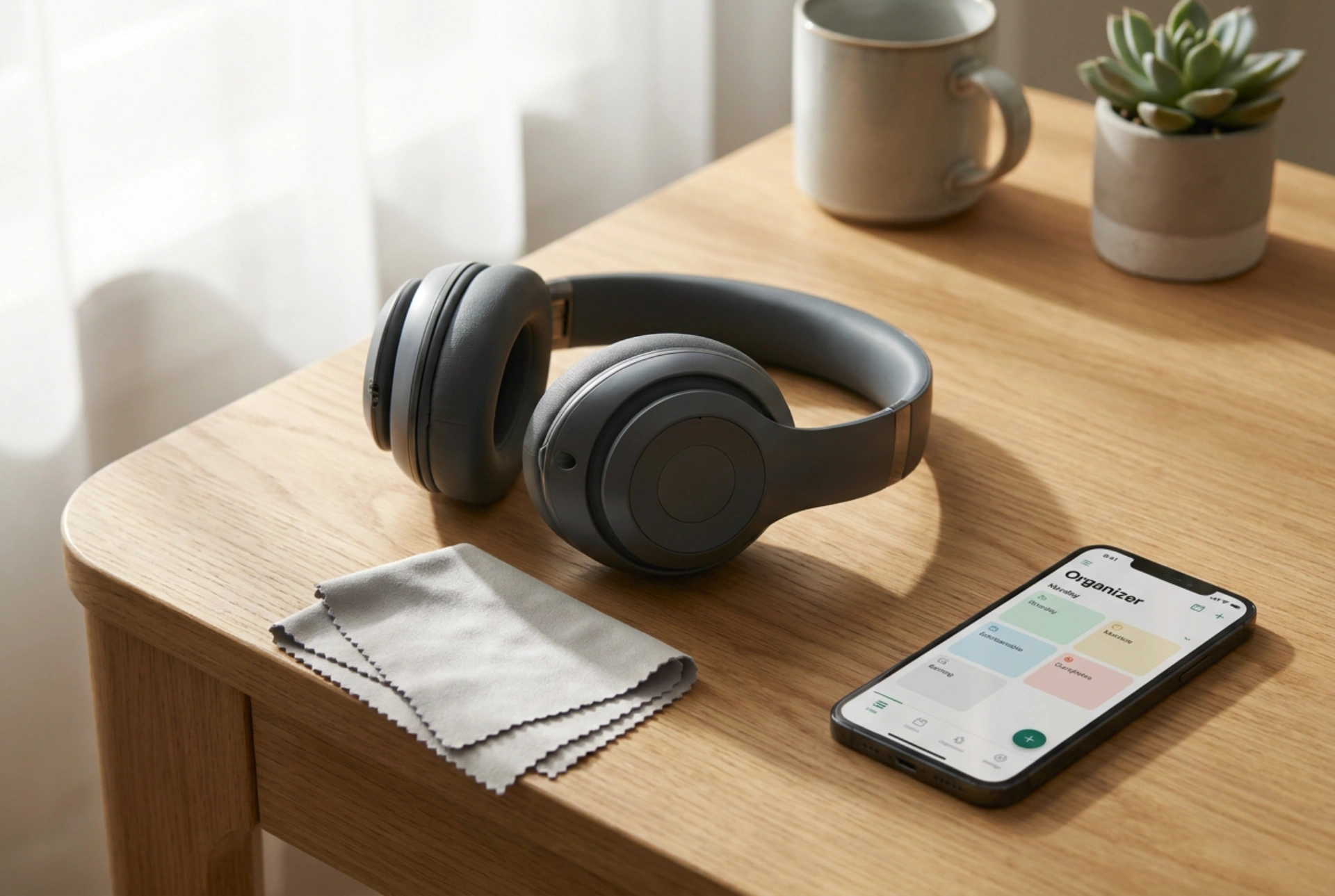


Configuring wireless headphones with an integrated microphone requires an understanding of radio frequency transmission and operating system audio routing to ensure low-latency playback and clear voice capture.
Understanding the Dual-Profile Bottleneck of Bluetooth Audio
Wireless headphones primarily communicate via the 2.4 GHz radio frequency band using the Bluetooth protocol. To manage the available bandwidth, the protocol utilises distinct profiles that dictate audio quality and bidirectional transmission capabilities. When you use your headphones solely for listening, the system employs the Advanced Audio Distribution Profile (A2DP). This profile is designed for one-way transport of high-quality, stereo audio streams.
However, once the microphone is activated for a call or voice application, the system must switch to either the Hands-Free Profile (HFP) or Headset Profile (HSP). Because these profiles must allocate bandwidth for both outgoing microphone data and incoming audio data simultaneously, the audio bandwidth is effectively split. This physical limitation often results in a noticeable drop in audio playback quality, switching from high-fidelity stereo to lower-sample-rate, monaural sound. Knowing this physical constraint helps prevent troubleshooting non-existent hardware defects when the drop in fidelity is simply a characteristic of the standard RF protocol.
The Pairing Sequence: Establishing the Physical Connection
Before any software configuration can occur, the physical transceivers in the headphones and the host device must establish a secure cryptographic handshake. This is known as pairing.
- Initiate Pairing Mode: Press and hold the designated power or bluetooth button on your headphones. This alters the internal state of the transmitter, causing it to broadcast its service UUID (Universally Unique Identifier) to nearby scanning devices. Typically, an LED will flash rapidly to indicate active broadcasting.
- Device Discovery: Open the Bluetooth settings on your host device and initiate a scan. The host device listens on the 2.4 GHz spectrum for the broadcasted packets.
- The Handshake: Select the headphones from the discovered list. The devices exchange encryption keys to secure the wireless link against eavesdropping, establishing a bonded connection.
Software Routing and Operating System Configuration
Once the physical link is established, the operating system must correctly route the digital audio streams. Failure to configure these settings often leads to situations where the headphones work but the microphone remains inactive.
Selecting the Correct Input and Output Devices
Access the sound management panel of your operating system. You will find separate lists for playback (output) and recording (input) devices. Set your wireless headphones as both the default playback device and the default communication device. In the recording settings, select the headset's microphone as the default input device. If you experience a complete loss of sound when starting a voice application, it is likely because the software is trying to send high-fidelity A2DP audio to a device that has switched its physical transceiver state to HFP/HSP mode.
Adjusting Sample Rates and Levels
To ensure optimal signal processing and prevent audio artifacts like crackling or popping, you must align the sample rates. Within the advanced properties of both the input and output devices, set the default format to a frequency supported natively by the hardware (typically 16-bit, 44,100 Hz for standard playback, or 16-bit, 16,000 Hz when in communication mode). Ensure that the microphone input level is calibrated to roughly 70-80% of its maximum range to prevent digital clipping while maintaining a healthy signal-to-noise ratio.
Mitigating Interference and Latency
Because the 2.4 GHz spectrum is highly congested, shared with Wi-Fi routers, microwave ovens, and other wireless peripherals, signal degradation can occur, leading to audio drops or microphone lag. To maintain a robust connection, position your host device away from large metal objects and active Wi-Fi routers. Human bodies are also highly effective at absorbing 2.4 GHz signals due to their high water content, so maintaining a clear line of sight between the headphones and the host receiver minimises packet loss. Additionally, closing resource-intensive background applications reduces CPU scheduling delays, which directly decreases audio buffer latency.